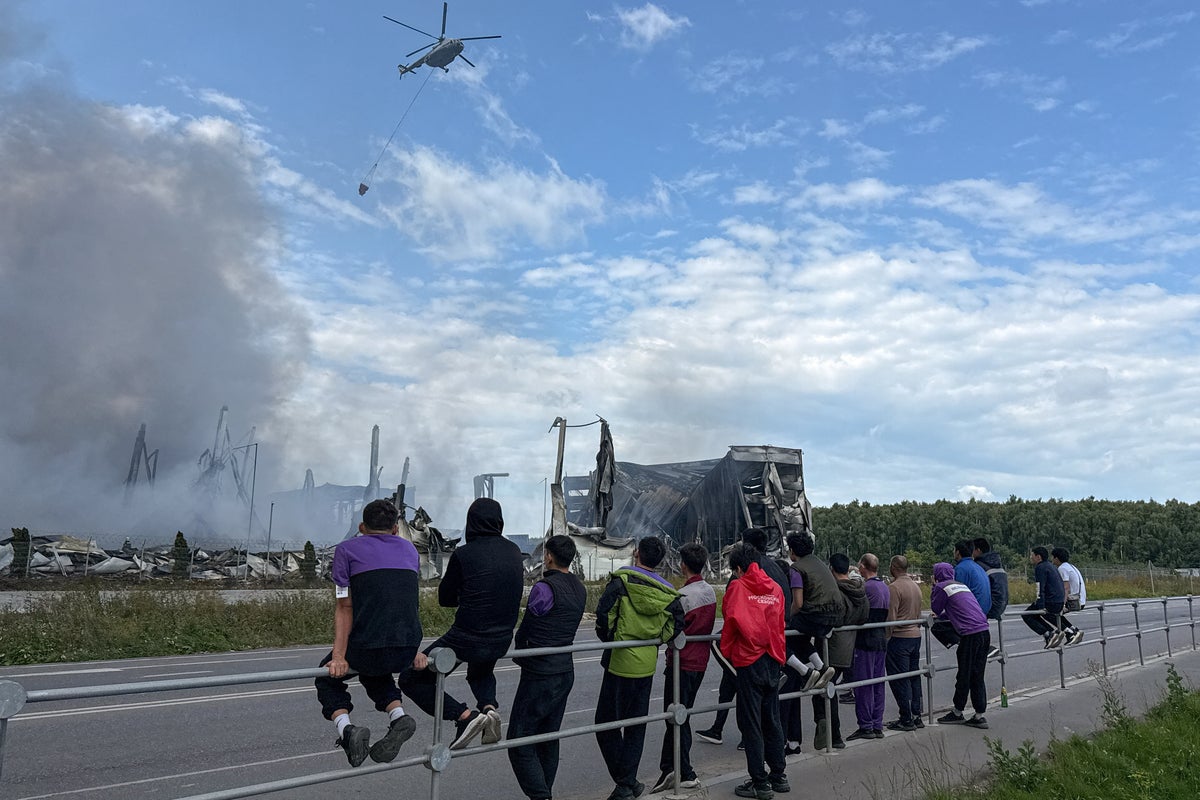
War doesn't just happen on muddy frontlines anymore. It happens inside massive distribution centers, sorting hubs, and digital supply chains. When long-term conflict stretches into its fifth year, modern defense strategy demands a shift toward choking the enemy's economic backbone. That's exactly why Kyiv has turned its sights on Wildberries, the massive e-commerce giant frequently dubbed Russia's Amazon.
Recent waves of drone strikes have hit close to twenty of the retail titan's massive fulfillment facilities across western Russia, sending towering columns of black smoke into the skies over the Moscow region and beyond. If you've been wondering why supply lines deep inside Russian territory are suddenly bursting into flames, you're looking at a deliberate strategy to dismantle dual-use logistics one warehouse at a time.
The Shift From Trenches to Tech Logistics
For a long time, conventional military analysis focused entirely on tanks, artillery shells, and entrenched infantry positions. But modern wars run on commercial infrastructure. Wildberries isn't just a place where everyday citizens buy shoes or household goods. Ukrainian defense officials argue that these sprawling logistics networks are routinely co-opted to store, route, and distribute dual-use goods, navigation hardware, and sanctioned components used directly in military drone production.
By targeting hubs in cities like Elektrostal, Kotovsk, and Podolsk, Kyiv is signaling that no part of the Russian war economy remains insulated. Moscow and corporate representatives have strongly denied that these commercial warehouses support military operations. Yet the frequency and scale of these coordinated aerial raids suggest that military planners view these distribution networks as legitimate strategic targets.
What Happens When E-Commerce Meets Total War
Targeting an enterprise valued in the billions changes the psychological and economic texture of the conflict for ordinary Russian citizens. When your local package sorting facility catches fire after a night of heavy air defense activity, the distant reality of the war lands squarely on your doorstep.
The scope of these operations is staggering. Recent overnight barrages involved hundreds of long-range drones heading toward major urban centers, forcing temporary airport closures and stretching regional air defense systems to their absolute limits. Facilities near St. Petersburg and across the Moscow region have faced recurring strikes, proving that distance from the frontline no longer guarantees safety.
The Real Cost of Disruption
You can't decouple a nation's consumer economy from its wartime output when the two are thoroughly intertwined. When commercial cargo networks double as shadow supply lines, they lose their civilian immunity in the eyes of military strategists. The ongoing destruction of these fulfillment centers creates immediate friction for regional distribution, forcing logistics managers to scramble for alternative pathways while facing mounting insurance costs and security bottlenecks.
Expect this campaign to persist as long as the broader conflict grinds onward. Logistics hubs are visible, fixed targets, and in a war defined by long-range attrition, hitting the enemy's supply chain is just as effective as striking a munitions factory.
Ukraine strikes warehouses of 'Russian Amazon' in revenge attack
This short video provides a look at the drone strikes hitting Wildberries fulfillment centers and explains how these logistics hubs became primary targets in the ongoing conflict.
http://googleusercontent.com/youtube_content/1