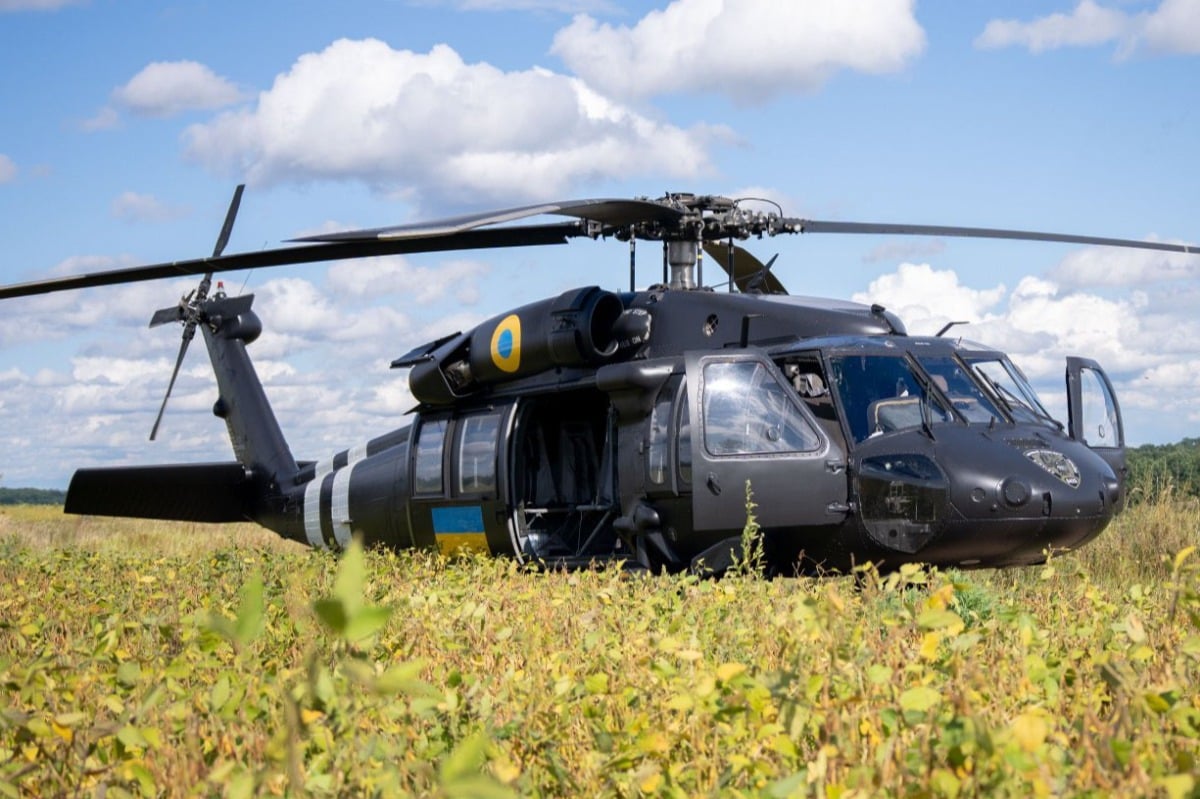
Ukraine is ready to phase out its entire fleet of Soviet-designed helicopters. It isn't a sudden whim. It’s a calculated, long-term survival strategy born out of a brutal logistics reality.
Brigadier General Pavlo Bardakov, commander of Ukraine's Army Aviation, recently confirmed what many analysts suspected. The military is actively drawing up projects to replace its aging Mil Mi-8 and Mi-24 fleets. The chosen successor? The American-made Sikorsky UH-60 Black Hawk.
For decades, the Mi-8 "Hip" has been the workhorse of Eastern European aviation. It is tough, large, and deeply familiar to Ukrainian crews. But flying a machine that relies on your enemy for spare parts is a losing game. The arrival of Western airframes isn't just about getting shinier toys. It’s about cutting the umbilical cord to Russian manufacturing.
The Fatal Flaw of the Soviet Fleet
You can upgrade an old Mi-8 with Western navigation systems. You can bolt on modern electronic warfare pods and chaff dispensers to keep it from getting swatted out of the sky by a man-portable missile. Ukraine has done exactly that with impressive resourcefulness.
But you can't outrun the supply chain.
The core components of the Mi-8 and the Mi-24 attack variant—the engines, the main rotor gearboxes, the specialized structural components—are manufactured in Russia. While Ukraine holds some domestic repair capabilities and stockpile reserves, a war of attrition chews through hardware at an unforgiving pace. General Bardakov noted that while a catastrophic shortage isn't hitting the fleet tomorrow or next year, the medium-term outlook is bleak without a hard pivot.
Keeping Soviet-era choppers operational requires sourcing parts through complex, gray-market third parties or cannibalizing downed airframes. That is no way to run a modern military during an existential conflict. Transitioning to a Western platform ensures a continuous, reliable flow of factory-new parts from allied nations.
Why the Black Hawk Wins the Debate
Some defense analysts wondered if Ukraine might lean toward lighter, cheaper European platforms or specialized attack helicopters like the Apache. The choice of the Black Hawk reveals a desire for utility and survivability over niche capabilities.
The UH-60 is a true multi-role machine. It handles troop transport, medical evacuation, and cargo logistics without breaking a sweat. When comparing it to the old Mi-8, Ukrainian operators who have already flown both highlight a few massive differences.
- Maneuverability: The Black Hawk is incredibly agile. It responds instantly to pilot inputs, allowing it to hug the terrain and dodge threats in a way the bulky Mi-8 simply cannot.
- Speed and Range: It flies faster and can sustain operations for over three hours, covering distances beyond 600 kilometers on a single internal fuel load.
- Survivability: The airframe is built to absorb small-arms fire and shield the crew during hard landings.
There's also a major logistical advantage. Ukraine's military intelligence agency (HUR) has been secretly operating a couple of refurbished UH-60A Black Hawks purchased through crowdfunding and private aerospace companies like Ace Aeronautics since early 2023. These aren't pristine, assembly-line-fresh models. They're older airframes retrofitted with modern glass cockpits, digital avionics, and defensive weapon mounts.
The trial run was an unqualified success. Ukrainian pilots with years of experience on the Mi-8 reported that they adjusted to the Black Hawk almost instantly. The transition took hours, not months. The controls are intuitive, and the digital systems take an immense cognitive load off the crew during high-stress combat missions.
Refurbished Over Factory New
Don't expect the Pentagon to drop a hundred brand-new UH-60M models into Kyiv next week. Buying new is astronomical, and global defense production lines are backlogged for years.
Instead, Ukraine is looking at a mix of refurbished and modernized airframes. The U.S. military frequently divests older UH-60A and UH-60L models as it upgrades its own fleet. Private defense contractors specialize in taking these mothballed airframes, stripping them down, and rebuilding them with modern avionics, uprated General Electric T700 engines, and advanced sensor packages.
This approach keeps costs manageable. It also bypasses long production wait times. Partner-funded programs are already looking at how to modify these refurbished birds specifically for the high-threat environment of the Ukrainian front lines, adding specialized electronic countermeasure suites and missile warning sensors.
What Needs to Happen Next
Swapping out an entire aviation ecosystem is a massive logistical hurdle. It requires more than just training pilots to move a joystick. To make this transition successful, Ukraine and its allies must focus on three immediate areas.
- Build Domestic Maintenance Hubs: Sending a helicopter back to Poland or Germany every time a rotor component wears out will cripple operational readiness. Ukraine needs localized repair depots capable of handling advanced Western turbine engines.
- Train Ground Crews En Masse: While pilots can adapt to the Black Hawk in a few flights, the technicians who maintain the complex hydraulic and electronic systems require deep, structured training.
- Secure Standardized Weapon Mounts: The Black Hawks must be configured to carry standard Western defensive weaponry, such as M240 machine guns or rocket pods, ensuring compatibility with current ammunition supplies.
The age of Soviet armor and aviation dominating Eastern Europe is drawing to a close. By setting its sights on the Black Hawk, Ukraine isn't just planning for the next counteroffensive—it's building the foundation for a post-war military completely integrated into the Western defense infrastructure.