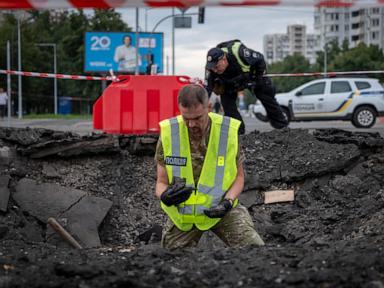
Air raid sirens in Kyiv aren't new, but the sheer volume of metal flying through the sky last night felt different. Russia launched a coordinated assault involving 12 missiles and 121 drones targeting multiple Ukrainian regions. While Ukrainian air defenses managed to swat down the vast majority of the incoming threats, the strikes still left six people dead, including a child, and 29 others wounded across the country.
But looking strictly at the damage inside Ukraine misses the biggest story of the night.
While Russian ballistic missiles were punching holes in Ukrainian infrastructure, Kyiv was busy executing one of its most expansive maritime drone operations since the war began. According to Ukraine's General Staff, a swarm of domestic drones targeted a massive fleet of Russian logistics vessels in the Sea of Azov. The damage report is staggering. Ukraine claims it hit 21 fuel tankers, four tugboats, two cargo ships, and a dredging vessel.
If those numbers hold up, it represents a massive blow to Russia's southern military pipeline. The Kremlin, predictable as always, claimed it shot down 178 drones and that only four ships were hit. The truth usually sits somewhere in the middle, but independent maritime monitoring suggests Russia’s Black Sea and Sea of Azov supply networks just took a serious punch to the gut.
The Human Toll of Russia's Dual-Layer Attack
The Kremlin’s strategy relied on overwhelming numbers. They mixed cheap, slow-moving Shahed drones with high-speed ballistic missiles. The goal is simple. Force Ukrainian air defense teams to burn through expensive interceptors on the drones, leaving the airspace wide open for the heavy stuff.
It worked exactly as planned in several areas. Ukrainian President Volodymyr Zelenskyy pointed out that while air defense teams eliminated 111 drones and two missiles, the ballistic variants made it through to 11 different locations.
The consequences of those misses were immediate and bloody.
- Sumy Region: In northeast Ukraine, two aerial glide bombs slammed into a crowded civilian area. The blast killed four people, including a youngster, and left 17 others with shrapnel wounds and severe concussions.
- Odesa Region: Down south, a Russian missile slammed directly into a building in the port city, killing two people and wounding another man.
- Kyiv District: The capital didn't see fatalities this time, but the falling debris and direct hits triggered massive fires across the Solomianskyi, Darnytskyi, and Dniprovskyi districts, wounding 11 people.
Russia's Defense Ministry offered its usual boilerplate justification. They claimed the strikes strictly targeted drone production facilities in Kyiv and port infrastructure in Izmail and Chornomorsk. But the smoldering residential buildings and civilian casualties tell a completely different story.
Blind Spots in the Air Shield
This latest barrage highlights a brutal reality that Kyiv has been screaming about for months. Ukraine is running dangerously low on the specific air defense systems needed to stop ballistic missiles.
Standard anti-aircraft guns and mobile drone-hunting units do a great job against slow suicide drones. They don't do squat against a ballistic missile dropping out of the stratosphere at Mach 5. For that, you need high-end systems like the American-made Patriot or the European SAMP/T.
The timing here is incredibly frustrating for Ukrainian commanders. Just days ago at the NATO summit in Ankara, U.S. President Donald Trump pledged to give Ukraine a license to manufacture Patriot systems locally. It sounds like a massive breakthrough on paper, but military logisticians know the truth. Building a manufacturing pipeline for something as complex as a Patriot missile system takes years, not weeks. It doesn't solve the immediate crisis of empty interceptor tubes right now.
Why the Sea of Azov Raid Matters
While the world focuses on the tragedies in Kyiv and Sumy, the strategic shift is happening at sea. The Sea of Azov has essentially been treated as an internal Russian lake since the fall of Mariupol early in the war. Russia used this protected body of water to move fuel, ammunition, and heavy equipment directly to its southern front lines without worrying about western anti-ship missiles.
By sending a massive swarm of long-range naval and aerial drones into the Azov, Ukraine proved that Russia's safe harbor no longer exists.
Taking out or damaging 21 tankers isn't just about destroying ships. It's about suffocating the Russian army's fuel supply in southern Ukraine. Modern armies run on diesel. If you can't move fuel across the Sea of Azov, you're forced to rely on vulnerable rail lines running through northern Crimea and occupied Zaporizhzhia. Those rail bottlenecks are much easier for Ukrainian sabotage teams and HIMARS crews to target.
Russia claims the damage was minimal and only one person died in the drone strikes. But the fact that Ukraine could coordinate a strike of this scale, hitting nearly 30 total vessels simultaneously, shows their domestic drone program has matured into a genuine strategic threat. They don't need Western permission to use these weapons, and they don't have to worry about cross-border restrictions.
What Happens Next
Expect Russia to double down on its port infrastructure strikes over the coming days. They want to crush the launch sites of these naval drones before more damage is done to their shipping fleets.
For Ukraine, the priority shifts right back to Washington and European capitals. Zelenskyy is going to use the images of last night's destruction to demand that allies accelerate the delivery of the air defense packages promised at the NATO summit. Air defense crews don't have the luxury of waiting for future manufacturing licenses. They need physical missiles on the ground immediately to plug the gaps that Russia just exposed.



.jpg)