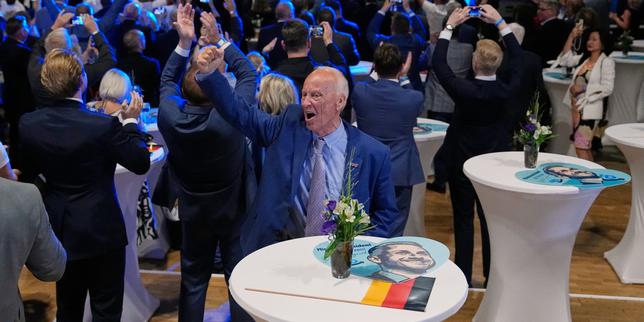
The political tremors shaking Germany right now don't come from Berlin boardrooms. They originate on the streets of Magdeburg, where thousands of voters just handed the Alternative for Germany a staggering 43.8% of the vote in Saxony-Anhalt. If you think this is just another regional blip, you're missing the bigger picture.
Let's look at the numbers. The AfD more than doubled its previous performance from 2021, leaving the governing CDU crashing down to 17.2%. For a small eastern German state of roughly 2.1 million residents, this outcome acts as a magnifying glass for the profound disconnect plaguing modern German politics. Ulrich Siegmund, the 35-year-old regional leader of the party, didn't win by playing traditional political games. He tapped straight into a deep-seated cultural resentment and a desperate craving for local identity.
The Appeal of Ulrich Siegmund and the Politics of Belonging
When supporters in Saxony-Anhalt talk about Siegmund, they don't just mention tax policy or infrastructure spending. They talk about social cohesion. They talk about a sense of community that feels completely shattered by years of economic stagnation, heavy-handed federal mandates, and cultural shifts pushed from the capital.
Siegmund campaigns with calculated populist flair. Arriving at his polling station in Tangermünde on a classic Simson moped, he projects an image of an everyday eastern German who understands local realities. While mainstream parties talk down to voters from ivory towers in Berlin, Siegmund listens to complaints about failing public services, high living costs, and unchecked immigration.
His core message is simple: the establishment has abandoned you, but we belong here together. That promise resonates deeply in a region where post-reunification promises never quite materialized for large parts of the working class.
The Math Problem Behind a Historic Victory
Winning 43.8% of the vote and 39 seats in the Landtag sounds like an unassailable triumph, but political reality is far messier. The party needs 42 seats for an absolute majority. They fell just three seats short.
Here is where the real drama begins. Every other party represented in the regional parliament has erected a strict political cordon sanitaire against the AfD. The CDU, the SPD, the Greens, Die Linke, and the new BSW refuse to form a coalition with them. Traditional coalition math fails entirely here.
Siegmund insists his party has a direct mandate to govern, warning that ignoring nearly 44% of the electorate invites a deeper democratic crisis. He even hints at the possibility of fresh elections if the political deadlock persists. Meanwhile, rumors swirl inside local political circles that disillusioned conservative lawmakers from opposing parties might break ranks to hand the AfD the votes it needs to take power.
Berlin Feels the Shockwaves
Chancellor Friedrich Merz and the federal leadership in Berlin are watching closely, terrified of what this means for national stability. Mainstream politicians are desperately debating their next move. Some call for doubling down on social programs in eastern Germany, while others whisper about trying to launch a formal legal ban on the AfD through constitutional courts.
Merz insists that federal institutions remain robust and that the Basic Law will protect the country's democratic order. But telling people their vote doesn't matter because of a political firewall only feeds the exact anti-establishment sentiment that drives voters into Siegmund's arms.
Interdicting a political movement rarely kills the underlying grievances. When citizens feel alienated from their own government, throwing legal barriers in front of ballot boxes just deepens their rage.
What Happens Next in Saxony-Anhalt
The clock is ticking for the regional parliament in Magdeburg to organize itself. The old coalition led by the CDU is reduced to running caretaker operations while everyone stares at each other across the legislative floor.
If the AfD finds a way to crack the legislative code and install a minority or coalition-backed administration, it will shatter decades of German political taboos. It turns regional politics into a testing ground for how the rest of the country might handle the steady rise of populist movements in future election cycles.
Pay attention to what happens next in eastern Germany. The old political consensus is dead, and nobody in Berlin has a credible plan to rebuild it.
34535443.jpg)