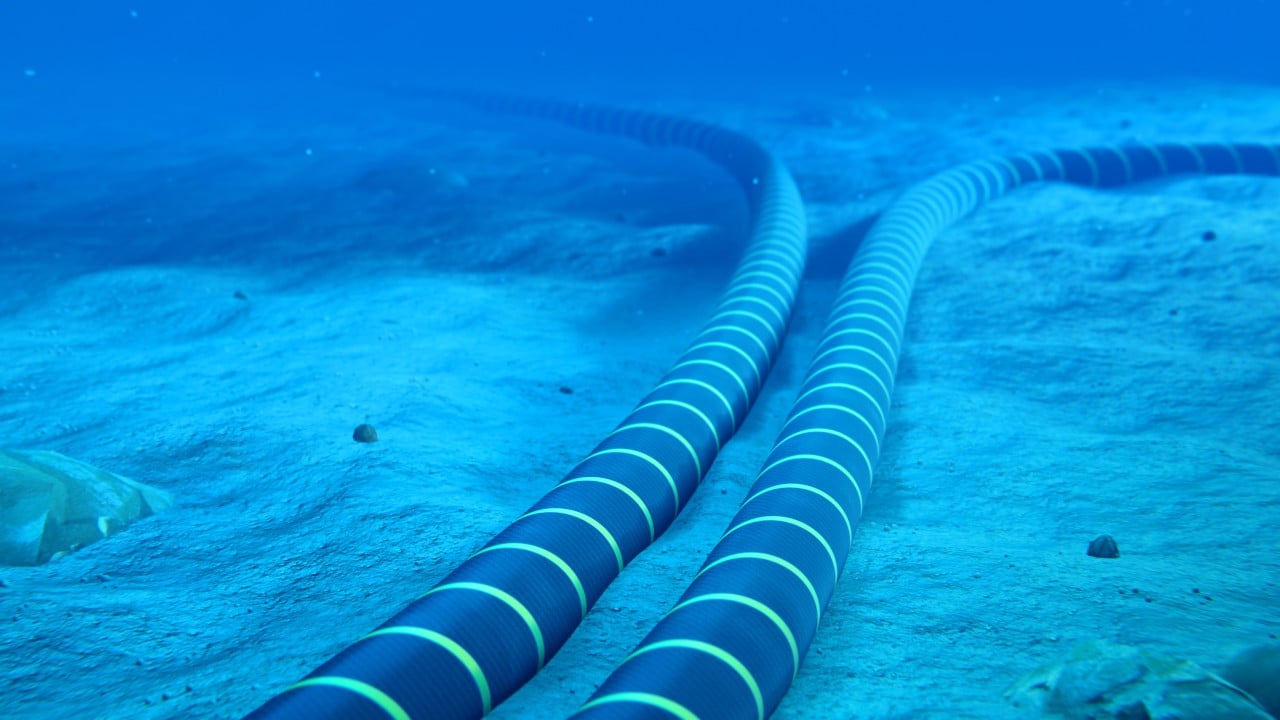
You don't think about the ocean floor when you send an email. You assume your digital life travels through the air via satellites. It doesn't. Over 99 percent of international data traffic moves through thin, fragile fiber-optic lines resting directly on the dark seabed.
Right now, these invisible arteries of global commerce are facing an unprecedented security crisis.
Governments from Washington to Beijing are pointing fingers over who poses the real threat to subsea infrastructure. With rising fears of maritime sabotage and ambiguous grey-zone tactics, the conversation has shifted from routine maintenance to existential digital defense.
The Fragile Foundation of Global Connectivity
Think of a submarine cable as a high-speed garden hose. Despite carrying trillions of dollars in financial transactions and powering global communications every single second, these lines are remarkably easy to disrupt. They are typically laid straight on the ocean floor or buried barely a meter deep in shallow coastal waters.
That leaves them wide open to external hazards. Natural disasters like earthquakes and underwater landslides snap them regularly. Heavy commercial shipping traffic poses an even bigger constant threat. A single dropped ship anchor can slice through a multi-million-dollar cable in seconds.
However, accidental damage is no longer the primary concern for military strategists. When communication lines near flashpoints like Taiwan experience dozens of sudden cuts over a short span, intelligence agencies stop trusting coincidence.
Gray Zone Tactics And Deniable Disruptions
Sabotage on the ocean floor looks entirely different from traditional warfare. It operates in what experts call the gray zone—actions aggressive enough to cripple an adversary's digital infrastructure, but deniable enough to avoid triggering an outright military retaliation.
When commercial fishing vessels or specialized research ships linger over key routing chokepoints, proving malicious intent is nearly impossible. Was it a careless anchor drop or a targeted grey-zone maneuver? Because the line between an accident and an attack is blurred, defenders struggle to respond. You can't park a warship over every single mile of fiber-optic cable across the globe.
This reality has forced nations to rethink maritime security from the ground up.
The Great Power Clash Over Cable Security
The United States and its allies have grown increasingly vocal about the risks of letting potential adversaries control or construct vital digital highways. Washington has actively blocked specific firms linked to state-backed technology initiatives from building regional subsea projects, citing acute national security vulnerabilities.
On the flip side, Beijing has pushed back hard against what it characterizes as the over-securitization of civilian infrastructure. Chinese officials maintain that their enterprises play a constructive role in global cable installation and maintenance, warning that geopolitical posturing threatens international market rules and open data connectivity.
Yet, reports from institutions like the Center for Strategic and International Studies highlight a deeper structural worry: a heavy reliance on specialized cable-repair vessels controlled by strategic competitors. If a crisis erupts, access to those repair fleets could be restricted, leaving severed regions digitally isolated for months.
Protecting The Invisible Web
Securing the world's underwater network requires practical, heavy-duty engineering solutions rather than diplomatic talking points.
Network operators and governments are slowly moving toward several concrete fixes:
- Deeper Burial: Burying cables significantly deeper in high-risk shallow zones to keep them safe from commercial anchors.
- Armoring Up: Wrapping vital lines in heavy steel wire layers to resist physical tampering.
- Route Redundancy: Laying entirely separate paths so that a single severed link doesn't plunge an entire region into offline isolation.
- Smart Monitoring: Deploying real-time acoustic sensors and electronic tracking to detect unauthorized dragging or cutting activity instantly.
The ocean floor is no longer a neutral, peaceful expanse. It is the new frontier of great power competition. If we don't harden these systems now, the next global blackout won't come from a software bug—it will come from the seabed.
Undersea Cable Threats: Taiwan, China and the Global Risk of Digital Disruption
This video explores how growing tensions and gray-zone tactics impact the security and resilience of critical submarine infrastructure.
http://googleusercontent.com/youtube_content/1