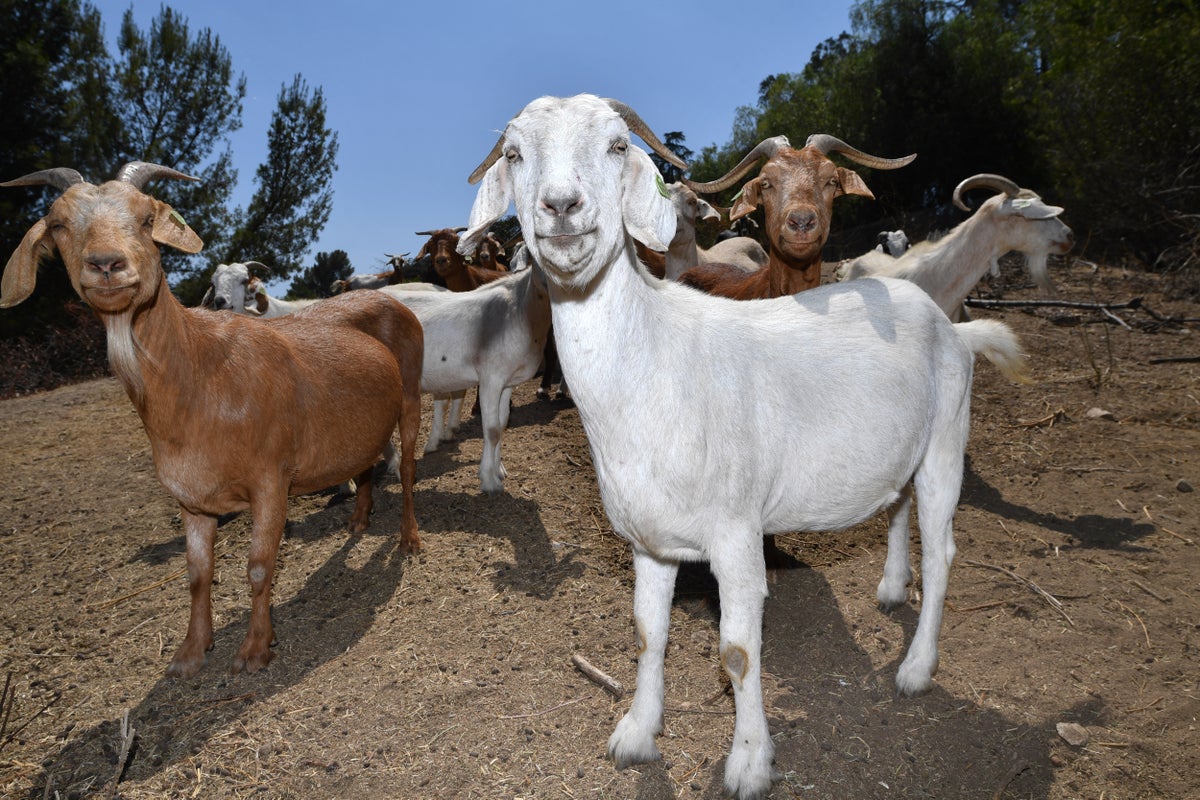
Southern California fire season doesn't care about movie sets, blockbusters, or theme park thrills. When the dry season hits, the steep, brush-covered hills surrounding Universal Studios Hollywood turn into a literal powder keg. Rather than relying entirely on heavy machinery or chemical weed killers, the famous studio turns to an army of hundreds of hungry goats every year to tackle its wildfire risk.
It sounds like a quirky marketing stunt. It isn't. It's a calculated, highly effective method of vegetation management tailored to terrain that humans and tractors struggle to touch.
The Reality of Southern California Fire Risks
If you live in or follow Southern California, you know the stakes. Major wildfire events—such as the devastating urban-edge fires that have swept through Los Angeles county over recent years—destroy thousands of structures and scorch hundreds of thousands of acres. The formula for disaster is simple: dry grass, fine brush, and ladder fuels.
Fine fuels include grass, weeds, and small twigs measuring under a quarter of an inch. These are the materials that catch a spark instantly and carry a fire rapidly across a landscape. When overgrown brush sits on steep hillsides, it acts as a ladder, allowing a low-level ground fire to climb straight up into heavy tree canopies.
Clearing that material is non-negotiable. But doing it safely on the treacherous slopes of a working studio backlot is a logistical nightmare.
Why Heavy Machinery Fails Where Goats Succeed
You can't easily drive tractors or heavy mowers up a 45-degree dirt incline behind the Bates Motel on the studio tour. Human work crews face their own hazards, including treacherous footing, rattlesnakes, and dense patches of poison oak. Hand-clearing crews also run into a disposal problem: once you cut down acres of dry brush, what do you actually do with it? Hauling it away costs a fortune. Spraying chemical herbicides creates runoff issues that threaten local watersheds.
Enter the goats.
Every year, a herd of roughly 400 goats is brought onto the Universal Studios property. They don't mind the steep angles. In fact, their cloven hooves and agile frames allow them to scamper up rocky inclines and into narrow ravines that humans can barely reach.
They are natural browsers rather than simple lawn grazers. They prefer woody brush, dry weeds, and low-hanging leaves over standard flat grass. A single goat can consume several pounds of vegetation daily, completely stripping away the fine fuels that feed fast-moving flames.
Better yet, they digest the material right on the spot. They leave no piles of dead brush behind to clear away, and their hooves naturally churn organic matter into the soil rather than packing it down into hardpan dirt.
Protecting the Herd on the Backlot
Managing 400 hungry animals in the middle of a massive entertainment and studio complex requires some oversight. The herd doesn't just roam free without a security detail. Dedicated livestock guardian dogs—often breeds like Great Pyrenees or mixes specifically trained for flock defense—stay embedded with the goats around the clock. These dogs protect the grazing animals from local predators like coyotes.
For visitors taking the famous Studio Tour, catching a glimpse of the goats chomping away near the hillsides close to the Hollywood sign or the backlot sets has become an unexpected seasonal highlight.
What Targeted Grazing Can and Cannot Do
Let's be completely honest about the limits of the practice. Goats are fantastic tools, but they aren't magic.
Fire scientists and land management experts emphasize that targeted grazing is only one layer of a proper defense. Goats do not chop down mature trees, they don't dig bare mineral firebreaks, and they won't make a property entirely fireproof. Some plants are toxic or unpalatable to them, meaning human crews still have to step in for specific invasive species. Furthermore, vegetation grows back after the seasonal rains, meaning the goats have to return year after year.
Even with those limitations, the science holds up. Research published across various ecological journals points to targeted grazing as a low-cost, chemical-free way to suppress fine fuels and break up fuel ladders.
Universal Studios relies on this method because it works. It cuts wildfire risk, protects critical infrastructure, avoids toxic runoff, and handles rugged terrain better than any bulldozer ever could.
Next time you look up at a dry California hillside during fire season, remember that the best technology for the job often has four legs, floppy ears, and an endless appetite for brush.
Every year these hardworking little landscapers return! #UniversalStudiosHollywood #StudioTour
This short video provides an up-close look at the hundreds of goats deployed on the steep hillsides around Universal Studios Hollywood to clear dry brush ahead of fire season.
http://googleusercontent.com/youtube_content/1