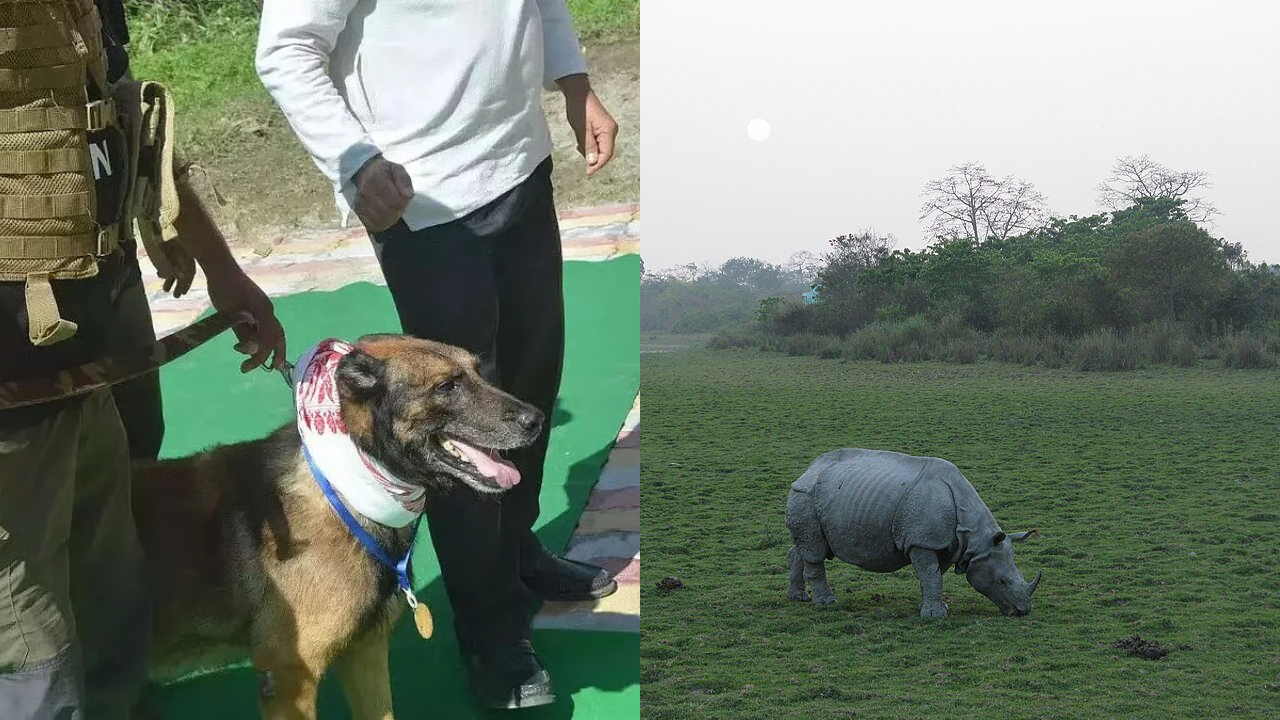
When poachers slip into the dense grasslands of Kaziranga National Park under the cover of darkness, human footprints vanish almost immediately in the thick mud and towering elephant grass. For decades, forest guards faced an impossible disadvantage trying to hunt down armed criminal gangs tracking the iconic one-horned rhinoceros. Traditional patrols meant guessing escape routes or waiting for tip-offs that usually came too late. Then came a four-legged operative named Zorba who completely changed how wildlife crime was fought in Assam.
Zorba wasn't just another pet or a casual addition to park patrols. As India's very first dog deployed specifically for anti-poaching duty, this Belgian Malinois proved that high-stakes conservation required more than binoculars and patrol boots. Handled by trained specialists through the biodiversity conservation organisation Aaranyak, Zorba spent an eight-year career doing what humans simply couldn't do alone: sniffing out hidden suspects, recovering crucial evidence from deep ponds, and tracking bloody trails across miles of unforgiving terrain. For another view, consider: this related article.
How a Belgian Malinois Became Assam Secret Weapon
The K9 unit launched in 2011 specifically to address the alarming surge in rhino poaching that threatened Assam's most treasured wildlife sanctuaries. Kaziranga, Orang National Park, and Pobitora Wildlife Sanctuary needed an edge. Belgian Malinois dogs are famous worldwide for their relentless energy, unmatched stamina, and razor-sharp focus. Zorba embodied every single one of those traits.
His first handler, Goura Baidya, often noted that once Zorba caught a scent, he simply wouldn't stop. Rain, dense brush, or swampy water didn't matter. The dog locked onto a target with absolute determination. Related analysis on the subject has been shared by Al Jazeera.
Consider what actually happened during some of his most legendary deployments. In one standout investigation, a critical piece of evidence—a camera trap containing active photographs of poachers—ended up dumped inside a murky pond. Local authorities had no way of knowing where to look until Zorba arrived. He navigated the water's edge, picked up the lingering scent, and successfully guided his handlers straight to the submerged device. Those recovered photos directly led to key identifications and subsequent arrests.
In another intense operation, an injured poacher fled into the dense brush, leaving behind nothing more than a faint trace. Zorba picked up the scent and relentlessly tracked the blood trail for nearly 1.5 kilometers through brutal terrain until forest officials caught up with the suspect.
Breaking Down Numbers and Expanding the K9 Unit
By the time Zorba retired from active duty in December 2019, his operational footprint was massive. He had assisted in numerous successful tracking missions, ultimately contributing to the apprehension of over 60 poachers across his career. Most of these suspects operated in Kaziranga, though his reputation pulled him into high-priority cases across other vulnerable parks in the region.
His success forced a massive shift in wildlife protection strategy across India. Conservation leaders realized that reactive patrols were failing. What they needed was a proactive, scent-driven defense system. What started as a lonely experiment with a single dog in 2011 gradually expanded. By August 2022, Aaranyak’s specialized K9 unit had grown to seven active dogs with more in training.
Dr. Bibhab Kumar Talukdar, Aaranyak's secretary general and chief executive, rightly hailed Zorba as a true conservation hero. When Zorba passed away in Guwahati in November 2022 following age-related health complications, he left behind a legacy that permanently altered Indian wildlife enforcement.
Beyond the Badge: The Reality of Working K9s
People love to picture working dogs as relentless action heroes twenty-four hours a day, but the reality on the ground is much more grounded. Behind every successful tracking operation sat handlers like Mrigen Das and Anil Kumar Das, who managed the daily care, specialized training drills, and quiet downtime that kept these animals sharp.
Even the toughest anti-poaching dog had simple pleasures. Handlers often remembered Zorba not just for the criminals he tracked or the miles he covered in the swamp, but for his absolute obsession with playing fetch with a simple ball. That playful contrast defined his life off duty. He spent his final years resting at the K9 unit center, receiving formal honors like an Independence Day citation and traditional Assamese gamosa in August 2022 just months before his death.
If you want to support modern wildlife protection efforts in regions like Assam, look directly at grassroots organizations funding these specialized anti-poaching units. Supporting frontline NGOs like Aaranyak ensures that wildlife crime units get the ongoing funding they need to train the next generation of tracking dogs.


