We love to talk about cities as engines of growth. Economists point out that metropolitan areas generate over eighty percent of global gross domestic product, making them look like magical zones of infinite wealth.
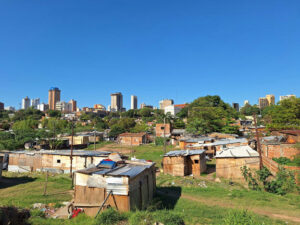
It is a nice fairy tale. But step outside the gleaming downtown financial districts and into the sprawling informal settlements surrounding Nairobi, Mumbai, or Lima, and that economic miracle vanishes.
Urbanization doesn't automatically lift people out of poverty. Too often, it just concentrates misery into tight geographic spaces, creating modern slums where generations stay stuck on the margins.
The Myth of the Automatic Urban Lift
For decades, conventional economic theory argued that moving from a subsistence farm to a bustling city was a guaranteed ticket up the socioeconomic ladder. You pack your bags, head to the nearest metropolis, find a job in a factory or office, and start building a middle-class life.
That script worked for parts of nineteenth-century Europe and North America. It doesn't work today for most of the Global South.
Modern urban growth is happening at a blistering pace without the corresponding industrial safety nets. Millions of people arrive in cities every single year only to find that formal jobs are scarce. Instead, they enter the informal economy. They become street vendors, casual laborers, or gig workers with zero job security, no health insurance, and wages that barely cover daily food costs.
When up to seventy-five percent of workers in Latin America and nearly ninety-seven percent in parts of sub-Saharan Africa toil in the informal sector, the urban promise breaks down completely. You aren't participating in a dynamic market. You're just trying to survive day-to-day on the edge of legality.
How Cities Deepen Inequality
Cities amplify divides rather than erasing them. When municipal governments fail to plan for mass migration, the physical layout of the city starts punishing the poor.
Housing is the most obvious battleground. Real estate speculation drives land prices through the roof. Low-income families get pushed further and further out toward the urban periphery, far from jobs, schools, and hospitals.
Consider what happens next. You live two hours away from your cleaning job because that is where you could afford a makeshift corrugated-iron shack. You spend half your daily earnings on crowded, unregulated minibus transport. One sudden transit fare hike or a minor health emergency wipes out your savings, forcing you deeper into debt.
Urban centers also fail on basic infrastructure. According to UN data, hundreds of millions of urban slum dwellers lack safe drinking water and adequate sanitation. Living conditions in these neighborhoods invite communicable diseases, disproportionately harming children and trapping families in recurring cycles of illness and medical debt.
Governments often respond by treating these informal settlements as temporary eyesores. They look the other way or implement forced evictions, destroying communities and pushing vulnerable residents into even worse precarity.
What Actually Works to Reduce Urban Poverty
If we want cities to genuinely reduce poverty instead of deepening it, we have to ditch trickle-down urban economics. Growth alone isn't enough. Policy choices dictate whether a city benefits everyone or just the elite.
Legal Recognition and Land Rights
You cannot build a stable life if the government pretends you do not exist. Millions of urban residents lack formal identity papers or land titles. Without a legal address or recognized tenure, you can't open a bank account, secure a formal small-business loan, or demand that the city connect your neighborhood to the electrical grid.
Progressive cities are shifting toward in-situ upgrading. Instead of bulldozing slums, municipal governments are granting property rights, installing basic water pipes, paving roads, and building community-led sanitation blocks right where people already live.
Investing in the Informal Economy
Stop treating street vendors and informal enterprises as criminals. In most developing cities, informal markets are the primary economic engine for the working class.
Smart urban policies focus on formalizing these workers gradually. That means providing secure vending spaces with proper lighting and waste management, offering micro-grants that don't require traditional credit scores, and extending basic health and accident insurance to independent laborers.
Transit Justice and Spatial Integration
Transportation policy is anti-poverty policy. If low-income neighborhoods are disconnected from job centers, employment rates drop.
Cities must subsidize public mass transit and prioritize rail or bus rapid transit corridors that link peripheral housing directly to commercial hubs. When a worker can commute cheaply and reliably in thirty minutes instead of two hours, their entire economic outlook changes.
Moving Forward
Urbanization is unstoppable. By 2050, more than two-thirds of the human population will live in urban areas, with the vast majority of that growth concentrated in developing nations.
We can either let these future cities turn into mega-slums of permanent crisis, or we can redesign them through deliberate, inclusive policymaking. The tools exist. What we need is the political courage to use them.
Start by supporting local grassroots organizations that fight for tenant rights and basic municipal services in your region. Demand that your local leaders prioritize infrastructure investments in marginalized neighborhoods rather than luxury downtown developments. Urban poverty is a human-made policy failure, and human policy choices can fix it.