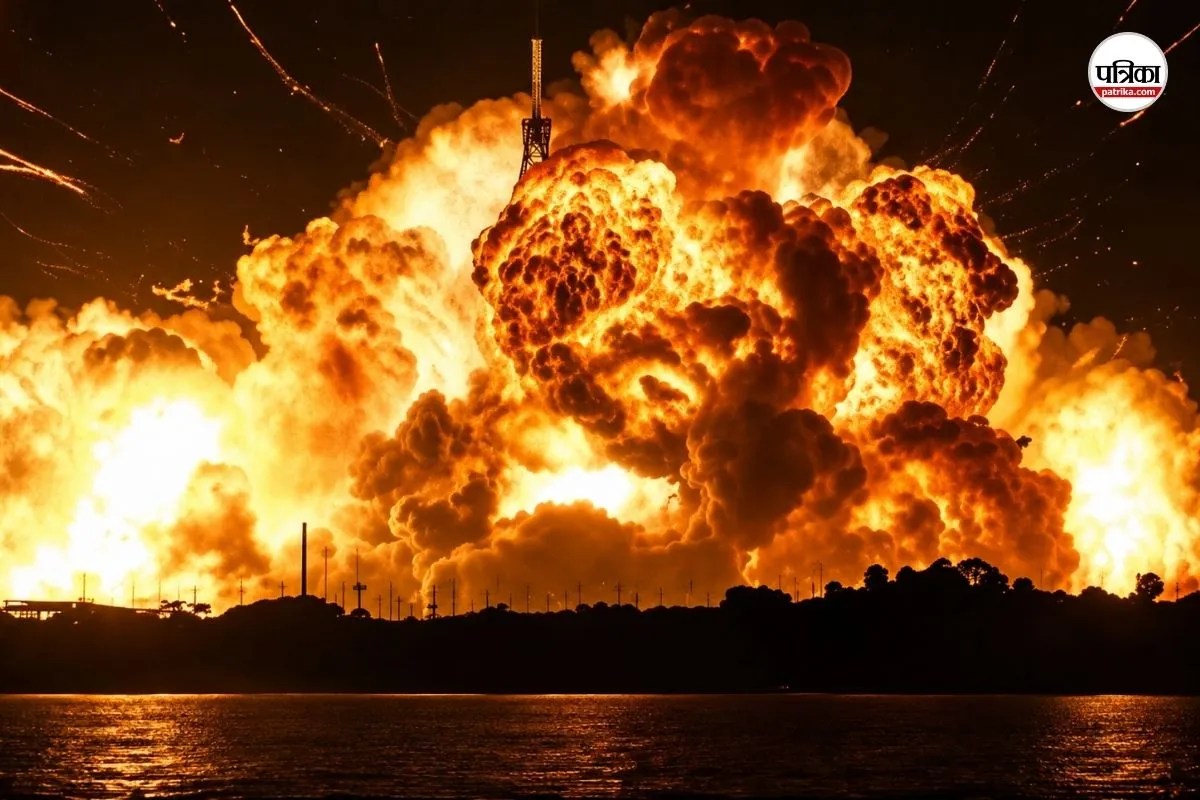
The fragile truce in the Middle East has completely shattered. If you thought the temporary ceasefire agreed upon in June would bring lasting peace, the latest military escalation proves otherwise. The United States has expanded its air campaign deep into Iranian territory, striking targets near Tehran and hitting ballistic missile sites in Semnan province. In response, Tehran has launched a coordinated barrage of missiles and drones targeting Bahrain, Kuwait, and Jordan—nations hosting American forces.
We are no longer looking at minor border skirmishes. This is a rapidly widening regional war with global economic implications, and the center of gravity remains the highly strategic Strait of Hormuz.
The Blockade is Back and the Gloves Are Off
The current cycle of violence was triggered by the U.S. decision to reimpose its naval blockade on Iranian ports. Originally put in place in April, the blockade was temporarily lifted during a 60-day negotiation window. But those diplomatic talks stalled. With Iran continuing to target shipping routes, Washington decided to enforce the blockade once again, attempting to choke off Iran's oil exports.
The U.S. military is not just holding defensive positions. On Wednesday, U.S. Central Command (CENTCOM) conducted multiple waves of airstrikes, uncharacteristically continuing the bombardment during daylight hours to signal an increased operational tempo.
The U.S. military even opened fire on a Curacao-flagged oil tanker, the Belma, which was sailing toward Iran's primary export terminal on Kharg Island. After the merchant ship reportedly ignored multiple warnings, a U.S. aircraft fired Hellfire missiles directly into its smokestack, disabling the vessel.
Tehran Strikes Back at Regional U.S. Allies
Iran's response to the renewed blockade and expanded airstrikes was swift and geographically widespread. Instead of confining its retaliation to maritime skirmishes, the Islamic Revolutionary Guard Corps (IRGC) launched targeted missile and drone attacks against neighboring Gulf countries hosting American military installations.
- Bahrain: Air raid sirens blared across the country as the interior ministry urged residents to seek shelter. Iran claimed successful strikes on the Sheikh Isa Air Base, specifically targeting a drone command-and-control center, helicopter maintenance units, and a hangar.
- Kuwait: Air defenses actively engaged incoming threats. Kuwaiti authorities reported intercepting multiple drones and missiles, though Iran claimed its strikes managed to hit radar systems and a Patriot air defense battery at the Ali Al Salem Air Base.
- Jordan: Known for its strong defensive posture, the Jordanian military shot down incoming Iranian missiles that breached its airspace.
This regional retaliation is a deliberate strategy. Tehran is sending a clear message to Gulf Arab states: if you allow the U.S. to operate from your soil to attack Iran, your own infrastructure will be in the crosshairs.
The High Stakes of the Strait of Hormuz
The Strait of Hormuz is the ultimate choke point for global energy. When the conflict initially flared up earlier this year, Iran effectively closed the strait, instantly driving up global prices for oil, fertilizer, and consumer goods.
Tehran understands the immense leverage it holds here. The IRGC has explicitly threatened to halt all energy exports leaving the Persian Gulf if the U.S. blockade continues. Their stance is simple: the export of oil and gas from this region will be for everyone, or it will be for no one.
For the U.S. administration, this presents a severe political challenge. Rising global energy costs threaten domestic economic stability, making a forced reopening of the waterway a priority. However, naval experts warn that completely securing the Strait of Hormuz against asymmetrical Iranian threats—like one-way attack sea drones and anti-ship missiles—would require a massive military commitment, potentially involving tens of thousands of ground troops.
What Lies Ahead
Despite the intense kinetic exchanges, diplomatic backchannels haven't completely closed. U.S. officials maintain that a broader settlement is still possible, even as they ramp up the military pressure. Concurrently, Iranian leadership warns that any further escalation against civilian infrastructure, like bridges or power grids, will result in catastrophic retaliatory strikes across the region.
With U.S. strikes moving further north into the Iranian heartland and Tehran demonstrating its capability to hit multiple Gulf nations simultaneously, the risk of miscalculation is at an all-time high.
Monitor global energy market reactions closely over the coming days. The stability of oil prices will serve as the most accurate barometer for how severely this conflict is disrupting the maritime trade routes in the Gulf. Keep a close watch on official statements from regional hubs like Kuwait and Bahrain regarding potential disruptions to commercial aviation and local security protocols.