The ink on the US-Iran memorandum of understanding isn't even dry, and the entire framework is already falling apart. Washington and Tehran spent months quiet-talking their way toward a 60-day roadmap to end their proxy war, get oil moving through the Strait of Hormuz, and stop the bleeding. But diplomacy in a vacuum doesn't work when guns are firing on the ground.
Today, the highly anticipated face-to-face implementation talks in Bürgenstock, Switzerland, were abruptly called off. US Vice President JD Vance canceled his flight. The Swiss Foreign Ministry confirmed the postponement with vague nods to logistics, but everyone knows the real reason.
You can't talk peace in a Swiss resort when your closest ally and your main proxy are blowing each other up.
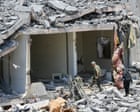
Overnight, the Israel Defense Forces (IDF) pounded southern Lebanon and the Bekaa Valley, hitting more than 80 targets. Lebanon's health ministry reported at least 18 people dead and 33 wounded. On the flip side, Hezbollah forces launched a brutal counter-offensive near Nabatieh, killing four Israeli soldiers, including a lieutenant colonel. It's the deadliest day for the IDF since this fragile truce framework was announced, and it exposes the massive structural flaw of the Washington-Tehran deal: the people actually doing the fighting never signed it.
The Ghost at the Negotiating Table
The fundamental mistake the White House made was assuming they could negotiate a Middle East peace deal while ignoring Israeli Prime Minister Benjamin Netanyahu.
Israel isn't a party to the US-Iran MoU. Netanyahu, who faces a brutal reelection campaign later this year, has zero interest in pulling back. Just yesterday, he declared a newly established "security zone" encompassing hundreds of square miles of southern Lebanon. He's dug in. Literally.
The wording of the interim US-Iran agreement calls for a cessation of hostilities on all fronts, including Lebanon, and demands respect for Lebanese sovereignty. Iran explicitly interprets this as a mandate for an immediate Israeli withdrawal. Netanyahu's response has been a flat, uncompromising refusal.
Inside Israel, the political temperature is boiling. Right-wing National Security Minister Itamar Ben-Gvir openly trashed the American diplomatic efforts today, stating, "With all due respect to the Americans, Israel must make it clear to the entire world that the blood of our sons and the security of our citizens are not up for bargaining. All of Lebanon must burn."
When your primary regional ally is promising to burn a neighboring country to the ground, your peace talks are effectively dead in the water.
Tehran Playing Hardball
Don't mistake Iran for a passive victim here. They're leveraging the chaos beautifully.
The initial leak about the Swiss talks being derailed didn't come from Washington or Berne. It came from Al Mayadeen, a pro-Hezbollah news network in Beirut, which reported that Tehran was intentionally withholding its delegation because of Israel's actions.
Iran's Supreme Leader, Mojtaba Khamenei, gave conditional permission for the preliminary deal, but he's under intense domestic pressure. The memory of the 2015 JCPOA nuclear collapse hangs heavy in Tehran. Khamenei made it clear that Iran won't accept "excessive demands" from the Americans. By stalling the technical talks, Iran's chief negotiator, Mohammad Bagher Ghalibaf, is sending a message: if Washington can't control Israel, Tehran won't control Hezbollah.
Meanwhile, Iran is already pocketing the wins. US Central Command (CENTCOM) just lifted its naval blockade on Iranian ports, which had been locking down the region since April. Marine traffic data shows commercial vessels are already moving through the Strait of Hormuz again. Yet, almost immediately after the blockade was lifted, Tehran announced plans to slap its own maritime fees on ships passing through the strait under its "Persian Gulf Strait Authority."
They're taking the economic relief while giving up absolutely nothing on the security front.
Washington's Disappearing Leverage
The Biden-Trump transition dynamics and Vance's presence as the lead negotiator complicate this even further. Vance tried to salvage the situation by telling Israeli critics that Donald Trump is their "only ally left in the world," trying to bully them into compliance. It's not working.
US Defense Secretary Pete Hegseth tried to play the tough guy at a NATO meeting in Brussels, threatening that the US would immediately reimpose the naval blockade and restart military action if Iran steps out of line. But those threats sound incredibly hollow when the current violation is being driven by a combination of Israeli airstrikes and Hezbollah ambushes.
The French are already panicking. Foreign Minister Jean-Noël Barrot publicly begged Israel to respect the ceasefire and demanded that the US exert actual pressure on Jerusalem. But Washington has historically shown it won't, or can't, force Netanyahu's hand when IDF soldiers are coming home in body bags.
What Happens Next
Forget the 60-day roadmap. The August 17 deadline for a final treaty looks completely unrealistic right now. If you're watching this crisis escalate, watch these three specific pivot points over the next 48 hours instead of listening to White House press briefings:
- The Nabatieh Foothills: If the IDF pushes deeper into this flashpoint to avenge their fallen lieutenant colonel, Hezbollah will retaliate with heavier rocket volleys into northern Israel, rendering the "ceasefire" a total myth.
- The Strait of Hormuz Tolls: Watch whether Western commercial ships actually pay Tehran's new maritime fees. If the US Navy steps back in to dispute those fees, the economic core of the MoU collapses instantly.
- Netanyahu's Coalition: Look for signs of Netanyahu bending to Ben-Gvir's "scorched earth" rhetoric. If Israel launches deeper strikes into the Bekaa Valley or Beirut, the Swiss talks won't just be postponed—they'll be permanently cancelled.
Diplomacy looks great in a Swiss mountain resort, but the reality of the Middle East is decided in the mud of southern Lebanon. Right now, the guys with the guns are winning, and the diplomats are stuck on the tarmac.

:max_bytes(150000):strip_icc()/opera-garnier--paris--france--europe-173294974-5a2d8e5b4e4f7d0037eef37d.jpg)