Washington loves a show of force. When three American soldiers died in a drone attack at a remote base in Jordan, the response was entirely predictable. The US military launches airstrikes, the Pentagon holds a press briefing, and politicians claim they sent a clear message. They call it swift punishment. They call it deterrence.
It does not work.
The latest rounds of US military airstrikes targeting Iran-backed militias in Iraq and Syria show the limits of American airpower. Dropping precision bombs from B-1 bombers looks impressive on cable news networks. It makes for strong headlines. But it completely misses the underlying geopolitical reality of the region. If the goal is to protect American troops and stop regional escalation, this strategy has already failed.
The Illusion of Military Deterrence
Military strategists love talking about deterrence. The idea is simple. You hit the enemy hard enough that they decide the cost of fighting back is too high.
But proxy warfare does not follow standard military logic. The Islamic Resistance in Iraq, Kataib Hezbollah, and the Houthis in Yemen do not operate like traditional state armies. They do not have massive, centralized military bases that you can wipe out in a single night. They use asymmetric tactics. They hide launchers in civilian areas, move supplies through underground tunnels, and rely on cheap, disposable technology.
A single one-way attack drone can cost less than twenty thousand dollars to manufacture. The US military fires interceptor missiles that cost millions of dollars each just to shoot them down. When the US launches retaliatory strikes, it often hits empty warehouses or temporary command centers. The militias know the strikes are coming. They move their top commanders. They hide their most valuable equipment.
The Pentagon frequently announces that it hit dozens of targets with high precision. That might be true technically. The bombs hit the exact coordinates they were programmed to hit. But destroying a concrete building does not destroy the ideology or the supply lines feeding these groups.
The Logistics of the Axis of Resistance
To understand why these airstrikes fall short, you have to look at how Iran supplies its network. This is not a top-down corporate structure. It is a loose coalition bound by shared strategic goals and ideological alignment.
Tehran provides the blueprints, the funding, and the advanced components like guidance systems and microchips. The local militias handle the assembly and deployment. This decentralized manufacturing process means you cannot stop the flow of weapons by bombing a few depots in Syria.
Look at the geography. The border region between Iraq and Syria, particularly around Al-Bukamal, is a massive smuggling corridor. The US has bombed this exact area repeatedly over the last decade. Every time the smoke clears, the trucks start moving again within days.
The militias have spent years building a resilient infrastructure. They dug deep tunnels into the mountains. They embedded themselves within local communities. When American ordnance drops, it creates a temporary pause, not a permanent halt.
What Actually Happened in the Recent Strikes
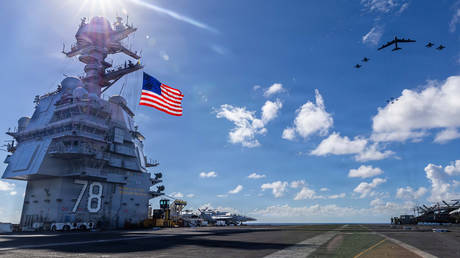
During the latest escalation, the US used long-range bombers flown directly from the American mainland. The military hit over eighty individual targets across Iraq and Syria. The administration wanted to show it could strike anywhere in the world at a moment's notice.
The immediate result was a lot of broken concrete and secondary explosions. The Pentagon claimed these secondary explosions proved they hit ammunition dumps. That is likely true. But it did not stop the rocket attacks on US installations. Within hours of the strikes, local militias launched fresh mortars toward American bases in eastern Syria.
This immediate retaliation proves that the militias are not intimidated by the scale of US airpower. For these groups, getting bombed by the world's superpower is actually a recruitment tool. It builds their credibility. It justifies their existence as a resistance movement.
The political fallout inside Iraq is even worse for Washington. Every time the US drops bombs inside Iraq without the explicit permission of the Baghdad government, it strains the diplomatic relationship. Iraqi politicians face massive public pressure to expel the roughly twenty-five hundred US troops currently stationed in the country. If those troops are forced to leave, it hands a massive strategic victory to Iran without Tehran having to fire a single shot.
The Escalation Trap Facing Washington
The White House finds itself stuck in a dangerous loop. If they do nothing after American troops are killed, they look weak. It invites more attacks. If they strike back too hard, they risk triggering a full-scale regional war that could draw in thousands more US service members.
So they choose the middle option. They conduct highly choreographed, telegraphed airstrikes designed to inflict damage on proxies while avoiding direct hits on Iranian soil or Iranian regular military personnel.
Tehran understands this dynamic perfectly. They know exactly where the American red lines are. They push right up to the edge, back off slightly when the pressure gets too high, and then resume their strategy of death by a thousand cuts.
This calculated ambiguity leaves US troops in the region exposed. Bases like Tower 22 in Jordan or the Al-Asad airbase in Iraq are essentially sitting ducks. They are defended by air defense systems that are excellent but not infallible. A single drone slipping through the defensive net can cause catastrophic casualties, forcing the US into another round of retaliatory bombings.
Moving Past the Cycle of Violence
Stopping this cycle requires moving away from the belief that every geopolitical problem can be solved with a joint direct attack munition. Airpower is an effective tool for destroying conventional military hardware, but it is an incredibly blunt instrument for managing complex proxy conflicts.
The real leverage lies in cutting off the financial and political oxygen that keeps these groups alive. This means tighter enforcement of maritime sanctions to stop the flow of illicit oil shipments that fund these groups. It means working closer with regional allies to secure borders and block smuggling routes. Most importantly, it requires a clear-eyed reassessment of the US military footprint in the region.
Holding small, poorly defended outposts in isolated desert locations does not project strength. It creates vulnerabilities. If those troops do not have a clear, achievable mission that serves a vital national security interest, keeping them there just provides targets for proxy forces.
The next step is not planning the next bombing run. It is securing the bases that are currently vulnerable and resetting the diplomatic strategy to isolate the threat economically. Stop counting the number of targets hit and start looking at the actual strategic outcome.