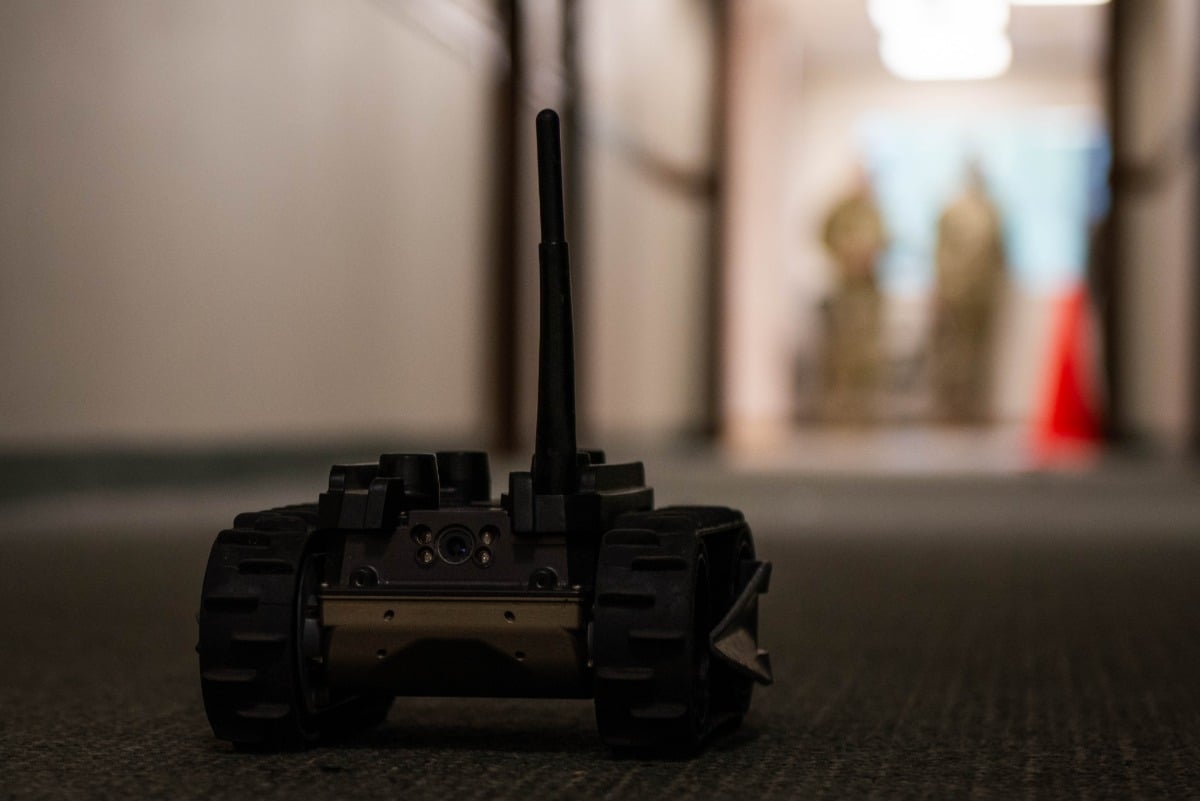
High-tech border warfare just got a lot smaller in North Africa. The US government recently greenlit the transfer of 110 micro-reconnaissance ground robots to Tunisia, marking a sharp pivot in how the two nations approach regional security. If you picture massive, heavy-treaded tanks or weaponized aerial drones when you think of modern defense contracts, you're looking at the wrong scale. These new assets are small enough to throw over a wall with one hand.
This shipment isn't a random gesture. It fits into a broader, highly calculated push by the US to shore up its major non-NATO allies in the region. Between regular large-scale exercises like African Lion and recent shipments of armored HMMWVs, Washington is aggressively upgrading Tunisia's tactical capabilities.
The sudden arrival of these 110 micro robots signals that the frontline of border control has moved from heavy hardware to hyper-portable tech.
The Reality of Throwing Tech Into a War Zone
Let's look closely at what these micro ground units actually do. The delivery focuses heavily on micro-robot systems like the Throwbot 2, which are designed for immediate, close-range scouting.
Weight: 1.3 lbs (0.6 kg)
Drop Resistance: 30 feet (9 meters) onto bare concrete
Payload: Integrated night-vision cameras and audio sensors
These devices are built out of aircraft-grade titanium and high-durability polymers. An infantryman can literally pull one off their vest, pull a pin, and hurl it onto a roof, through a shattered window, or down an embankment. Once it lands, the operator uses a handheld control unit to drive the two-wheeled pod through dirt, mud, and debris, streaming real-time video and audio back to the squad.
It completely removes the deadliest blind spot in infantry operations: walking around a corner completely blind.
Turning the Tide Along the Libyan Border
Why Tunisia, and why now? The answer lies in the country's brutal geography. Tunisia shares a chaotic 460-kilometer border with Libya and another rugged frontier with Algeria. These borders are highly active corridors for weapon smuggling, human trafficking, and splinter groups linked to ISIS and Al-Qaeda in the Islamic Maghreb (AQIM).
Traditional surveillance tools struggle here. Fixed radar towers can't see into deep desert ravines or jagged mountain passes. Aerial reconnaissance planes can map the wide open spaces, but they can't tell you who is hiding inside a concrete compound or a cave network.
Tunisian troops have spent years fighting asymmetric threats in places like the Chaambi Mountains. In these tight environments, heavy armored vehicles are just big targets. By scattering over a hundred micro-reconnaissance robots across frontline units, the Tunisian military can clear buildings, scout out caves, and inspect suspected ambush points without risking a single human life.
The Bigger Geopolitical Picture
This robot transfer is part of a massive, long-term US investment in North African stability. The United States has poured well over $1 billion into security cooperation with Tunis.
Just look at the recent timeline of American hardware flowing into the country:
- Four advanced Textron C-208EX reconnaissance aircraft to map borders from above.
- 48 armored HMMWVs to give infantry mobile, protected firepower on rugged terrain.
- The debut of next-generation tactical ground sensors during recent joint military drills.
The 110 micro-reconnaissance units act as the connective tissue for all this gear. The planes spot a gathering from 10,000 feet, the armored vehicles rush troops to the scene, and the micro robots clear the actual structures. It creates a closed loop of situational awareness.
Actionable Next Steps for Tracking Regional Defense Tech
If you track defense procurement or geopolitical shifts in North Africa, don't focus entirely on big-budget fighter jets or missile defense systems. The real shift is happening at the squad level.
Keep a close eye on upcoming joint training exercises like African Lion. Watch how Tunisian border units integrate these micro-UAVs and micro-UGVs into their daily patrols along the desert line. The data gathered from these real-world deployments will likely dictate how the US and its allies outfit light infantry units across the globe over the next decade. The era of the disposable, throwable robot isn't coming; it is already operating on the ground.