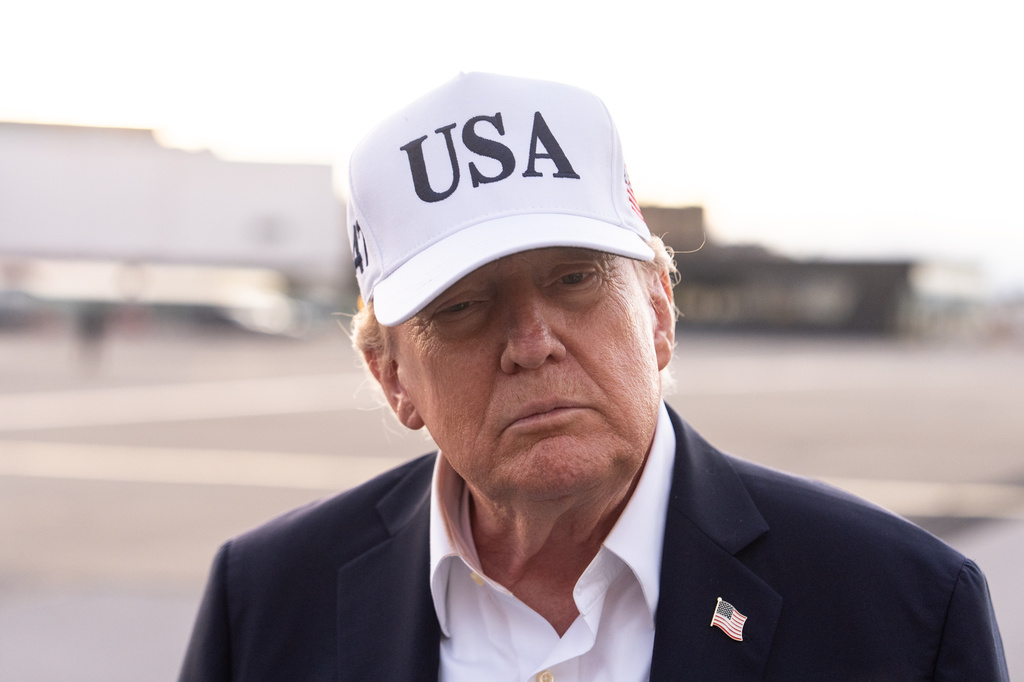
Donald Trump isn't known for pulling his punches, especially when he feels an ally is leaving the United States hanging. His recent comments regarding South Korea’s refusal to assist in a military operation against Iran have reignited a massive, decades-old debate. The core of the issue? It’s not just about a single request for help. It’s about the massive financial and strategic burden of the US security umbrella.
If you’re wondering why this matters right now, you have to look past the headlines about Iran. The real story is the shifting dynamic of the US-South Korea alliance. For years, the arrangement seemed simple: the US provides the muscle to deter North Korean aggression, and Seoul focuses on its domestic economy and regional stability. Now, that assumption is being tested in real-time.
The cost of the American security umbrella
When Trump questions why Washington should continue spending billions of dollars to guard a nation that won't help out when asked, he is tapping into a sentiment that has been brewing in American politics for a long time. Protecting allies isn't cheap. Maintaining 39,000 soldiers on the Korean Peninsula costs serious money, and for any US leader, the calculus of "What do we get out of this?" becomes unavoidable when an ally says no to a request.
From my perspective, this isn't just about the Iran conflict. It’s about the transactional nature of modern international relations. We are moving away from the era of "automatic" security guarantees. Nations are increasingly expected to pay their way, both in actual currency and in political and military support for broader US global initiatives. When an ally declines to assist, it creates immediate friction because the domestic audience in the US starts asking exactly what Trump asked: "Why are we involved in helping you?"
Why South Korea is walking a fine line
You might find it strange that Seoul would say no to such a high-stakes request from Washington. However, look at the reality from their side. South Korea sits right next to a nuclear-armed North Korea. Their entire security architecture is focused on managing that threat. Getting pulled into a Middle Eastern conflict could complicate their relations with other regional players and potentially weaken their focus on the immediate danger on their own border.
It’s a classic dilemma for smaller nations caught in the orbit of a superpower. They need the US for existential survival against local threats, but they can't afford to be seen as a mere appendage to American foreign policy in every corner of the globe. Seoul is trying to maintain its sovereignty while needing the ironclad guarantee of the US military. That is a tightrope walk that usually results in disappointment for both sides.
The fallout of reduced military exercises
This friction is already having tangible impacts on the ground. Trump’s directive to Secretary of War Pete Hegseth to "substantially reduce" joint military exercises with South Korea is a direct consequence of this deteriorating diplomatic temperature.
Joint drills are the bread and butter of the US-ROK (Republic of Korea) alliance. They are how soldiers train together and how the US demonstrates that its commitment to the defense of Seoul is real. By calling these drills "costly" and "inappropriate," Trump is signaling a major change in how the US views the value of these exercises. If the administration perceives that the relationship is one-sided, the first thing to get cut is the visible, expensive display of military unity.
This reduction sends a signal to everyone—Seoul, Pyongyang, and Beijing. It tells the world that the "ironclad" guarantee might have a price tag attached to it. For North Korea, it’s a potential win. For Seoul, it is a significant strategic headache.
What happens next
If you are following this for professional or personal reasons, pay close attention to the upcoming diplomatic backchannels. Seoul has already mentioned it is consulting with the US on "practical" contributions regarding freedom of navigation in the Strait of Hormuz. This is a classic diplomatic pivot. They are trying to find a way to say "yes" to US security interests without triggering the massive political fallout that a direct combat deployment might cause.
We are likely to see:
- Increased pressure on defense burden-sharing. The conversation will move toward who pays what, not just who fights where.
- More selective military cooperation. We might see a shift away from massive, expensive, high-profile drills toward smaller, more specialized training missions that are cheaper and less diplomatically provocative.
- Transactional diplomacy. Expect the US to continue linking local security guarantees to broader global cooperation. If you want the shield, you have to contribute to the sword.
The reality is that alliances in 2026 are not the static, unchanging pacts they were in the 20th century. They are fluid, demanding, and incredibly expensive. The friction we are seeing between Trump and Seoul is just the latest symptom of a global order that is rewriting its rules on the fly. Don't expect this to blow over quietly; the fundamental question of what it means to be a US ally has changed, and it isn't going back.