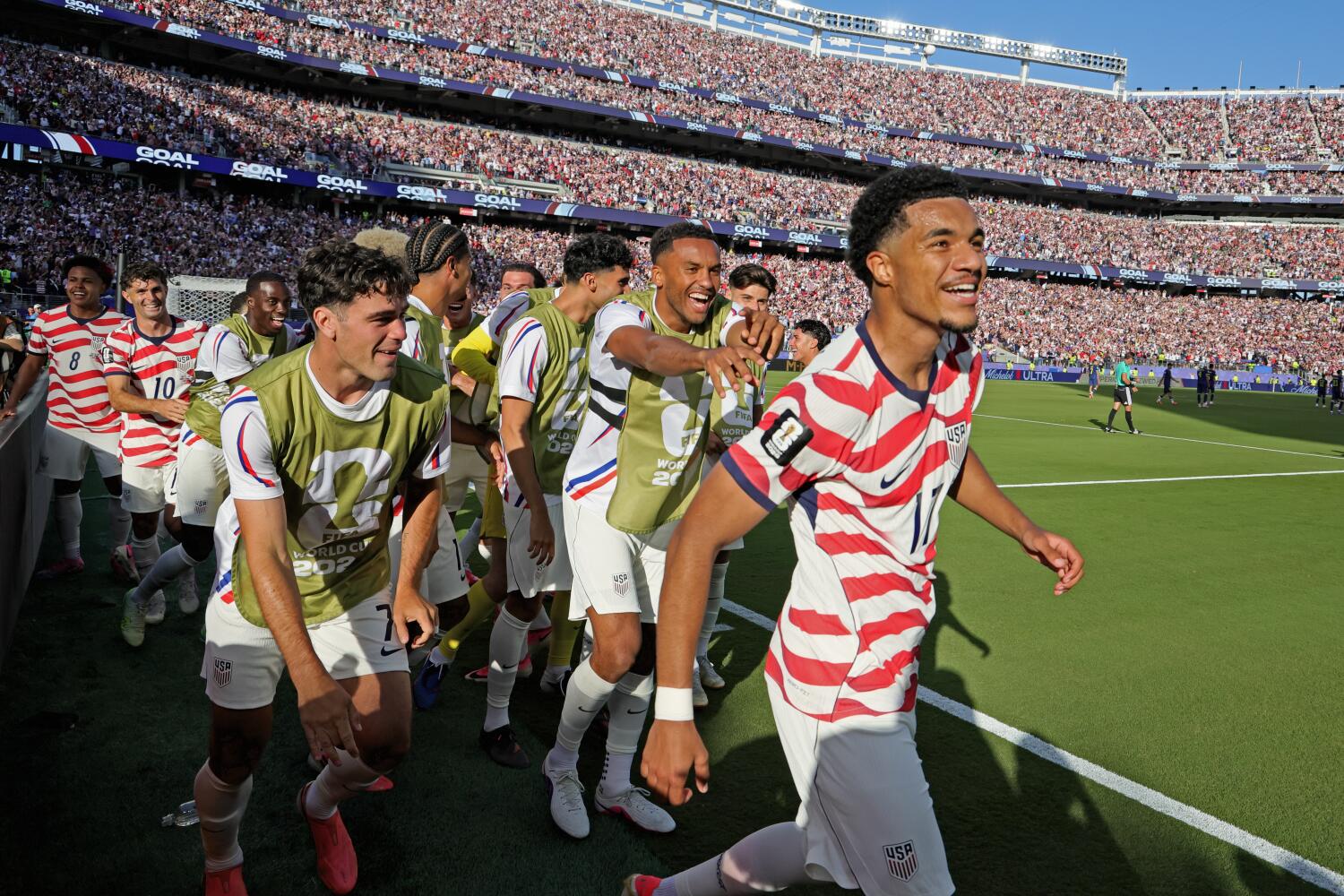
Stop worrying about the red card. The U.S. Men's National Team just did something they haven't managed in over two decades. They won a World Cup knockout game while staring straight into total disaster.
Forget the slick, over-produced tournament narratives. Wednesday night at the San Francisco Bay Area Stadium in Santa Clara wasn't about beautiful soccer. It was about pure survival. The 2-0 victory over Bosnia and Herzegovina sent the co-hosts into the Round of 16, booking a massive date with Belgium in Seattle. But the raw scoreline hides the real story of a match that almost fell apart in the California sun.
The Night the USMNT Learned How to Suffer
American soccer fans are used to heartbreak. We expect the defensive collapse. We prepare for the moment where tactical gaps open up and European teams exploit them. For decades, the script remained unchanged. Before this match, the U.S. had gone 13 consecutive World Cup games without beating a European opponent, a miserable streak stretching back to the famous win over Portugal in 2002.
Mauricio Pochettino changed that script.
The match began with terrifying vulnerability. Bosnia didn't come to defend. They pushed high, exposing the U.S. backline early. Goalkeeper Matt Freese had to rescue the team twice in the opening eleven minutes. First, he blocked a point-blank blast from Ermedin Demirović. Seconds later, he clawed away a viciously curling corner from Kerim Alajbegović. The defense looked rattled. The crowd was tense.
Then came the grit.
The U.S. settled down, clogged the midfield lanes, and started forcing turnovers. Just before the halftime whistle, the pressure paid off. Tim Ream cut out a lazy Bosnian pass near the center circle. Malik Tillman picked up the loose ball and threaded a quick pass into the penalty area. Folarin Balogun did the rest. He shielded his defender, spun, and slid a left-footed shot right under the arm of Bosnian keeper Nikola Vasilj. 1-0.
Balogun broke out LeBron James' iconic "Silencer" celebration. The stadium erupted. It was the first time the U.S. had held a lead in a World Cup knockout match since 2002.
The Sixty-Fourth Minute Disaster
Things got messy fast.
In the 64th minute, Balogun chased a loose ball and caught Bosnian defender Tarik Muharemović with a hard, clumsy stamp on the ankle. The referee didn't hesitate after checking the VAR monitor. Straight red card.
Suddenly, the tournament dream looked like it was slipping away. Playing a man down for more than 26 minutes against a physical European side is usually a death sentence. Bosnia had done this before. In their qualifying run, they turned around a deficit against Italy under identical circumstances.
Everyone expected Pochettino to park the bus. Instead, the team showed a level of maturity we haven't seen from this generation. Tyler Adams and Weston McKennie didn't just sit in front of the center-backs. They pressed intelligently. They chose their moments to transition. They refused to get pinned deep into their own penalty box.
Malik Tillman Erases the Doubt
The defining moment of the match didn't come from a defensive clearance. It came from a dead ball.
In the 82nd minute, Christian Pulisic drew a foul just outside the Bosnian box. With Balogun gone, the tension was suffocating. Malik Tillman stepped up. The young midfielder didn't try anything fancy. He hit a knuckling, powerful strike over the wall. Vasilj got a hand to it, but the sheer velocity carried the ball into the back of the net.
2-0. Complete chaos in the stands.
That goal didn't just seal the win. It rewrote the identity of this team. Scoring a second goal while playing with ten men in a knockout tournament requires immense tactical discipline. It showed that Pochettino has instilled a ruthless streak that this program has lacked for a generation.
What This Means For the Round of 16 in Seattle
The celebration won't last long. The victory leaves a massive tactical puzzle for the coaching staff ahead of Monday's clash against Belgium at Seattle Stadium.
Balogun is suspended. You can't replace a striker who has scored three goals in a single World Cup tournament without altering your entire attacking structure. Ricardo Pepi will likely get the nod, but he offers a completely different profile. He won't stretch the backline the way Balogun does. Pochettino will have to adjust his midfield triggers to ensure Pulisic and Tillman aren't left isolated.
Belgium presents a massive step up in quality. They boast a world-class midfield that won't give away possession as cheaply as Bosnia did in Santa Clara. If the U.S. backline starts the game as slowly as they did on Wednesday, Romelu Lukaku and company will punish them before Freese can even react.
Your Next Steps as a Fan
Don't just watch the highlights. Pay attention to how this team prepares for the next phase. Here is what you need to track before Monday night's kickoff.
- Watch the training reports out of Seattle regarding the central defensive partnership. Tim Ream and Chris Richards survived against Bosnia, but Belgium's movement will test their lateral speed.
- Monitor Pochettino's press conferences for clues about the tactical shift upfront. Look to see if he hints at a formation change to support Pepi.
- Secure your viewing plans early. The match kicks off at 8:00 PM Eastern on Monday, July 6. Seattle is going to be incredibly loud, and the home-field advantage will be vital.
The U.S. team has officially crossed the threshold from a talented group of individuals into a resilient tournament team. They proved they can win when everything goes right, and they proved they can survive when everything goes completely wrong. That is exactly what it takes to make a historic run on home soil.