You can't have a normal Fourth of July when the ground beneath your feet is ready to explode.
Utah Governor Spencer Cox just made a move that political leaders usually hate to make right before Independence Day. He issued an executive order restricting fireworks across the state through July 5. It is a massive blow to holiday traditions, especially as the nation builds up to its 250th anniversary celebrations. But honestly, he didn't have a choice. The state is currently sitting in a powder keg, and the match has already been lit.
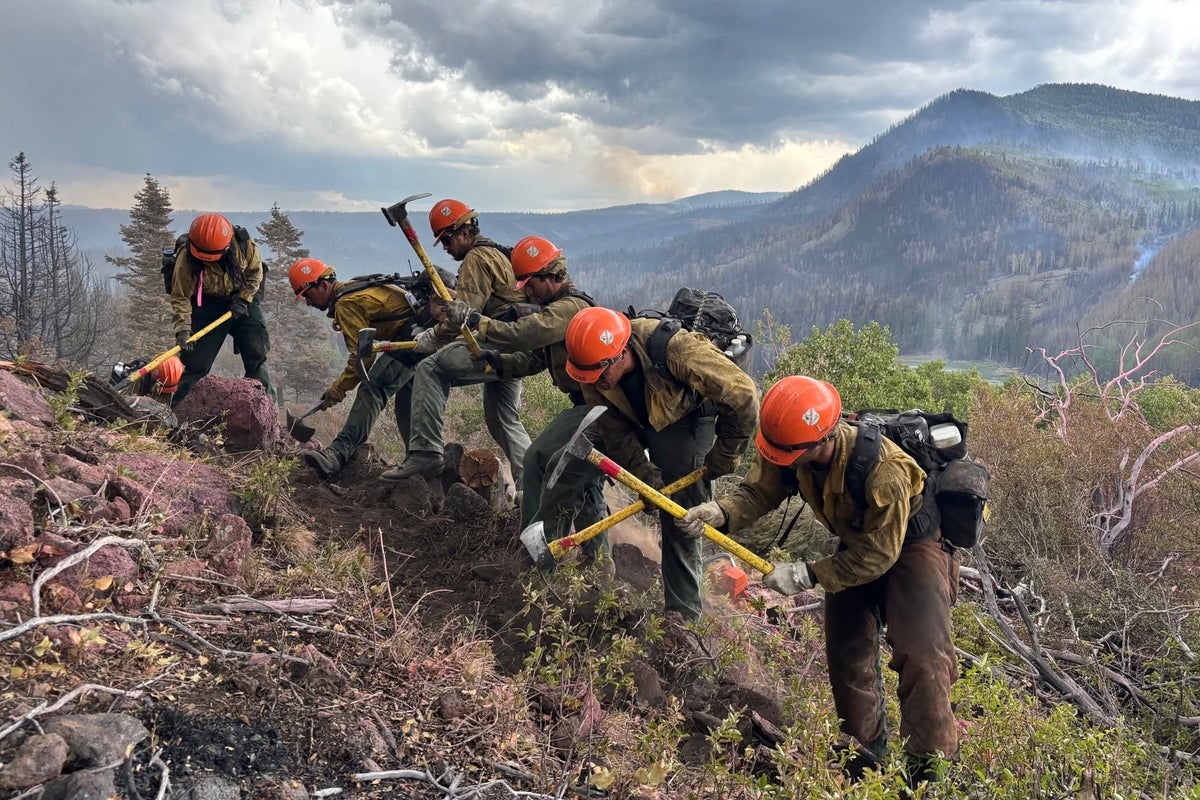
The driving force behind this emergency declaration is the Cottonwood Fire. It started on Monday in southern Utah and has quickly ballooned into the largest active wildfire in the United States. By Friday, the blaze swallowed nearly 111 square miles of land.
The worst part? It is sitting at zero percent containment.
The Unprecedented Threat of the Cottonwood Fire
If you want to understand how bad things are, look at Beaver County. The Cottonwood Fire ripped through the area and severely damaged the Eagle Point ski resort, triggering urgent mandatory evacuations. This isn't just grass burning on a hillside. It is tearing down homes, decades of memories, and vital infrastructure.
Local residents are returning to absolute devastation. Bruce Brown, a 76-year-old resident, went back to his property accompanied by the county sheriff. His 31-year-old cabin was gone. He described the scene as looking like the moon—completely burned out, with power poles tipped over all the way up the canyon. Another resident, Alyssa Olsen, confirmed her family’s cabin met the exact same fate.
This isn't typical fire behavior. State Forester Jamie Barnes made it clear that firefighters are dealing with something entirely new. Fires are spreading farther and faster than historical models ever predicted. Veteran crews are witnessing erratic fire behavior that defies their decades of training.
The stats back up the panic. The National Weather Service in Salt Lake City did something it has never done before in its history. It issued a Particularly Dangerous Situation warning for five Utah counties, including the zone where the Cottonwood Fire is raging. That specific alert is usually reserved for major tornado outbreaks. When a weather office drops a tornado-level warning on a wildfire, you know the situation is desperate.
Blustery Winds and Dry Dirt
The weather is working entirely against the containment efforts. Forecasters expect extreme conditions to persist through the weekend, featuring wind gusts up to 50 mph and incredibly low humidity levels across the southwest desert and the central and southern mountains.
The wind doesn't just spread the flames. It makes fighting them from the air almost impossible.
It also threatens the power grid. Rocky Mountain Power has already placed central, southern, and eastern Utah on a public safety power shutoff watch. When high winds hit dry brush, a single falling power line can spark a brand-new inferno in seconds. Shutting down the juice to thousands of homes is a drastic preventive measure, but it keeps the disaster from multiplying.
Meanwhile, the Cottonwood Fire isn't acting alone. It is just one of six major blazes eating up Utah land. About 70 miles southwest of Salt Lake City, the Iron Fire has blackened 63 square miles. Firefighters managed to get that one to 26% containment, but not before it forced the evacuation of the entire town of Eureka and a nearby ranch.
Taking the Power Away From Towns
Governor Cox’s executive order changes the political landscape of how Utah handles fire season. Usually, local municipalities and individual towns decide whether or not to ban fireworks within their borders. Local leaders like having that control.
This order changes that dynamic completely. It shifts direct authority to State Forester Jamie Barnes, giving her the power to restrict or entirely prohibit fireworks displays inside cities and towns, regardless of what local councils might want.
It is causing some political friction, but the data justifies the heavy hand. More than 75% of Utah's wildfires this season have been caused by human activity. Leaving the gate open for thousands of people to launch burning chemicals into the sky during a historic drought would be administrative negligence.
The Rest of the West is Next
Utah is simply the epicenter of a broader regional crisis. Red flag warnings cover a massive swath of the western United States, running from Idaho all the way down to southern Arizona and New Mexico.
- Arizona: High winds and low humidity are punishing the state, with recent fires near Sedona forcing evacuations in the rugged terrain of Oak Creek Canyon.
- New Mexico: Crews are currently fighting a stubborn blaze in the Jemez Mountains that forced the immediate evacuation of local campgrounds and a YMCA youth camp.
- Colorado: Massive plumes of smoke from Utah's Cottonwood Fire are drifting hundreds of miles east, choking skies and creating heavy haze over major vacation destinations.
The U.S. Drought Monitor shows severe to extreme drought conditions locking down most of Utah, with Arizona and Colorado facing similar deficits. The entire region is dry, hot, and windy.
Your Immediate Safety Checklist
If you live in Utah or any of the surrounding Western states under these red flag warnings, stop planning your private fireworks shows. The risk isn't worth losing your home or your life. Shift your focus to immediate property defense and personal safety.
Check the current evacuation status for your specific county through your local sheriff's office or emergency management portal. Do not wait for a knock on the door if you see active smoke plumes moving toward your property.
Clear dry leaves, dead branches, and firewood piles at least 30 feet away from your home's exterior walls to create a defensible space.
Pack a go-bag right now for every member of your household, including pets. Keep essential medications, financial documents, identification, and several days of clothing inside your vehicle.
Monitor your local utility company's website for real-time updates on public safety power shutoffs so you aren't caught off guard by sudden blackouts in the middle of a heatwave.
:max_bytes(150000):strip_icc():focal(999x0:1001x2)/Jax-and-Brittany-040323-04-2000-d82e6b51b7c0490e95749e731826a758.jpg)