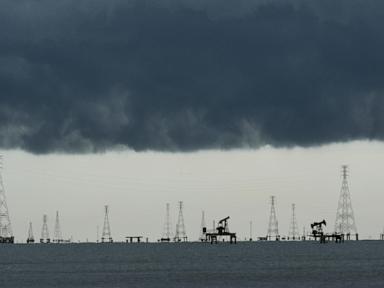
Venezuela sits on top of roughly 300 billion barrels of oil. Official claims place the nation comfortably at number one globally, beating out Saudi Arabia and every other heavy hitter in energy. Yet, the country pumps a fraction of what it used to, and global markets barely blink when political shocks hit its borders.
If you look at the raw numbers, the story doesn't add up. How can a country hold nearly a fifth of the world's total proven reserves while its infrastructure crumbles and its output lags behind smaller producers?
The answer changes how you view global energy security entirely.
The Orinoco Reality Check
To understand the truth behind Venezuela's massive oil claims, you have to look at where that crude actually lives. It's not light, sweet crude that easily flows out of a standard well. It's trapped in the Orinoco Belt, and it's thick, heavy, and sludgy.
Extra-heavy crude behaves more like cold molasses than liquid gold. You can't just drop a pipe into the ground and watch it gush into a tanker. It requires specialized upgraders, massive amounts of diluents, and advanced technical processing just to move it through a pipeline.
When you hear that Venezuela has 300 billion barrels in the ground, remember that "in the ground" does a lot of heavy lifting. Extracting it requires billions in upfront capital, stable electricity grids, and specialized engineering expertise—things that have been scarce in the country for years.
Proven Reserves Versus Extractable Reality
Geologists and energy analysts draw a sharp line between reserves that exist on paper and reserves that can actually be produced economically.
In the 2000s, Venezuela's reported numbers shot up dramatically, more than tripling over a short period. Critics point out that these figures were largely political statements rather than strict, independent audits. Accounting rules allow countries to report heavy oil deposits as proven reserves if higher oil prices make extraction theoretically viable.
The catch is simple. Viable on a spreadsheet doesn't mean viable on the ground today.
When you factor in sanctions, decades of underinvestment, and brain drain at state-owned PDVSA, turning those paper barrels into actual fuel becomes an uphill battle. Production has ticked up slightly recently, hovering near one million barrels per day, but that's a far cry from the 3.5 million barrels per day the country produced during its peak years.
Why Global Markets Don't Panic
Traders used to panic whenever Venezuelan supply faced disruption. Today, the reaction is muted.
Global crude markets have learned a hard lesson. Having oil doesn't equal shipping oil. Because Venezuelan crude is so heavy, refiners along the U.S. Gulf Coast are among the few equipped to process it properly. Even with shifting geopolitical deals and foreign investments trickling back in, rebuilding the necessary infrastructure takes years of sustained, uninterrupted work.
You're not going to see a sudden flood of Venezuelan oil crashing global prices anytime soon. The capital required to upgrade the Orinoco fields is massive, and foreign energy firms remain cautious about legal and political risks.
Stop treating those 300 billion barrels as an immediate game-changer for your energy bills. Treat them for what they are: a colossal natural endowment locked behind a wall of technical hurdles, political chaos, and heavy economics.
If you want to track where global energy is actually heading, watch the refining capacity and capital investments, not the political press releases.
Why Venezuela's Vast Oil Reserves Matter For Global Crude Markets
This video breaks down how Venezuela's massive oil reserves impact global crude markets and why output remains constrained despite the huge numbers.
http://googleusercontent.com/youtube_content/1