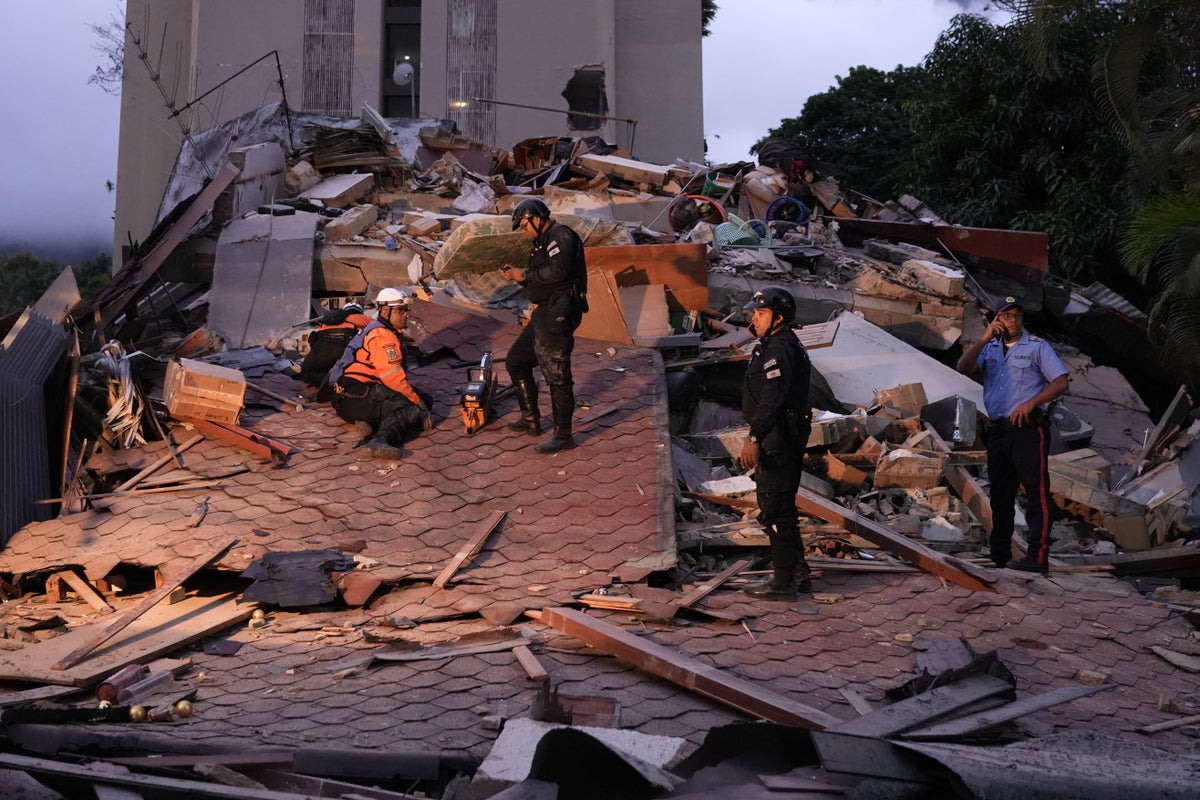
When the ground under Caracas started shaking on Wednesday evening, June 24, 2026, most people thought they were dealing with a standard, albeit terrifying, tremor. Families were at home celebrating a national public holiday, marking the 1821 military victory that sealed the country's independence. Then the world fell apart.
Within a span of just 39 seconds, two massive earthquakes—measuring magnitude 7.2 and 7.5—ripped through north-central Venezuela. It wasn't a mainshock followed by a minor aftershock. It was a brutal one-two punch that scientists call an earthquake doublet. Buildings collapsed. Dust columns choked the air in the Altamira neighborhood. The main international airport shut down with severe structural damage. If you found value in this piece, you should read: this related article.
At least 32 people are dead, over 700 are injured, and rescue teams are still clawing through collapsed concrete to reach those trapped under the rubble. If you want to understand why these Venezuela earthquakes were so destructive and why our current understanding of Caribbean seismic safety needs an immediate overhaul, you have to look at the unique mechanics behind this rare disaster.
The Brutal Physics of an Earthquake Doublet
Most people assume that a big earthquake relieves pressure on a fault line. You get one big shake, and then a series of smaller aftershocks follow as the earth settles. That didn't happen here. For another angle on this story, see the recent update from Wikipedia.
The first 7.2 magnitude quake struck at a shallow depth of about 13 miles near the coastal town of Morón. Before anyone could even process what was happening, a second, even more powerful 7.5 magnitude quake ruptured just 10 miles away at a depth of 6.2 miles.
This is an earthquake doublet. It happens when a fault rupture doesn't stop. Instead, the sudden shift transfers immense stress onto an adjacent fault segment that is already locked and loaded with tectonic pressure. The first quake essentially acts as a trigger, snapping the neighboring segment almost instantly. Instead of relieving stress, it multiplied it.
The sheer energy released by these back-to-back quakes makes this sequence one of the most powerful tectonic events to hit Venezuela in more than a century. The tremors were so intense they evacuated buildings more than a thousand miles away in the Brazilian Amazon.
Cracking the Tectonic Puzzle of Northern Venezuela
Why is this region so vulnerable? Northern Venezuela sits right on the messy boundary where the Caribbean Plate slides eastward against the massive South American Plate. This isn't a single, clean line in the dirt. It's a highly complex network of interconnected strike-slip faults moving at roughly two centimeters every single year.
The main culprits behind the regional seismic risk include a few key fault lines.
The Morón Fault Zone runs right through the central northern coast near the epicenter of Wednesday's disaster.
The San Sebastián Fault lines the offshore region near Caracas.
Further west, the Boconó Fault cuts through the Venezuelan Andes, while the El Pilar Fault dominates the northeastern zone.
When you look at how these faults interact, you realize they form a fragile spiderweb. A violent snap in the Morón zone triggers immediate stress changes along the San Sebastián system. Seismologists have warned for years that portions of this plate boundary have been locked for decades, quietly storing up energy. On Wednesday night, that energy found its way out.
The Chaos on the Ground in Caracas
The timing of the quakes made a bad situation much worse. Because it was a national holiday, office buildings were mostly empty, but residential high-rises were packed.
Witnesses across Caracas described a low rumble that instantly turned into violent side-to-side tossing. Furniture flew across apartments. Entire exterior walls of older brick and concrete apartment buildings sheared off completely, exposing living rooms to the open air.
Local infrastructure buckled under the strain. The Simón Bolívar International Airport in Maiquetía suffered extensive cracking and structural failures, forcing authorities to halt all flights. The Caracas subway system ground to a halt, and natural gas lines were isolated to prevent massive fires.
Compounding the terror was a near-total collapse of cellphone signals and electricity in major pockets of the capital. For a country with over 7.7 million citizens living abroad due to the ongoing economic crisis, the lack of communication caused agonizing panic. Families outside Venezuela spent hours staring at dead screens, waiting to hear if their loved ones survived the initial collapse.
Politics and the Rescue Effort
Acting President Delcy Rodríguez quickly declared a state of emergency. She cancelled school classes and ordered all medical professionals to report to hospitals immediately. In Falcon state, regional officials confirmed dozens of hospitalizations and mounted desperate operations to free people pinned under fallen structures.
The disaster has also forced unexpected diplomatic cooperation. The interim government accepted aid offers from several nations, including emergency search-and-rescue teams from the United States. Field assets, medical supplies, and canine units are arriving to help local civil protection forces who are severely under-equipped after years of economic stagnation.
A major concern now is structural integrity. The initial double shock left hundreds of buildings standing but heavily compromised. Interior Minister Diosdado Cabello warned residents to stay outdoors in parks and open avenues, because even a moderate aftershock could bring down fractured concrete walls. Seismologists estimate an 89% chance of at least one aftershock hitting magnitude 5 or higher within the first few days.
What You Need to Do to Survive a Major Seismic Event
If you live in a seismically active zone along the Caribbean or South American plate boundaries, relying on luck isn't a strategy. Earthquakes give zero warning, but your immediate actions determine whether you walk away.
Secure your physical space before the shaking starts
Look around your living room or office right now. Heavy bookshelves, unsecured televisions, and large mirrors are deadly projectiles during a 7.5 magnitude quake. Bolt heavy furniture to the wall studs. Store heavy items on lower shelves.
Know the Drop, Cover, and Hold On protocol
Do not try to run outside while the ground is actively moving. You will likely be thrown off balance or hit by falling debris from building facades. Drop to your hands and knees. Cover your head and neck under a sturdy table or desk. Hold on to your shelter until the shaking completely stops.
Prepare an offline communication plan
As we saw in Caracas, cell networks die instantly during major disasters. Plan a specific, physical meeting location for your family outside of your neighborhood. Keep emergency cash, physical maps, and a battery-powered radio on hand to monitor official updates when the internet goes dark.
Inspect your structure post-quake
Once the shaking stops, check your surroundings carefully for deep, diagonal cracks in support beams or concrete pillars. If you see exposed rebar or major structural shifting, evacuate immediately and do not go back inside for aftershocks.
The tragedy in Venezuela proves that nature doesn't care about political boundaries, holidays, or readiness. The Caribbean plate boundary remains highly volatile, and these twin quakes are a stark reminder that structural reinforcement and personal preparedness are the only real defenses we have.