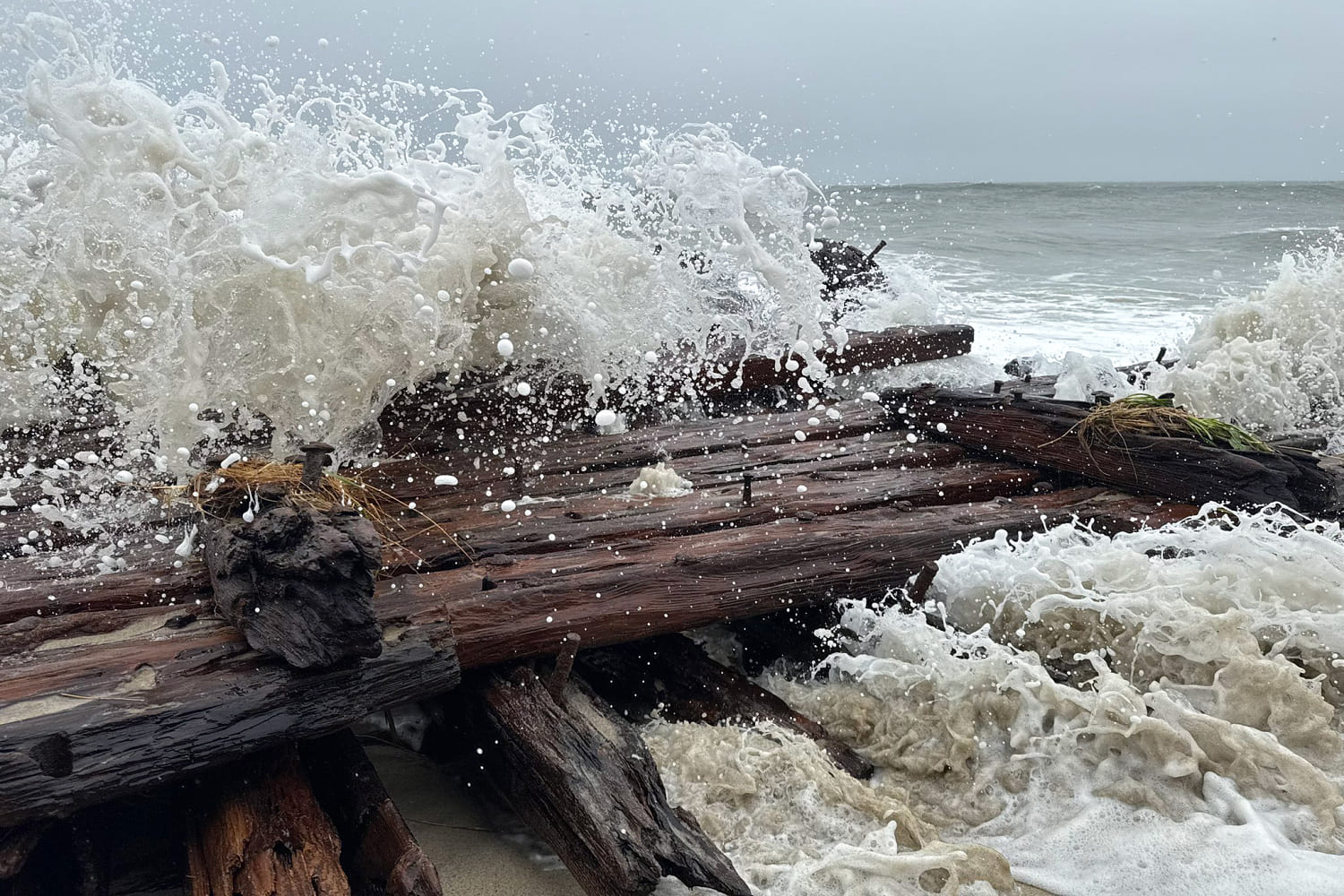
Nature has a funny way of digging up our past when we least expect it. When a brutal nor'easter slammed into the East Coast, dumping rain and whipping up dangerous winds across New England, it didn't just flood coastal roads and cancel flights. It stripped away feet of sand along Nantucket's south shore, dragging a 140-year-old maritime ghost back into the daylight.
Walkers along Miacomet Beach stumbled upon massive, weather-beaten wooden timbers and heavy iron fasteners sticking out of the shifting dunes. Local historians and state archaeologists quickly identified the wreckage as belonging to the Warren Sawyer, a wooden coastal schooner that met its fiery, stormy end back on December 22, 1884. Building on this topic, you can find more in: Why Trump And Iran Are Waiting Out The Midterm Elections.
The Tragic Night of the Warren Sawyer
If you look at the logs from that cold December night, you realize just how unforgiving the Atlantic can be. The Warren Sawyer was a 360-ton wooden schooner carrying a heavy commercial payload consisting of 1,115 bales of cotton and 28 tons of scrap iron. She had been sailing out of New Orleans, bound for Boston, before gale-force winds completely battered her off course and shoved her toward the shallow shoals of Nantucket.
Around 11 p.m., she ran hard aground near Miacomet Beach. The surf was violent, wrapping around the hull and leaving only the swaying masts visible in the pitch black. Experts at NBC News have also weighed in on this trend.
Rescue didn't happen by magic. It took sheer grit from the local Surfside lifesaving station crew. Patrolman Eugene Clisby spotted the ship's lights flashing out in the Miacomet Rip and raised the alarm. Capt. Veeder and his team fired a line over the jib-stay, but the sailors onboard were already too freezing and numb to grab it.
They didn't give up. The lifesavers rigged a breeches buoy and worked through the freezing night, hauling every single crew member ashore by morning.
Why Storms Keep Exposing Nantucket's Secrets
Shipwrecks popping up on East Coast beaches aren't random miracles. They're the result of dynamic, constantly shifting coastlines. Sand comes and goes. A severe nor'easter acts like a giant industrial sandblaster, stripping away protective dunes in a matter of hours and revealing whatever hull fragments or cargo remains underneath.
In fact, this isn't even the first time pieces of the Warren Sawyer have made a guest appearance. Portions of the same schooner were exposed during winter storms in late 2022 and early 2023, drawing crowds of curious onlookers and maritime researchers. Other storms have occasionally coughed up different historical artifacts across the island's shores, reminding everyone that Nantucket's beaches are basically an open-air museum of maritime tragedies.
The Legal Reality of Finding Beach Treasure
If you're picturing yourself stumbling across an exposed 19th-century shipwreck and hauling a massive timber home for your living room, pump the brakes. Massachusetts has strict cultural resource laws.
Under state guidelines, removing or disturbing shipwreck artifacts is prohibited without official permits. The Massachusetts Board of Underwater Archaeological Resources (BUAR) and local groups like the Egan Maritime Institute monitor these discoveries closely. When a fragment surfaces, experts rush out to document the timber, measure the iron fastenings, and log the GPS coordinates before the next high tide reburies or destroys the fragile wood.
Maritime heritage belongs to the public record, and leaving these artifacts in place—or letting trained historians recover them safely—ensures we don't accidentally destroy pieces of our history.
What Happens Next
The wooden ribs of the Warren Sawyer won't stay visible forever. Within a few weeks or months, normal tidal action and shifting winds will likely push sand back over the site, tucking the schooner safely back into its watery grave until the next major storm rolls up the coast.
Next time a powerful autumn gale hits the Northeast, keep an eye on local reports. The ocean always gives up its ghosts eventually. Just make sure you admire them from a respectful distance and leave the digging to the professionals.