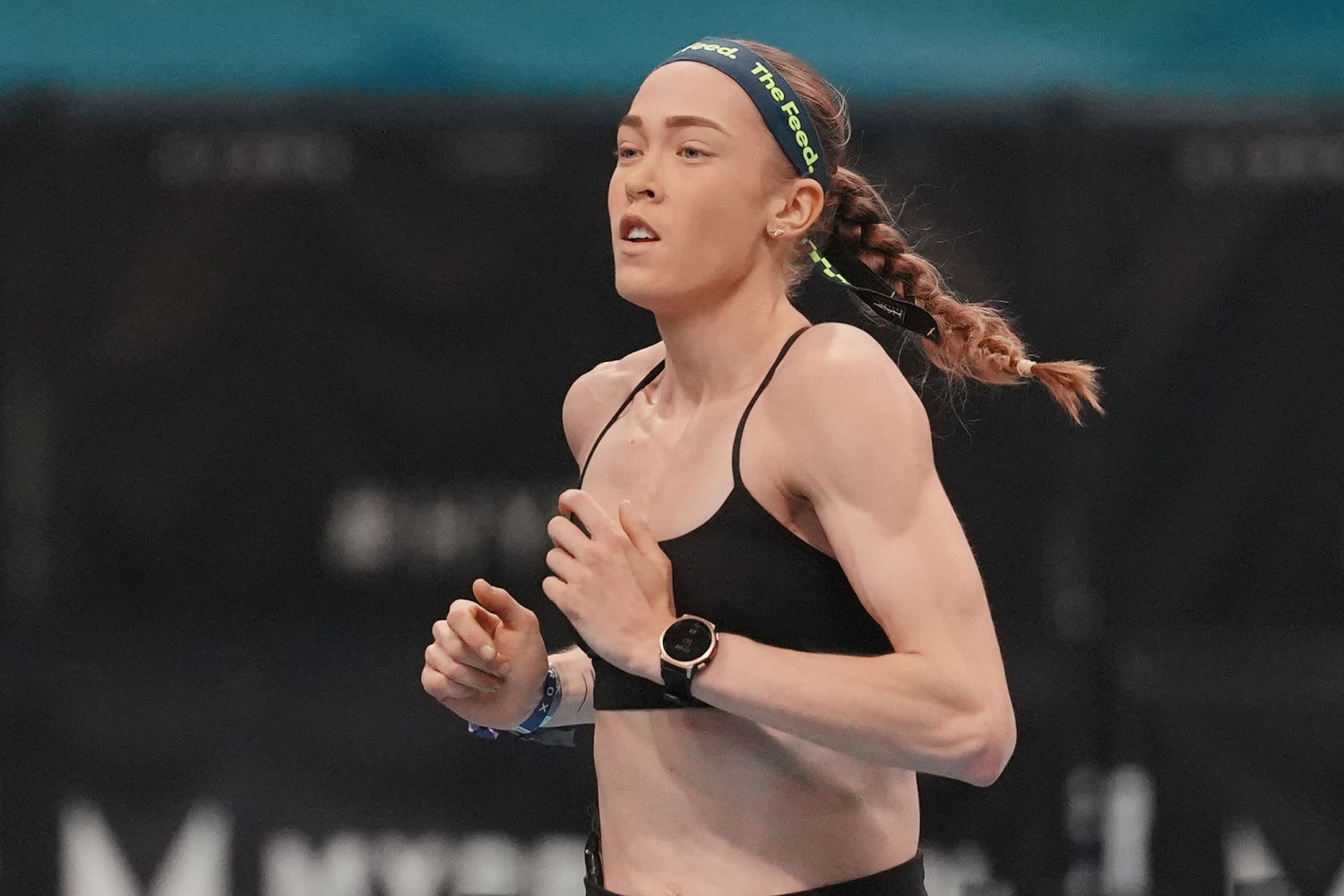
Extreme endurance sport loves to fetishize suffering. We praise athletes who bleed, vomit, and crawl across finish lines, treating self-destruction as the ultimate marker of mental toughness. But what happens when endurance culture crosses the line from gritty determination into a public health hazard? Ask anyone who watched Australian competitor Joanna Wietrzyk claim victory at a Beijing fitness race while dealing with a severe involuntary bowel movement.
The incident blew up globally, triggering fierce debates about hygiene, sportsmanship, and the sheer blind spot of event organizers. Days after initially celebrating her win, Wietrzyk issued a public apology and retroactively forfeited her title.
Let's look at what actually happened, why the sports world reacted with such fury, and how this bizarre episode is reshaping competitive fitness events.
When Grit Goes Too Far
The setting was a high-profile Hyrox fitness competition at the National Speed Skating Oval in Beijing. Wietrzyk, a recognized world record holder in the sport's solo pro division, suffered a sudden medical issue—widely reported as severe food poisoning—resulting in an involuntary bowel movement during the race.
Instead of stepping off the track, she kept going.
Footage quickly spread across social media showing the athlete moving through functional fitness stations and running laps while visibly soiled. She finished with a winning time of 1:01:23. Initially, the mindset seemed to match the old-school athletic adage that a win justifies any cost. Wietrzyk posted and later deleted a celebratory selfie from what looked like a hospital bed alongside the caption that a win is a win.
The public reaction was immediate and unforgiving.
The Public Health Crisis on Shared Tracks
Competitive fitness races like Hyrox rely heavily on communal infrastructure. Competitors don't just run on a shared indoor track; they cycle through shared rowers, medicine balls, sandbags, and battle ropes.
Spectators and fellow racers quickly pointed out the obvious hazard. Witnesses reported that matter left on the track caused other runners to slip, and participants were forced to handle equipment contaminated with fecal matter.
This wasn't just gross. It was a biohazard.
Sports exist within a framework of mutual safety. When one person's refusal to quit compromises the physical well-being of everyone else on the floor, the romanticized narrative of "pushing through the pain" evaporates. Health risks in contact and indoor proximity sports are real. Pathogens like E. coli or norovirus spread rapidly in enclosed spaces, making the decision to stay on the course indefensible to anyone outside the extreme competitive bubble.
The Institutional Failure
The athlete shouldn't bear all the blame here. The event organizers dropped the ball completely.
Moritz Fürste, co-founder of Hyrox, issued a public apology admitting that officials made a massive mistake by failing to intervene immediately. Under existing rules at the time, race judges lacked clear, explicit protocols to pull an athlete for a biohazardous medical situation mid-competition.
Think about how absurd that is. Officials can disqualify someone for stepping out of a lane or missing a meter on a rower, yet lacked the regulatory backbone to stop a biological hazard in real-time.
Hyrox China eventually announced refunds for over a thousand participants affected by the fallout, and corporate leadership promised immediate safety rulebook updates to ensure judges can step in instantly if a similar situation arises.
The Apology And The Fallout
Facing intense global backlash, Wietrzyk walked back her initial stance. In a statement posted to social media, she admitted her mistake.
"Looking back, I regret the decision to not have stepped off the track," she wrote. "I recognize that I should have made a different choice. I take responsibility for my decision to continue and am deeply sorry for the discomfort and disruption it caused."
She went a step further, announcing she was retroactively withdrawing from the race and forfeiting her points and title.
Her coach, Chris Bayens, defended her human error in the heat of a high-stakes moment, but the damage to the competitive optics was already done. The incident even drew sharp criticism from other athletes pointing out systemic contradictions, like competitors getting penalized or disqualified for minor technicalities while severe health issues were momentarily ignored by floor staff.
What Endurance Sports Must Learn Now
We need a culture shift in amateur and professional athletics. Stubbornness shouldn't be confused with elite discipline.
If you are violently ill, leaking bodily fluids, or posing a direct transmission risk to your peers, stepping off the field isn't quitting. It's basic human decency. Event organizers must also remove the burden of choice from athletes whose judgment is naturally impaired by exhaustion, adrenaline, and oxygen debt.
When your body breaks down to that degree, the race is over. Know when to walk away, let the medical staff take over, and leave the shared equipment clean for the next person.