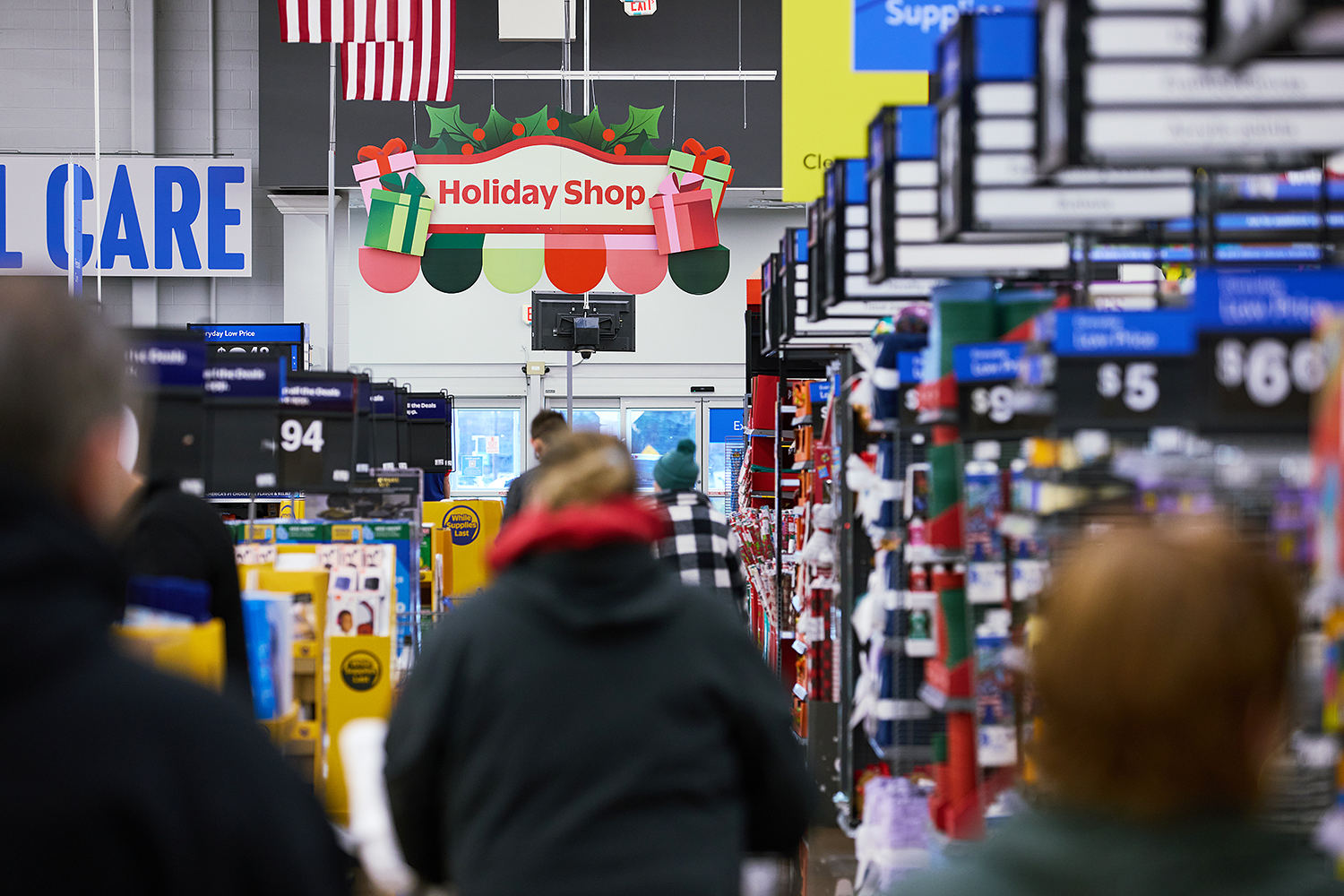
Walk into a Walmart aisle in mid-November and you'll notice something interesting. Shoppers aren't throwing random gifts into their carts the way they used to. They're checking unit prices. They're grabbing eggs and paper towels right next to ornaments and toys. And Walmart is leaning straight into that reality, cutting prices on thousands of items and leaning on speed and scale to win over inflation-weary households ahead of the holidays.
Here's the bottom line upfront. Walmart isn't trying to win holiday shoppers with flashy luxury or one-day doorbuster hype alone. Instead, the retailer is doubling down on everyday groceries, aggressive rollbacks, fast store-fulfilled delivery, and value baskets to capture stretched budgets while competitors fight over fickle discretionary spending. Even as overall U.S. holiday retail sales are projected to top $1 trillion in November and December, higher prices and selective spending mean shoppers are picking their spots carefully—and Walmart wants to be the default stop for both what families need and what they gift.
How Walmart Is Positioning Itself for Stretched Budgets
When prices stay stubbornly high across daily life, holiday shopping changes shape. People don't suddenly stop celebrating, honestly, they just stop pretending money is no object. They stretch budgets, compare prices across apps, and combine weekly grocery runs with seasonal buys.
Walmart's playbook fits that mood like a glove. During its third-quarter update ahead of the peak holiday stretch, CEO John Furner pointed to strong grocery momentum alongside roughly 7,700 price reductions—well above Walmart's typical 5,000 to 5,500 range—and highlighted a holiday meal basket priced just over $3.50 per person, down around 12% from a year earlier. Selling a million more Thanksgiving turkeys than the prior year isn't an accident. When a family can lock in affordable dinner staples, they feel a little less squeezed when it comes time to buy gifts.
At the same time, Walmart raised its full-year enterprise sales growth forecast to a range of 4.9% to 5.2%, up from 4% to 5% previously. That kind of confidence doesn't come from guessing. It comes from watching real-time basket data across thousands of stores and millions of online orders.
Why Inflation Changes What "Holiday Shopping" Actually Means
A lot of commentators still talk about holiday retail as if it's strictly a gift-giving contest. That view misses half the picture.
Research from Walmart Connect shows that the holiday cart is the everyday cart. Shoppers regularly put stocking stuffers or decorations in the same basket as eggs, milk, and household staples. When budgets are tight, households don't separate "holiday money" from "grocery money" as neatly as economists sometimes assume. If food and fuel eat up more of a paycheck, gift budgets shrink or shift toward practical, high-value items.
Industry forecasts back up how cautious the environment feels. The National Retail Federation has projected U.S. holiday sales to rise 4.2% to roughly $1.01 trillion across November and December, while noting that higher prices—rather than sheer unit volume—are expected to account for roughly half of that growth. Consumers are shopping early, too. Data shared by Walmart Connect indicates that half of surveyed Walmart shoppers start researching more than four weeks ahead of the holidays, and nearly half make multiple trips.
If you're a brand or a shopper waiting until the week before Christmas to think about deals, you're already late to the party.
What Shoppers Get Right—and Where They Slip Up
Having watched retail cycles play out over years of shifting prices, I've noticed a clear split between shoppers who stretch their dollars well and those who end up frustrated.
Smart shoppers track baseline prices before November hits. A "sale" tag on an item you haven't priced in September doesn't tell you much. Smart shoppers also bundle essentials with seasonal items to hit free-shipping or fast-delivery thresholds without buying junk they don't need.
Where do people slip up? Basically, two ways. First, they assume every holiday promotion is a bargain because the retailer calls it a deal event. Second, they wait until peak days and rush decisions under pressure, which leads to impulse buys and overpaying on convenience.
Speed and Convenience Are No Longer Extras
Price gets people in the door. Speed keeps them coming back.
One of Walmart's biggest structural advantages right now is how tightly its physical stores and fulfillment network work together. Walmart can reach 96% of U.S. households within three hours and 60% within 30 minutes, with stores fulfilling more than 80% of U.S. e-commerce orders. Think about what that means when you're hosting family, running out of baking ingredients, or realizing you forgot a gift exchange item two days before a party.
Convenience isn't just about shaving minutes off a delivery clock, either. It's about cutting friction. More than half (56%) of online holiday transactions among surveyed Walmart shoppers happened on smartphones, and 35% said they'd add more items to a cart to get faster shipping. Plus, 72% of AI users surveyed said the technology simplifies holiday shopping choices by cutting down choice overload. Nobody wants to scroll through 400 nearly identical throw blankets when they're tired after work.
The Hidden Pressures Behind Low Prices
It's tempting to look at aggressive rollbacks and think retail margins are easy money. They aren't.
Even as Walmart lifted its annual adjusted earnings per share forecast to a range of $2.84 to $2.89, executives pointed to real headwinds, including rising fuel and logistics costs and a 5% rise in operating expenses to $40.01 billion in the third quarter. Integration costs tied to its Vizio acquisition have also been cited as a modest drag on full-year operating income growth, while nearly $3 billion in tariff refunds helped offset freight and cost pressures.
That tension is worth keeping in mind. Walmart isn't immune to inflation or fuel spikes. Instead, it uses scale, membership and delivery growth, and grocery volume to absorb pressure where smaller or more specialized retailers get squeezed. Still, there's a fair debate among analysts about how long heavy price investments can outpace cost pressures if fuel and freight climb further. Keep an eye on unit volumes versus price-driven sales growth—that's the real tell on whether demand is genuinely strong or just propped up by higher price tags.
Practical Ways to Shop Smarter This Holiday Season
If you're trying to navigate holiday buying without blowing your budget, a few simple habits make a real difference:
- Start your list early and price-check staples first. Lock in lower-cost grocery and meal basket items ahead of peak week so your core food spending doesn't catch you off guard.
- Separate "must-have" gifts from "nice-to-have" extras. Decide your hard ceiling before multi-week deal events start rolling out.
- Use pickup or fast local delivery strategically. Combine routine household restocks with seasonal orders only when it saves you time or extra trips—don't add filler items just to chase a perk unless you'll genuinely use them.
- Watch return windows and receipt rules. Always check exact holiday return deadlines before buying big-ticket items or gifts for picky family members.
Holiday retail doesn't have to feel like a financial hangover in January. Plan early, stay picky about real value, and let the deals work for your budget instead of the other way around.