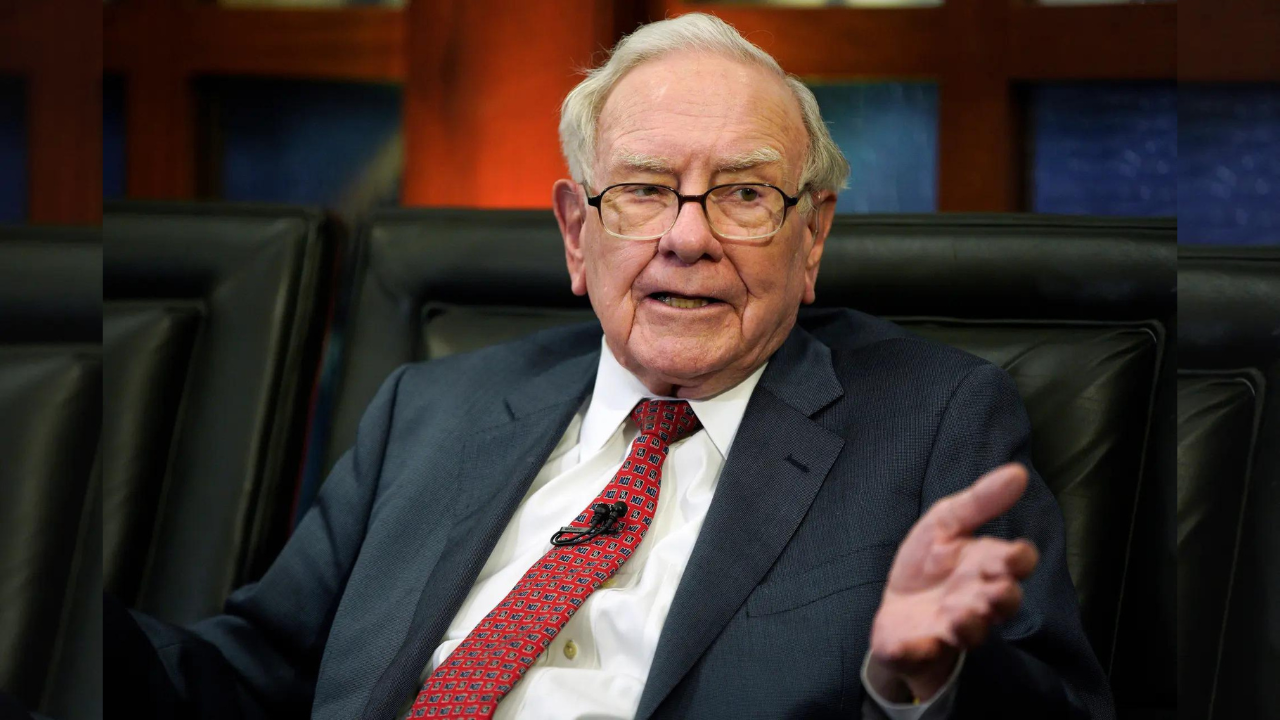
Warren Buffett isn't slowing down his philanthropic exit plan. The legendary investor just handed over approximately $5.47 billion in Berkshire Hathaway shares to four family-run charities, reinforcing a decades-long pledge to give away nearly his entire fortune.
If you track billionaire wealth management or Berkshire's corporate evolution, this latest move is packed with signals. It is not just about writing big checks. It is a masterclass in estate execution, tax efficiency, and corporate succession planning.
Let's break down what actually happened, why Buffett converted those rare Class
Why Warren Buffett is Giving Away Billions Now and Cementing His Succession Plan
business
Billionaires usually hoard wealth until their final breath. Warren Buffett is actively doing the exact opposite.
The legendary investor just unloaded another massive block of Berkshire Hathaway stock worth roughly $5.47 billion. This wasn't a random holiday gift or a sudden whim. It marks the latest phase of his long-term pledge to give away nearly all of his fortune. He distributed these shares across four family-run charities, converting 6,150 Class A shares into 9.2 million Class B shares to make the transfer possible.
If you watch Berkshire closely, you notice this ritual happens like clockwork every summer. But this year carries a different weight. Succession is no longer a theoretical debate for a distant future. Greg Abel is firmly steering the operational helm, and Buffett is clearing the runway to prove the conglomerate can thrive without its iconic founder.
Unpacking the Mechanics of the Latest Berkshire Transfer
The numbers look staggering on paper. Handing over nearly $5.5 billion in equity sounds like a heavy hit to anyone else, but for Buffett, it represents another checkbox on his grand exit strategy. He promised years ago to distribute his massive stake in Berkshire Hathaway to philanthropic causes rather than passing an imperial dynasty down through his bloodline.
To execute this round of giving, Berkshire had to handle a massive internal conversion. Class A shares of Berkshire are famously expensive, trading at hundreds of thousands of dollars apiece because they have never split. Converting 6,150 of those prized Class A units into 9.2 million Class B shares provides the required liquidity and fractional flexibility needed for charitable endowments.
The beneficiaries are specific. The bulk of his philanthropy flows through foundations managed by his children: the Susan Thompson Buffett Foundation, named after his late first wife, along with organizations run by his children Howard, Susan, and Peter. Critics sometimes poke holes in family-run foundations, but Buffett defends the setup. He trusts his kids to allocate capital efficiently, matching his philosophy of decentralized accountability.
The Quiet Transition to Greg Abel
The money grabber headlines miss the real story happening underneath the surface. This financial shuffle coincides with a deliberate tightening of Berkshire's future corporate structure. Greg Abel is running the day-to-day operations of the non-insurance businesses, while Todd Combs and Ted Weschler manage large portions of the equity portfolio.
For decades, Wall Street whispered about the "Buffett discount." Investors worried that Berkshire's stock price held a special premium tied entirely to Warren Buffett's personal genius, his folksy wisdom, and his uncanny market timing. Every time the Oracle of Omaha catches a cold, markets react.
By systematically stepping back from operational control and distributing his voting power through charitable gifts, Buffett is actively stress-testing the organization. He wants the market to see that Berkshire Hathaway is an institutional machine, not a personality cult. Abel has spent years managing Berkshire Hathaway Energy, proving he can handle massive capital allocation without flashy media tours or erratic management styles.
What Most Observers Miss About Buffett Giving It All Away
People often view modern mega-giving as a PR stunt or a tax shelter. With Buffett, the math tells a simpler story. He has repeatedly stated that hoarding billions serves no practical purpose once personal comfort is secured. He views accumulated wealth as a societal scorecard, and his ultimate goal is to return that score to zero before he checks out.
Notice the structure of his giving. He gives away stock, not cash. By gifting Berkshire shares directly to foundations, he avoids realizing capital gains taxes while shrinking his voting control over the company he built. Over time, this dilution reduces his grip on the corporate board, forcing the institution to rely on its institutional momentum rather than his personal veto.
This approach shatters the standard billionaire playbook. Most founders cling to voting shares until they die, leaving bitter heirs and corporate civil wars in their wake. Buffett is intentionally dissolving his control piece by piece, year by year, ensuring a peaceful handoff.
Looking Past the Oracle Era
The transition period for Berkshire is messy only if you expect a single person to fill shoes made for a giant. Nobody will ever match Buffett's folksy charm or his century-spanning market track record. That is precisely why the company stopped trying to find a clone.
Greg Abel operates with a low-profile efficiency. He does not write folksy annual letters filled with aphorisms about chewing gum and cigar butts. He focuses on cash flow, disciplined acquisitions, and keeping the dozens of underlying subsidiaries humming along.
Buffett's recent multi-billion-dollar donation serves as a giant public vote of confidence in that exact operational model. He is signaling to institutional shareholders that the empire is stable, the succession plan is locked in, and the philanthropic engine is running exactly as designed.
The era of the solitary corporate titan is winding down at Omaha headquarters. The real test begins the moment the final share leaves his portfolio, and Berkshire has spent the last decade building the infrastructure to survive that exact day without missing a single beat.