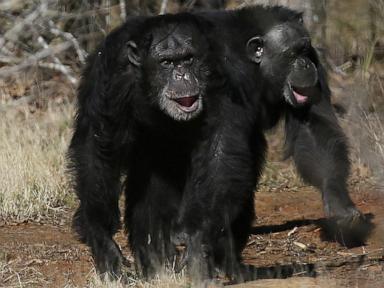
Go to any zoo and watch a group of young chimpanzees chase each other. If you look closely, you will see something deeply familiar. They open their mouths, pant rhythmically, and make a sound that sounds like a gravelly breathy pant. They are laughing. It is not just an imitation of human behavior. It is a biological trait deeply embedded in our shared history.
For centuries, people thought laughter was a uniquely human gift. Philosophers argued it separated us from the beasts. They were wrong. Evolutionary biologists have tracked down the roots of the human giggle, and it turns out we share this joyful noise with our closest living relatives. When great apes share similar giggles with us, they reveal a profound truth about where our emotions come from.
This isn't about projecting human feelings onto animals. It's about rigorous acoustic science. Researchers have spent hours tickling infant apes to analyze their sounds. The data shows our laughter evolved from a common ancestor millions of years ago. Understanding this changes how we view ourselves and our place in nature.
The Science Behind Tickling Primate Babies
The breakthrough in this field came when researchers decided to systematically investigate primate humor. Dr. Marina Davila-Ross, a psychologist at the University of Portsmouth, led a landmark study that changed everything. She and her team didn't just listen to apes play. They got their hands dirty. They tickled 21 infant and juvenile great apes, including chimpanzees, bonobos, gorillas, and orangutans. They also tickled human infants to get a baseline for comparison.
They recorded over 800 laugh sounds. Then they used advanced acoustic software to break those sounds down into specific components. They measured pitch, duration, stability, and whether the sound was produced while breathing in or breathing out.
Humans usually laugh exclusively on the exhale. We take a breath and let out a series of "ha-ha-ha" sounds as the air leaves our lungs. Apes do it differently. They can laugh while inhaling and exhaling. This is why a chimp's laugh sounds more like a saw cutting through wood or a heavy pant.
The acoustic analysis revealed something beautiful. When you map the acoustic features of these laughs onto a genetic family tree, they match perfectly. The similarity of the sounds follows the exact evolutionary timeline of primate divergence.
Mapping the Evolutionary Timeline of Joy
The structural similarities between human and ape laughter are too precise to be a coincidence. The data allowed scientists to build an evolutionary tree of laughter. This tree suggests that the primal giggle is at least 10 to 16 million years old.
Orangutans split from the common lineage first, around 14 million years ago. Their laughter sounds the most distinct from ours. It relies heavily on airflow and lacks the vocal cord vibration that gives human laughter its tone. Gorillas split off next, around 10 million years ago. Their giggles are a bit closer to ours, often containing more stable acoustic elements.
Chimpanzees and bonobos are our closest relatives, sharing a common ancestor with us roughly 6 million years ago. Their laughter is remarkably similar to human laughter. They use their vocal cords to produce voiced sounds during play, just like we do.
Some chimpanzees can even sustain a laugh entirely on the exhale for short bursts. This shows the evolutionary transition toward the human style of laughing was already starting before our lineages split. We didn't invent laughter. We just refined it. We adapted it to fit our unique vocal anatomy and our need for complex communication.
Why Play and Laughter Mattered for Survival
Laughter didn't evolve just because it feels good. It served a vital evolutionary purpose. In the wild, play is dangerous business. It looks a lot like fighting. Animals wrestle, bite, chase, and pin each other down. Without a clear signal that it's all a game, a play session can quickly turn into a real, bloody conflict.
Laughter is that signal. It's a vocal badge of safety. When a young gorilla emits a gravelly giggle while wrestling, it tells its play partner that the bite wasn't malicious. It means keep going, I am not trying to hurt you.
This social glue allowed early primates to develop complex social structures. Play is how young primates practice survival skills, build muscle, and learn social boundaries. Laughter makes prolonged play possible. It reduces tension and builds trust among group members.
When humans evolved, we took this basic social signal and expanded it. We started laughing at jokes, ironies, and ideas. The fundamental purpose remained the same. We use laughter to signal safety, form alliances, and show we belong to the same group. It is a tool for social bonding that predates language by millions of years.
Common Mistakes in Evaluating Animal Emotion
Mainstream media often gets animal behavior wrong. People see a chimpanzee baring its teeth in a wide grin and think the animal is happy. In reality, that "fear grin" is a sign of intense stress or submission. It is the exact opposite of a smile.
This misunderstanding is why acoustic research is so critical. We can't rely on visual cues alone because primate facial expressions don't always map directly to human ones. A laughing ape often looks like it's just panting with an open mouth.
Another mistake is assuming animals only mimic us. Critics sometimes argue that apes in captivity laugh because they watch human caretakers. The acoustic data refutes this. The laughter of wild-born apes raised in sanctuaries follows the same evolutionary patterns as those in zoos. The sound is hardwired into their biology. It's an innate emotional response, not a learned trick.
What Ape Giggles Tell Us About Human Language
The fact that great apes share similar giggles also sheds light on the origins of human speech. Human speech requires incredible control over our breathing. We can modulate our breath to speak long sentences without stopping.
For a long time, scientists believed this respiratory control was completely unique to humans, developing only when we started speaking. The laughter of chimps and bonobos challenges this idea. Because they can produce voiced sounds on the exhale during laughter, it shows the building blocks of speech control were present long before humans started talking.
Laughter might have been the bridge between animal calls and human language. It provided a playground for early hominids to practice vocal control and emotional expression. It proved we could use our voices for complex social interactions before we ever had words for them.
Your Next Steps to Witness This Science
You don't need a research grant to see these evolutionary connections yourself. You can actively observe and understand this biological link.
First, watch raw footage of primate play. Look up videos from verified research organizations or reputable sanctuaries showing young chimpanzees or bonobos wrestling. Turn your volume up. Ignore their facial expressions at first and listen purely to the rhythm of their breath. You will hear the distinct, rhythmic panting that matches the cadence of a human chuckle.
Second, pay attention to how you laugh during physical play. The next time you tickle a family member or wrestle with a pet, notice your breathing. You'll find that primal, uncontrollable laughter feels entirely different from a polite social laugh. That raw, gasping laughter is your evolutionary heritage showing itself.
Third, support primate conservation efforts. The species that hold the secrets to our own emotional evolution are endangered. Protecting habitats for gorillas, orangutans, chimps, and bonobos isn't just about saving animals. It's about preserving the living library of our own history. Without them, we lose the context of what makes us human.