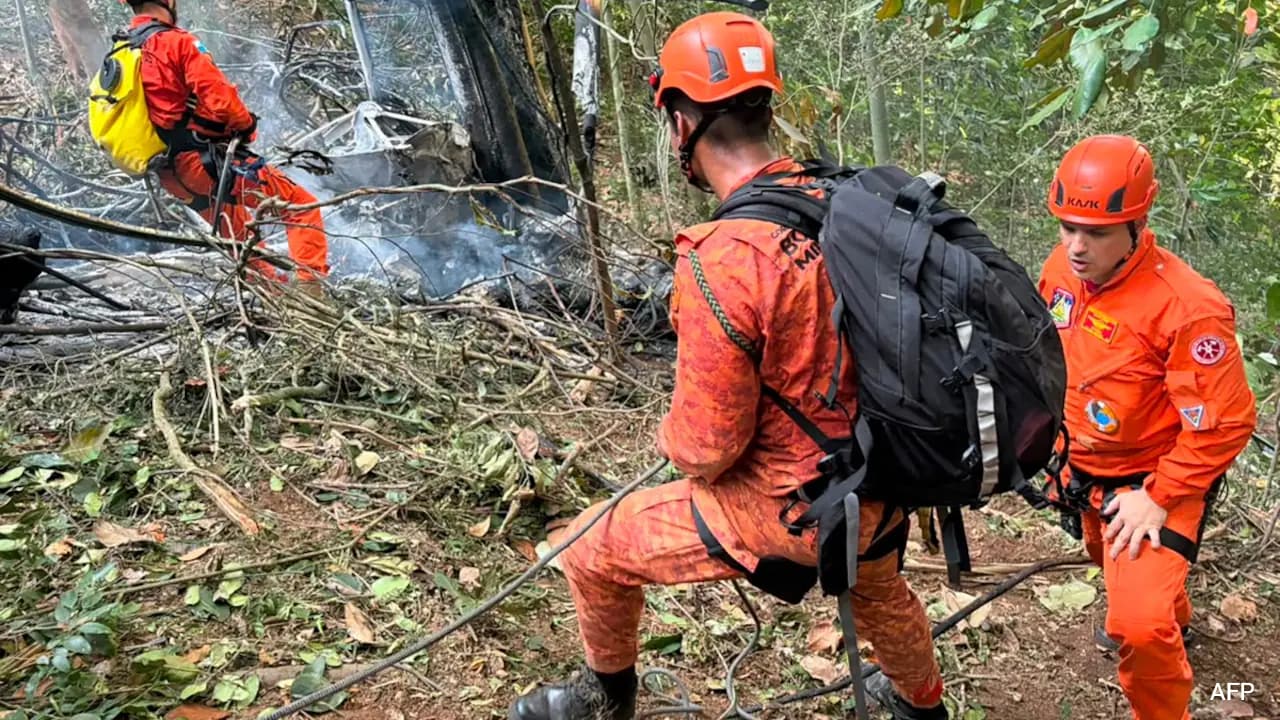
Aerial transit over dense urban sprawls always carries an inherent margin of risk, but few disasters shock the public quite like a mid-air collision. When two aircraft crossed paths over the western zone of Rio de Janeiro, six people lost their lives in a catastrophe that instantly drew international scrutiny. Aviation authorities and local emergency responders scrambled to secure the impact zones as flames engulfed parts of a local car dealership parking lot.
Understanding how this disaster unfolded requires looking past surface-level headlines. Let's break down the known facts, the safety concerns surrounding urban helicopter corridors, and the questions investigators are currently trying to answer.
The Anatomy of the Collision
The incident occurred during clear morning hours, bringing down a Eurocopter AS350 B Esquilo and a Bell 206B JetRanger III. Witnesses on the ground reported hearing a sudden metallic screech overhead before seeing the aircraft spin out of control. One machine plummeted directly into a commercial lot, igniting a severe fire among parked electric vehicles, while the second wreckage settled roughly a hundred meters away.
Military fire department units arrived swiftly to suppress the flames, but rescue teams confirmed there were no survivors. Among those whose names appeared on the flight manifests were prominent public figures, including American singer-songwriter Oliver Tree and Argentine content creator Gaspar Prim Díaz, widely known as Gaspi. Pilots Alexandre Souza and Charles Marsillac were also among the victims who perished across the two aircraft.
Safety Standards Under Scrutiny
Rio de Janeiro relies heavily on helicopter transit due to its congested geography, steep terrain, and wealthy clientele who bypass gridlocked traffic via private air charters. However, heavy reliance on visual flight rules (VFR) in dense airspace raises persistent safety questions.
Investigators from Brazil's aeronautical accident prevention center quickly seized flight logs, radar telemetry, and maintenance records. Public registries revealed that the operator of one involved aircraft had faced regulatory scrutiny previously over administrative compliance. While investigators have not yet attributed the crash to regulatory non-compliance, aviation experts point out that oversight of private charter and rental fleets remains a weak link in South American metropolitan aviation.
Eyewitness Accounts And Immediate Aftermath
Ground witnesses provided harrowing details of the final seconds before impact. Local workers near the dealership described seeing one machine already trailing smoke before a catastrophic breakup forced a desperate mid-air exit attempt.
Emergency management cordoned off multiple city blocks as forensic teams worked through charred debris to recover personal belongings and positively identify remains. Because intense thermal damage affected parts of the wreckage, identification procedures required exhaustive dental and DNA profiling by civil police.
Moving Forward With Urban Aviation Safety
Tragedies of this scale prompt difficult conversations about low-altitude traffic management. Cities like Rio de Janeiro feature designated visual corridors, yet high volume and blind spots near mountainous terrain create hazardous bottlenecks.
If municipal authorities want to prevent future mid-air disasters, mandatory transponder upgrades, stricter altitude separation rules, and digital proximity warning systems for private operators must become standard requirements rather than optional recommendations. Until policy changes catch up with urban air congestion, flying over scenic coastal mega-cities will remain a calculated gamble.