You can tear down a historic wing, raise hundreds of millions in private money, and still run straight into a constitutional wall. Donald Trump's ambitious push to construct a massive $400 million ballroom on the grounds of the White House just hit a hard legal stop. A federal appeals court ruled that the project cannot move forward aboveground without express authorization from Congress. Now, the administration is preparing an immediate appeal to the U.S. Supreme Court.
If you've been following the clash over presidential power and the physical footprint of the executive mansion, this battle represents a core constitutional stress test. Let's break down what actually happened, why the courts blocked the project, and what comes next as this fight lands at the highest court in the country. If you enjoyed this post, you might want to look at: this related article.
The Court Battle Over the White House East Wing
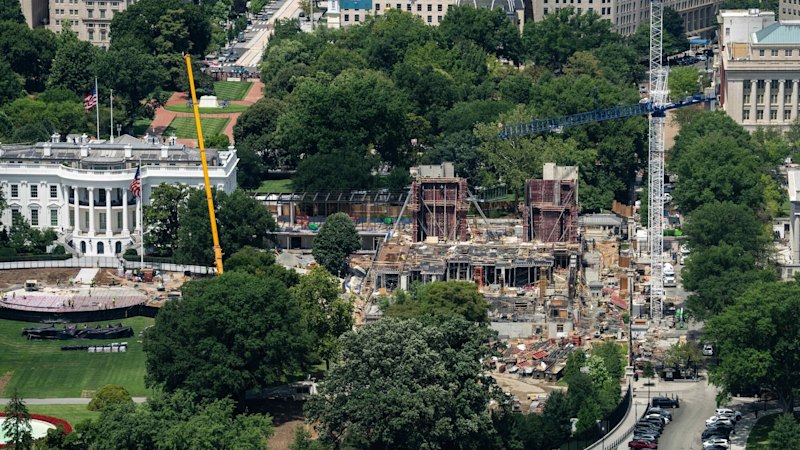
Last year, the historic East Wing of the White House was torn down to clear space for a sprawling 90,000-square-foot ballroom project. Trump touted the structure as a long-overdue addition and a "gift" to the country, arguing that the White House has lacked a proper large-scale venue for formal state events for generations.
The National Trust for Historic Preservation disagreed with how the project bypassed traditional legislative checkpoints. They sued the administration, arguing that altering a premier national landmark requires congressional approval. For another perspective on this event, see the latest update from TIME.
A three-judge panel from the U.S. Court of Appeals for the District of Columbia Circuit agreed in a 2-1 decision. Writing for the majority, Judges Patricia Millett and Bradley Garcia drew a sharp line on executive power. They noted that each president serves as a temporary tenant rather than an owner of the White House. The court concluded that deciding whether to build a massive new structure on federal property belongs squarely to Congress, not to executive self-help.
Why Private Funding Didn't Fix the Legal Problem
One of the central arguments from the administration has been that public tax dollars aren't funding the construction. Trump and government attorneys argued that because the project relies on private donations and personal funds, the executive branch has the freedom to build without seeking a congressional appropriation.
The courts weren't convinced. Federal judges emphasized that bypassing appropriations doesn't exempt a project from structural separation-of-powers rules. Congress maintains full control over federal property laws and the oversight of federal grounds. Just because a project is privately financed doesn't mean a president can reshape the nation's most famous residence without legislative sign-off.
Meanwhile, government attorneys tried framing the construction as an essential security and national defense upgrade, pointing to underground work, potential bunkers, and military infrastructure included in the broader site development. The appeals court maintained that while underground security work can proceed, the visible aboveground ballroom remains frozen until the legal questions are sorted out.
What Happens Next at the Supreme Court
The D.C. Circuit placed its ruling on a temporary 14-day hold. This gives the administration a brief window to file its emergency appeal to the Supreme Court.
Trump immediately denounced the ruling on social media as unjust and politically motivated, confirming that an emergency petition to the high court is coming. The Supreme Court will now have to decide whether to step into a high-stakes dispute over executive authority, historic preservation, and the limits of presidential remodeling.
Cranes and construction teams have dominated the White House backdrop for months, and the administration wants the work completed before the end of the presidential term. Whether the Supreme Court clears the way for the structure to rise or leaves the injunction intact depends on how the justices view the constitutional boundary between executive initiative and congressional oversight.