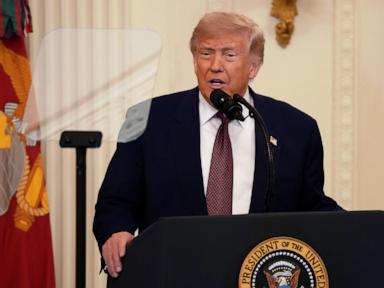
Imagine knowing exactly what the President of the United States is going to say before he even opens his mouth. For most people, that sounds like a political fantasy. For Gabriel Perez, it was just another day at the office—and a highly lucrative side hustle.
Perez, who has worked as Donald Trump’s personal teleprompter operator since 2016, is now the focus of a major federal investigation. Regulators say he used his direct, early access to the president’s speeches to rake in more than $100,000 on prediction market platforms. You might also find this connected article insightful: Why Canada Is Still Dragging Its Feet On Residential School Denialism.
He didn't need to predict complex geopolitical shifts or election outcomes. He just needed to know if Trump would say words like "Hormuz," "fake news," or "inflation" during major addresses, including the State of the Union.
This isn't just a quirky story about a rogue staffer. It is a massive wake-up call for the rapidly growing world of political betting. It highlights a glaring vulnerability in prediction markets that many saw coming but few prepared for. As reported in latest articles by Associated Press, the results are worth noting.
The Ultimate Insider Trading Cheat Code
To understand how Perez pulled this off, you have to look at how modern speechwriting and presidential teleprompting work.
Preparing a presidential address is a highly collaborative, multi-step process. Speeches go through dozens of drafts, circulating among policy advisors, lawyers, and communications staff. By the time a speech is loaded onto the teleprompter, the final draft is locked down.
Perez was the gatekeeper of those final words. He sat at the prompt console, directly responsible for scrolling through the text as Trump spoke. He had the final script on his screen hours, sometimes days, before the public heard a single syllable.
In the physical world, that information is a closely guarded secret. In the digital world, it became raw material for prediction markets.
We are talking about "mention markets". These are niche betting pools offered by platforms like Kalshi and Polymarket. They allow retail traders to bet on whether a public figure will say specific words during a live broadcast.
If you know the exact script, these markets are essentially free money.
The Mechanics of Mention Markets
Mention markets work like binary options. You buy "Yes" or "No" contracts for a specific phrase.
If Kalshi lists a market on whether Trump will say "rigged election" during a national address, the contract price fluctuates between 1 cent and 99 cents based on perceived probability. If the word is spoken, "Yes" contracts pay out $1.00. If it isn't, they expire worthless.
For an average trader, betting on these phrases is a guessing game. You analyze past speeches, study campaign talking points, and pray Trump doesn't go off on a tangent.
For Perez, there was no guessing. He had the answers to the test.
He could see the exact words queued up on his screen. While the public speculated on what Trump would say, Perez could quietly log onto his account and buy up contracts at a massive discount.
How the Scam Fell Apart
Greed is almost always the undoing of insider traders.
Perez’s downfall started when his trading activity began to look less like lucky guessing and more like a sure thing. Market makers and analysts on Kalshi noticed a series of highly irregular trades in March.
Someone was dumping huge amounts of capital into highly specific, low-probability bets right before speeches began.
No real trader operates with that level of absolute certainty unless they know something the rest of the market doesn't. Kalshi’s internal surveillance team flagged the account and ran an investigation.
When they cross-referenced the user data, they discovered the account belonged to a federal employee with direct ties to the administration.
Kalshi immediately took action. They froze the account, keeping roughly $90,000 of Perez's profits from being withdrawn, and reported the findings to the Commodity Futures Trading Commission.
Why the CFTC Stepped In
The CFTC regulates derivative trading in the United States, which includes licensed prediction platforms like Kalshi.
Because prediction markets are treated as financial contracts, using non-public information to trade on them falls squarely under the umbrella of market manipulation and insider trading.
Reports indicate that Perez is currently in active talks with the CFTC to settle the allegations. The White House has tried to distance itself from the mess, reiterating that all staffers are expected to follow strict ethical guidelines.
But the damage is already done. This incident proves that the guardrails keeping government insiders out of these markets are incredibly weak.
A Predictable Threat to Prediction Markets
Critics of political betting have long warned that mention markets are uniquely susceptible to manipulation.
Unlike election outcomes, which are decided by millions of voters and are impossible for one person to rig, a speech is entirely within the control of a single individual or a small group of staffers.
This isn't even the first time someone has messed with these markets for fun or profit.
Last year, Coinbase Chief Executive Officer Brian Armstrong wrapped up an earnings call by rattling off a list of buzzwords like "bitcoin," "ethereum," "blockchain," and "Web3". He openly admitted he was doing it to trigger payouts on a Polymarket pool betting on what he would say.
While Armstrong did it as a joke to highlight the absurdity of the markets, the Perez situation is far more serious. It involves a government employee abusing their official position for personal financial gain.
Some major financial platforms saw the writing on the wall months ago.
Robinhood, which recently partnered with Kalshi to offer prediction market trading, deliberately chose to exclude mention markets from its platform. They cited serious concerns over market manipulation and insider influence.
It turns out their skepticism was entirely justified.
What This Means for the Future of Political Betting
If you're a retail trader looking to make some quick cash on what a politician is going to say, you need to reconsider your strategy.
The Perez scandal proves that you aren't just trading against other enthusiasts who are analyzing public data. You are trading against insiders who have the literal transcript in their hands.
Here is what needs to happen next if prediction platforms want to survive this reputational hit:
- Banning Mention Markets: Platforms should voluntarily phase out wagers on specific speech words. They are too easy to rig, and the temptation for staffers is too high.
- Stricter Identity Verification: Kalshi recently started requiring users to disclose their employers before trading in high-risk political markets. This needs to become an industry-wide standard with zero exceptions.
- Real-time Surveillance Expansion: Exchanges must deploy more aggressive algorithms to automatically freeze accounts that show highly profitable, last-minute trading patterns right before major public announcements.
To protect your own capital, stop betting on events where a handful of people hold all the cards. Focus your trades on broad, macro-level outcomes—like election results, economic indicators, or policy decisions—where no single teleprompter operator can tip the scales.