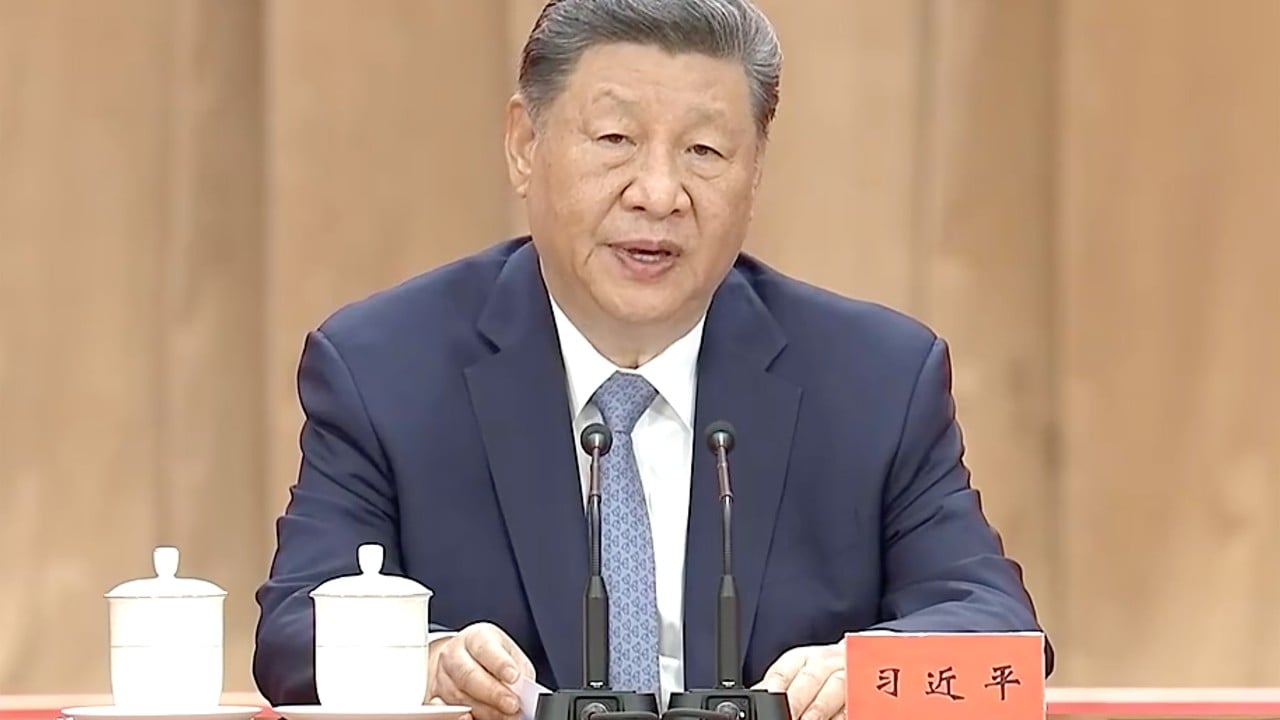
Beijing just sent a massive wake-up call to its scientific establishment. If you think China is satisfied with its current tech gains, you're misreading the situation. On July 8, 2026, Chinese President Xi Jinping took the stage at the national science and technology award conference in Beijing to deliver a speech that was less about celebrating past achievements and much more about fixing deep institutional flaws.
The timing isn't accidental. China is entering its 15th Five-Year Plan period, spanning from 2026 to 2030. Beijing views this specific five-year window as a make-or-break phase to achieve tech self-reliance and escape Western containment. Xi didn't mince words. He openly targeted wasteful research spending, duplicated investments, and a glaring lack of breakthrough innovation. For a top leader, this level of public self-criticism is rare, and it signals a heavy shift in how the country plans to run its state-backed tech machine.
The real narrative isn't just that China wants to win the global tech race. It's that the current system is too bloated and inefficient to get them there.
The Problem With Chinas Current Innovation Model
On paper, the country looks like an unstoppable scientific juggernaut. Spending on research and development has grown by an average of 10 percent annually over the last few years. By the end of 2025, R&D intensity hit 2.8 percent of the country's gross domestic product. That actually pushed it past the average for countries in the Organization for Economic Cooperation and Development for the first time.
But cash injection doesn't automatically equal breakthrough results. Xi explicitly called out the fact that money is being wasted on repetitive projects. Local governments and different state institutions often build identical research centers or fund the exact same type of low-level tech applications just to tick a box on their bureaucratic performance reviews.
This bureaucratic box-ticking has created a massive imbalance. China excels at incremental innovation, taking an existing technology and making it cheaper, faster, or more scalable. Think about lithium-ion batteries or commercial drones. However, the system struggles heavily with true fundamental scientific breakthroughs, the kind that start from a blank sheet of paper. When Western sanctions cut off access to high-end lithography machines or advanced semiconductor architecture, incremental improvements aren't enough to bridge the gap.
Where the Money and Resources Are Going Next
The state is redirecting its massive financial resources away from vanity projects and focusing strictly on specific high-stakes frontiers. The speech outlined a highly coordinated list of priority sectors that the central government will directly manage.
- Frontier fields: Artificial intelligence, quantum technology, and life sciences.
- Priority industrial sectors: Integrated circuits and advanced manufacturing.
- Strategic domains: Deep sea exploration, deep space research, and deep earth drilling.
Instead of letting hundreds of different universities and local state-owned enterprises run their own minor AI or quantum experiments, Beijing is stepping in to enforce centralized coordination. The state intends to manage planning, policy, major tasks, and resource platforms under a unified command structure. This eliminates the internal competition where different provinces compete against one another for the same talent and resources, a phenomenon often described locally as "involution-style" competition.
Fixing the Talent Mismatch and Research Waste
Another massive bottleneck that the leadership addressed is the country's imbalanced talent structure. China produces millions of engineering graduates every year, but the system is failing to nurture top-tier creative scientists who can lead original research.
The evaluation system for scientists in China has long been broken. Researchers are usually judged by the sheer quantity of papers they publish in academic journals rather than the actual real-world impact or originality of their work. This forces young researchers to play it safe, pursuing minor variations of existing research to guarantee publication rather than taking big, risky bets that might fail but could lead to a massive breakthrough.
Xi insisted on transforming this evaluation system, turning it into a proper guiding tool that rewards actual quality, innovation capacity, and tangible contributions. The government also plans to integrate research much more tightly with education, targeting teenagers to build scientific literacy and experimental skills early on.
To show what kind of success the state actually values, Xi personally presented the top science and technology awards for 2025 to two veteran scientists. One went to Chen Liquan, a pioneer who helped build the foundations of China’s lithium battery sector, and the other to Ben De, a prominent radar technology expert. These aren't theoretical academics; they are individuals whose work directly built critical domestic industries and military capabilities.
The Global Implications of Beijings New Blueprint
For the rest of the world, this policy shift means the tech competition is about to become much more intense and highly focused. The era of China simply importing core components and assembling final products is over. The 15th Five-Year Plan is essentially a blueprint for national survival in an increasingly hostile international environment.
We saw an early glimpse of this shift with the sudden rise of new AI architectures out of China, which managed to match or beat Western models while using a fraction of the computing power. That happened because resource scarcity forced domestic engineers to optimize their code rather than just throwing infinite hardware at the problem. Now, Beijing wants to apply that exact same efficiency-driven mindset across the entire spectrum of advanced technologies.
The ultimate objective is to make global supply chains deeply dependent on Chinese technical standards while completely removing Western dependencies from China's own internal systems.
Next Steps for Global Tech Players and Analysts
If you are tracking global technology trends, analyzing supply chain risks, or managing a tech business, you need to adjust your strategy based on this systemic overhaul.
- Stop monitoring just the raw spend: Do not judge China's technological progress simply by looking at their total R&D budget or the number of patents filed. Watch the structural reforms. Look at how they consolidate their state laboratories and whether they successfully change the academic evaluation system away from paper volume.
- Watch the application requirements: The state is demanding that scientific innovation link directly with industrial needs. Pay close attention to high-level industrial clusters forming around advanced manufacturing and semiconductors in specific regions like the Greater Bay Area or the Yangtze River Delta.
- Anticipate stricter data and ethics governance: As part of this overhaul, Beijing is tightening its grip on scientific ethics and security governance. Expect stricter regulations regarding data sovereignty, biotech experimentation, and AI alignment within Chinese borders, which will directly impact international research collaborations.