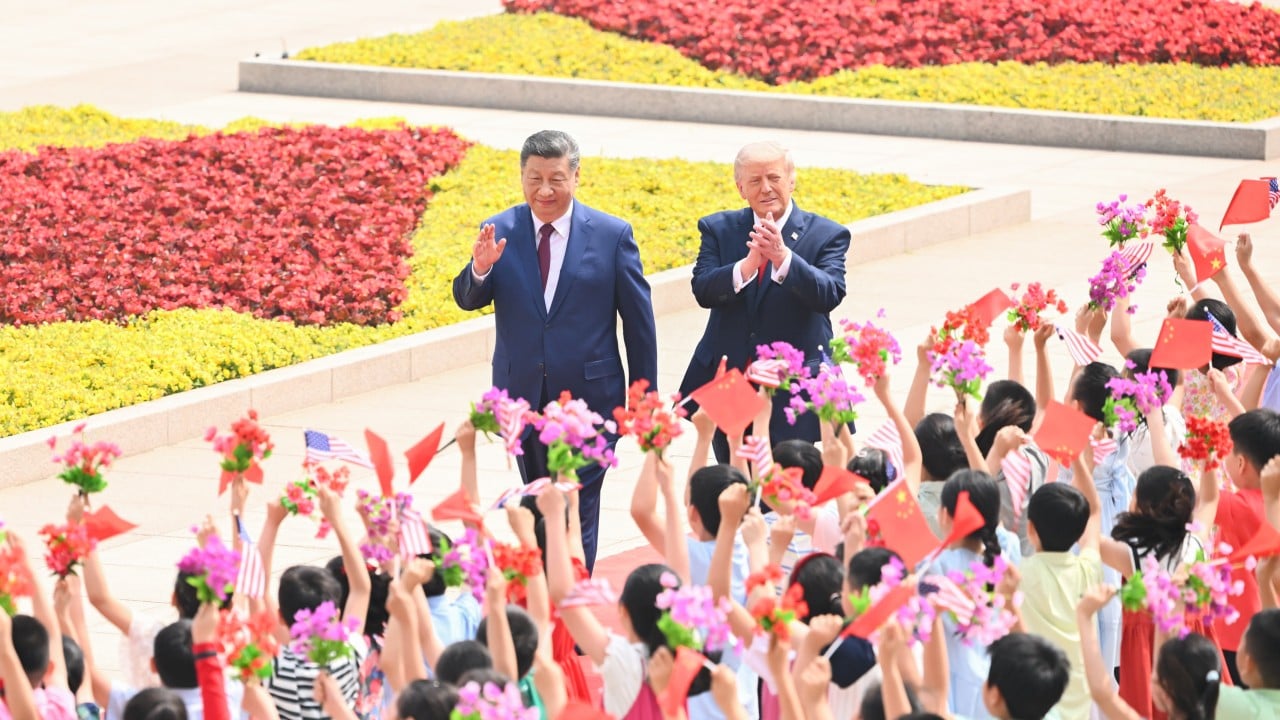
Ceremony matters just as much as policy when two nuclear-armed superpowers lock horns. Donald Trump rolled out a massive red carpet at Joint Base Andrews, stepping onto the tarmac himself to greet Chinese President Xi Jinping. Presidents rarely greet foreign counterparts plane-side. Trump broke that rule to match the pageantry he experienced during his trip to Beijing earlier in the year.
Beneath the military flyovers, 21-gun salutes, and viral clips of service members smoothing carpets, a tense 48-hour diplomatic chess match began. Trade, artificial intelligence, critical minerals, and regional conflicts frame the agenda. Washington and Beijing are talking, but nobody expects miracles.
The Optics of Power and Protocol
For Beijing, the concept of "face" carries massive political weight. The choreography of a state visit is scrutinized down to the inch. When Trump traveled to China, Xi didn't meet him at the airport, sending Vice President Han Zheng instead. By showing up at Joint Base Andrews alongside First Lady Melania Trump, the White House signaled an unusual level of personal diplomacy.
Critics immediately jumped on the optics. Lawmakers on Capitol Hill questioned the lavish welcome given ongoing tensions. Social media users dissected a 12-second clip of military personnel adjusting the 30-meter red carpet, sparking fierce debates about respect and national posture.
Yet, pageantry serves a functional purpose in modern statecraft. It provides a controlled environment where leaders can posture for domestic audiences while maintaining open communication channels.
What is Actually on the Table
Don't expect sweeping trade treaties or permanent geopolitical breakthroughs from this summit. Foreign policy analysts note that the core disagreements remain deeply entrenched. Think tanks categorize the friction points into three critical buckets: trade, tech, and Taiwan.
Supply chain vulnerabilities loom large. Last year, China demonstrated its leverage by restricting critical rare-earth elements, sending shockwaves through American manufacturing. Trump wants safeguards against future supply disruptions. Meanwhile, Washington continues to restrict advanced semiconductor exports and artificial intelligence technology to China, pushing for stricter tech containment.
The State Dinner and Cultural Diplomacy
While the trade and security talks happen behind closed doors, the spouses handle the soft diplomacy. First Lady Melania Trump coordinated an itinerary featuring a visit to the Smithsonian National Museum of Asian Art for Madame Peng Liyuan.
Thursday evening brings the black-tie state dinner in the East Room of the White House. Guest lists typically feature tech titans, prominent diplomats, and business leaders like Elon Musk and Jensen Huang. These events offer high-stakes networking disguised as luxury dining.
On Friday, the leaders wrap up their 48-hour window with tea in the Red Room followed by a joint trip to the National Archives to view historical documents.
Look past the red carpets and military bands. This visit is about managing friction, avoiding direct escalation, and keeping channels open when trust is entirely absent.
Check the official scheduling updates and watch how markets react to the closed-door statements.