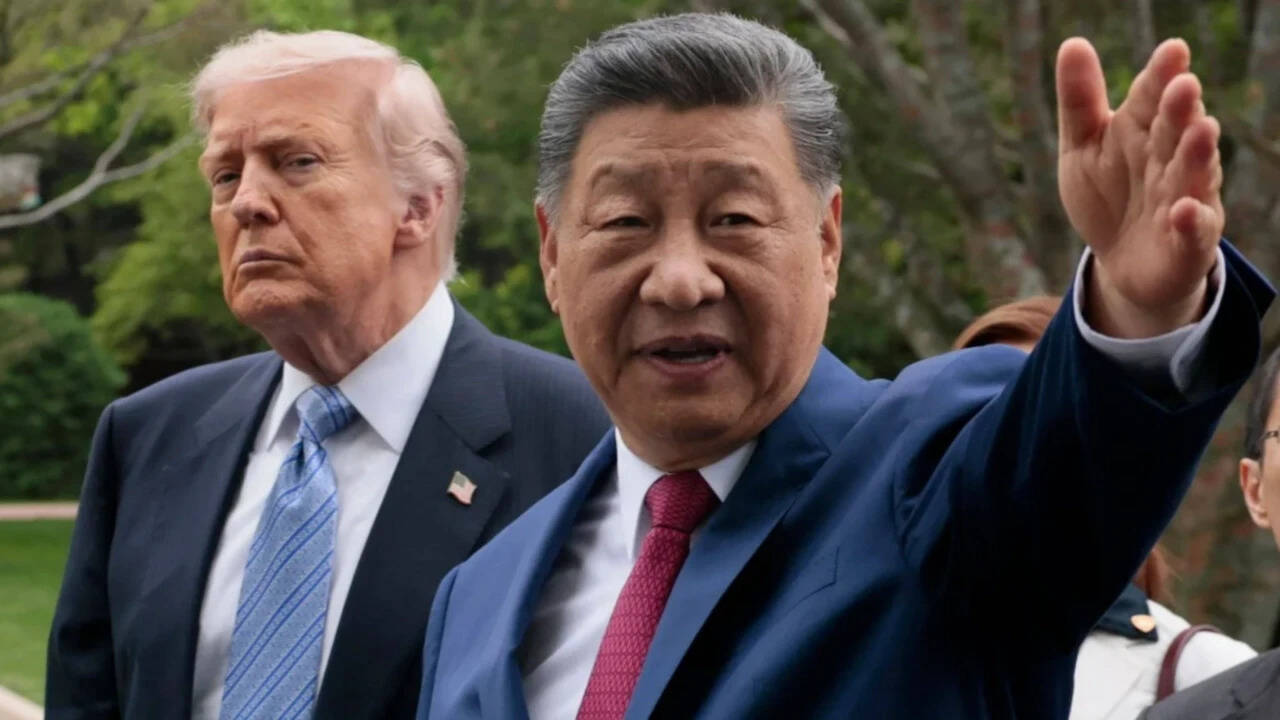
Donald Trump just dropped a diplomatic flashbang right into the middle of US China negotiations. During a primetime White House address, he alleged that Beijing executed the largest election data compromise in history, claiming Chinese spies grabbed 220 million voter files. On paper, throwing around accusations like that right before a major diplomatic summit usually kills the meeting entirely.
Yet, Chinese President Xi Jinping is still planning to land on American soil this coming September.
Beijing confirmed that prep work continues behind closed doors. US Secretary of State Marco Rubio told reporters before taking off for ASEAN meetings in the Philippines that Washington expects the summit to move forward as scheduled. Chinese Vice Foreign Minister Ma Zhaoxu is preparing to travel to Washington and Miami to lay down the groundwork.
It looks like total chaos from the outside. Look a little closer, though, and you'll see both world powers playing a very calculated game of political theater.
The Primetime Speech That Almost Blew Up the Summit
Trump's July 16 address caught plenty of foreign policy watchers off guard. Just two months earlier in May, Trump traveled to Beijing. That trip ended with smiles, handshakes, and a public invitation for Xi to visit Washington in September. The mood was surprisingly calm after months of grueling tariff disputes.
Then came the sudden pivot. Trump took to national television, declassifying intelligence files and accusing China of obtaining vast troves of voter registration data between 2016 and 2017. He claimed Chinese intelligence agencies wanted him to lose and accused American security officials of hiding the full picture.
China's response was swift and blunt. Foreign Ministry spokesperson Lin Jian called the allegations a fabricated smear and told Washington to stop using China as a political football. Chinese diplomats reminded the press that Beijing adheres strictly to a policy of non-interference in other nations' internal matters.
If this happened ten years ago, a spat like this would have canceled high-level diplomatic visits for months. Today, both sides are treating it as noise they can manage around.
What the Declassified Intelligence Files Actually Show
When you cut through the political rhetoric and look at the declassified documents released during the address, a very different picture emerges.
The released files show that Chinese intelligence actors collected publicly available voter registry data from 18 states almost a decade ago. Political consultants purchase those exact same datasets every single day for campaigns.
Crucially, the 2021 US intelligence community assessment confirmed that no foreign power altered vote totals, tampered with balloting systems, or affected the technical outcome of any American election. One of the declassified CIA documents even stated plainly that vote tabulation systems would be extremely difficult to manipulate on a scale large enough to change election outcomes.
So why bring it up now?
Trump is facing upcoming midterm elections and heavy pressure from critics who claimed he went soft on Beijing during his May summit. Dredging up older intelligence lets him project a tough stance toward China for domestic voters while keeping the actual diplomatic channel open for economic trade deals.
Why Beijing Is Choiceful About Its Reactions
Beijing understands American election-year politics better than most people give them credit for.
Chinese foreign policy experts like Zhao Minghao from Fudan University point out that Beijing views Trump's harsh public statements as political theater aimed at a domestic audience. Chinese leadership knows that blowing up a summit over campaign rhetoric doesn't serve their economic interests right now.
China wants economic stability. They want predictability in trade agreements, clear rules on technological exports, and a platform to present Xi as a global statesman who can manage volatile American leaders. Canceling the September trip would hand political ammunition to hardliners in Washington who want total economic decoupling.
Instead, Beijing chooses direct verbal rejections through official press briefings while keeping working-level diplomats busy on logistics behind the scenes. Lin Jian made sure to emphasize that leader-to-leader diplomacy provides irreplaceable strategic guidance for US-China relations. That phrasing isn't accidental. It signals that Beijing still values the direct line between Xi and Trump above the daily noise of press briefings.
Strategic Realities Forcing Both Leaders to the Table
Neither leader is walking into the planned September summit out of goodwill or personal affection. They are forced together by harsh economic realities and mutual dependencies.
- Trade and Tariffs: Trade disputes create massive headaches for manufacturing and supply chains in both nations. Neither country can afford an unchecked trade war right now.
- Geopolitical Hotspots: Global conflict zones demand constant communication between the world's two largest superpowers to prevent accidental military escalation.
- Technology Controls: Strict rules surrounding AI governance and semiconductor supply chains need high-level framework agreements so global markets don't fracture completely.
- Domestic Economic Pressures: Both presidents need to deliver tangible economic stability to their home audiences ahead of critical political milestones.
When you look at those structural pressures, a controversial speech about decade-old voter registries isn't going to derail a high-stakes presidential summit. Both sides have too much skin in the game.
The Playbook for Tracking High Stakes Diplomatic Summits
Watching superpower diplomacy can feel confusing when headlines shift from confrontation to cooperation overnight. You can track whether the September summit remains on track by watching three clear indicators over the next few weeks.
First, track working-level diplomatic travel. When Vice Foreign Minister Ma Zhaoxu visits Washington and Miami, pay attention to whether formal agendas and logistics press releases are issued. If those preparatory meetings continue uninterrupted, the summit is safe.
Second, monitor rhetoric around trade tariff deadlines. If both governments continue technical discussions on trade and supply chains without imposing sudden surprise tariffs, the broader relationship remains manageable.
Third, watch for official announcements from the White House protocol office regarding venue confirmations in Washington. Official scheduling confirmations usually drop three to four weeks before the actual meeting date.
The noise from cable news and political speeches will stay loud, but the underlying diplomacy moves on hard economic interests. Expect Xi to land in the US this September, regardless of what gets said from a podium in the meantime.