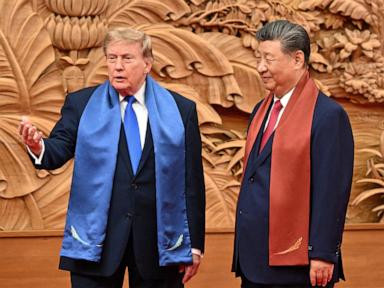
When Xi Jinping tells Donald Trump that Washington must do "the right thing" on Taiwan or risk serious turbulence, he isn't offering a polite diplomatic suggestion. He's drawing a sharp line in the sand during high-stakes summitry—and testing whether the White House will bend on weapons, rhetoric, or regional restraint.
In short, Beijing uses that phrase to pressure Washington into curbing arms sales to Taipei, reiterating opposition to Taiwan independence, and avoiding moves that challenge China's claim over the island. Yet the real story behind Xi's warning isn't just a bilateral talking point. It sits right at the collision of pending weapons packages, strained trade truces, parallel conflicts in the Middle East and Eastern Europe, and a shifting balance of power in Asia.
Why Xi's Taiwan Warning Hits Harder During Summit Diplomacy
If you follow U.S.-China relations closely, you know that Taiwan always shows up on the agenda—even when officials try to keep the spotlight elsewhere. Before summit gatherings in China—including the APEC talks in Shenzhen where Xi met with Trump and held a rare trilateral meeting with Russian President Vladimir Putin—analysts noted that Xi routinely uses face-to-face moments to press his expectations on cross-strait dynamics.
Chinese state media, including Xinhua, framed Xi's message around avoiding major setbacks in bilateral ties, while reporting that Trump reiterated that the United States does not support Taiwan independence. That phrasing is crucial. Washington's long-standing posture has been a delicate balancing act: opposing unilateral changes to the status quo by either side while maintaining unofficial ties and defensive support for Taiwan. When Beijing pushes for "the right thing," it wants the U.S. to tilt that balance decisively toward Beijing's red lines.
Honestly, watching high-level summits unfold shows how quickly pageantry can mask unresolved friction. Warm airport welcomes, big-picture talk about stability, and broadly worded declarations often coexist with intense behind-the-scenes bargaining. As analysts at the Council on Foreign Relations and CBS News have pointed out, summits give Xi a stage to project calm authority while testing how much room Trump has—or wants—to accommodate Beijing.
The Weapons Bottleneck Behind the Rhetoric
Abstract warnings get concrete fast when military hardware is sitting on a desk. A roughly $14 billion U.S. arms package for Taiwan has been a major flashpoint, complicated earlier in 2026 when munitions demands tied to the conflict with Iran led the Navy to pause shipments to preserve stockpiles.
Now think about the squeeze on the White House:
- Pressure from Beijing: Xi wants Washington to hold back on weapons transfers that bolster Taiwan's defense and signal U.S. backing.
- Pressure from Congress: Lawmakers in Washington have pushed to move delayed arms packages forward despite competing global demands.
- Military supply constraints: Global crises—from the Iran conflict and Strait of Hormuz disruptions to Russia's war in Ukraine—stretch defense production and diplomatic bandwidth at the exact same moment.
A common mistake people make is treating a delay in arms deliveries as a permanent policy shift. Sometimes it's logistics and munition math; sometimes it's political leverage. Often, it's both.
What People Get Wrong About Cross-Strait Pressure
A lot of commentary treats Taiwan either as an isolated dispute or as an imminent war trigger that moves on a single switch. Neither view captures how pressure actually works day to day.
First, Beijing relies heavily on gray-zone pressure rather than waiting solely for a dramatic crisis. Taiwan's defense authorities regularly track Chinese aircraft sorties, naval vessels, and official ships operating around the island, alongside occasional coordinated air activity involving Russian bombers near Taiwan's air defense identification zone. That steady drumbeat wears down readiness, tests reactions, and reminds Taipei—and Washington—of China's proximity and persistence.
Second, Taiwan isn't a passive bystander with zero room to maneuver. Even when excluded from formal state-to-state summits because of diplomatic constraints, Taipei sends high-profile representatives to regional forums like APEC—such as Acer founder Stan Shih attending on President Lai Ching-te's behalf—and emphasizes its own defense investments and close communication with U.S. officials.
Third, economic leverage cuts across the entire relationship. Tensions over artificial intelligence, semiconductor export controls, rare-earth supply restrictions, and expiring trade truces all shape how much heat either side wants to generate over Taiwan on any given week. When trade and supply chains are already strained, leaders sometimes talk tough on core sovereignty issues while trying to keep channels open so markets and talks don't completely derail.
Why Regional Neighbors Watch Every Word
Taiwan doesn't sit in a vacuum. Neighboring capitals read U.S.-China exchanges like tea leaves because any shift in deterrence affects their own security calculations.
Japanese Prime Minister Sanae Takaichi, for example, drew sharp pushback from Beijing after past remarks suggesting Japan could deploy forces if a move against Taiwan threatened Japanese territory, even as Tokyo maintained its long-standing 1972 stance. Meanwhile, the Philippines and other regional players watch how Beijing pairs diplomatic overtures with maritime and economic pressure across the East and South China Seas.
From a practical standpoint, here is what usually works versus what sounds good in theory when reading headlines about these summits:
- Sounds good in theory: Assuming a single leader's pledge at a summit settles the Taiwan question for months. In reality, competing domestic pressures in Washington, Taipei, and Beijing quickly test any verbal truce.
- Works better in practice: Tracking concrete actions—actual arms approvals, military patrol patterns, export-control rules, and trade truce extensions—rather than relying solely on upbeat readout quotes.
Data on backchannel diplomacy is naturally limited because sensitive conversations happen behind closed doors, and experts themselves disagree on whether summit diplomacy stabilizes tensions or simply buys Beijing time. Acknowledging that uncertainty keeps you from over-interpreting a single quote.
Practical Ways to Follow U.S.-China-Taiwan Developments
If you're tracking this story for business, policy, or personal awareness, skip the clickbait headlines and build a tighter habit:
- Compare the readouts side by side. Check what Chinese state media says Xi said, what the White House or U.S. officials confirm, and how Taipei responds—paying close attention to what gets left out.
- Watch the pending arms and tech files. Follow congressional movement on Taiwan defense packages alongside U.S. chip/AI rules and Chinese rare-earth or export restrictions, which often signal real leverage better than speeches do.
- Monitor daily operational signals. Look at credible reporting on Taiwan Strait military activity, regional diplomatic reactions in Tokyo and Manila, and upcoming trade deadlines rather than reacting to every tough phrase.
Taiwan Watches Closely as Trump Meets Xi, Putin In Shenzhen
This video adds timely regional coverage of how Taiwan's officials and observers watch high-level summit meetings involving Trump, Xi, and Putin unfold.