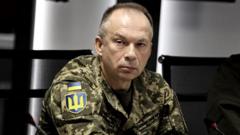
Volodymyr Zelensky just made the biggest military gamble of Ukraine’s war so far.
By sacking General Oleksandr Syrskyi and replacing him with 43-year-old Maj. Gen. Mykhailo Drapatyi, Ukraine’s president didn't just reshuffle his high command. He surrendered to days of street protests and admitted that his senior military structure was failing to adapt to modern warfare.
If you've been following the news out of Kyiv, the move seemed abrupt. It wasn't. The decision follows a week of political chaos, public outrage, and a bitter generational clash inside Ukraine’s military apparatus.
The Feud That Sparked Mass Protests in Kyiv
The crisis erupted when Zelensky made a sudden decision to fire his 35-year-old Defense Minister, Mykhailo Fedorov. Fedorov, a former tech entrepreneur, was wildly popular among younger Ukrainians, front-line drone operators, and Western tech partners.
During his six months in office, Fedorov pushed hard to overhaul how Ukraine fights. He prioritized long-range drone strikes deep inside Russian territory, streamlined recruitment apps, and tried to strip away Soviet-era bureaucracy. But that push brought him into direct conflict with General Syrskyi.
Syrskyi, a 60-year-old commander trained in the Soviet era, favored traditional artillery battle plans and centralized command. Fedorov openly accused Syrskyi of blocking reforms and dragging his feet on tech initiatives.
When Zelensky backed Syrskyi and fired Fedorov, the reaction was immediate and fierce.
Thousands of demonstrators took to the streets in Kyiv and other major cities. They carried signs demanding Fedorov's return and Syrskyi's dismissal. Independent media outlets paused publishing to join the demonstrations. Senior defense officials resigned in protest. The public message was simple: Ukraine cannot win a modern war with old-school tactics.
Why Mykhailo Drapatyi Marks a Massive Generational Shift
Zelensky quickly realized he miscalculated public sentiment. With pressure mounting, his chief of staff signaled that "the position of society has been heard."
Enter Mykhailo Drapatyi.
Drapatyi isn't an armchair strategist. At 43, he represents a totally different generation of Ukrainian military leadership—officers whose entire senior careers were forged on the front lines against Russia, not in Soviet military academies.
He gained national recognition during the early years of fighting in Donbas and later led the defense of Kharkiv, stabilizing front lines during critical Russian offensives. Crucially, Drapatyi has a track record of taking personal accountability. A year ago, he resigned from a senior post after a Russian strike hit a training ground, stating that commanders must take responsibility for frontline failures.
When Fedorov was ousted, Drapatyi publicly backed the civilian reformer, writing that "the military needs change, but without justice, no change will make sense to the people who carry this war on their shoulders every day."
That willingness to embrace reform made him the obvious choice to replace Syrskyi.
What This Means for the Front Lines
This isn't just about personalities or political survival in Kyiv. It directly impacts how Ukraine fights over the coming months.
Drone Warfare and Modernization
Fedorov pointed out a brutal truth before his dismissal: drone architecture and field tech change every three to four months. Traditional military hierarchies move too slowly to keep up. Under Drapatyi, expects faster deployment of uncrewed systems, better integration of electronic warfare units, and less micromanagement from central headquarters.
Command Structure and Morale
Syrskyi was respected for his defensive victories around Kyiv early in the invasion, but field commanders frequently criticized his willingness to accept high casualty rates in protracted battles. Drapatyi’s appointment sends a clear signal to soldiers on the front lines that leadership values innovation and frontline lives over stubborn doctrine.
Civil-Military Dynamics
By backing down to public protests, Zelensky proved that Ukrainian democracy remains active even under martial law. However, it also shows the president's vulnerability to domestic pressure during times of military strain.
What to Watch Next
The immediate crisis in Kyiv may have cooled, but key strategic questions remain open. Here is what to track as Drapatyi takes full control of the armed forces:
- Fedorov’s New Role: Zelensky offered Fedorov a senior position overseeing technological development and state innovation. Whether Fedorov accepts will show if the civilian tech team is truly reconciled with the military leadership.
- Immediate Frontline Transitions: Watch how quickly Drapatyi reshuffles army corps commanders to replace Syrskyi loyalists with younger officers.
- Supply Chains for Long-Range Drones: Pay attention to whether Ukraine accelerates its deep-strike campaign against Russian domestic infrastructure, which was Fedorov’s signature focus.
Ukraine has traded senior military continuity for generational adaptation. In a long, brutal war of attrition where technological advantages spoil in weeks, staying flexible isn't just a preference—it's the only way to survive.