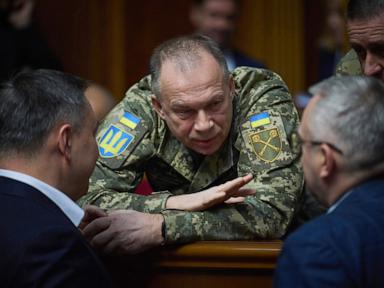
When thousands of Ukrainians took to the streets of Kyiv demanding the removal of General Oleksandr Syrskyi, President Volodymyr Zelenskyy didn't have much room left to maneuver. On Tuesday, Zelenskyy officially ousted Syrskyi as commander-in-chief of Ukraine's armed forces, replacing him with 43-year-old Major General Mykhailo Drapatyi.
This wasn't just another routine reshuffle in Kyiv. It was a massive political reckoning driven by a public that refused to stay silent.
If you've been following the war, you know leadership swaps happen when front lines stall. But this firing was different. It came after days of passionate street protests triggered by Zelenskyy's decision last week to remove Defense Minister Mykhailo Fedorov. Fedorov, a tech innovator who pushed hard for drone warfare and military modernization, clashed directly with Syrskyi's traditional, Soviet-style command style. When Fedorov was forced out, the public saw it as the administration siding with a rigid, old-guard military apparatus over vital reforms.
To understand why Zelenskyy made this high-stakes decision and what it means for the war effort moving forward, we have to look past the official press releases.
The Mounting Street Protests That Forced Zelenskyy's Hand
Street protests in wartime Ukraine are extremely rare. Martial law is active, and citizens generally rally around the government against external threats. Yet, when news broke that Fedorov was dismissed due to friction with Syrskyi, citizens, veterans, and military families reached a breaking point.
Demonstrators gathered in Independence Square and outside government buildings in Kyiv and other major cities. They weren't protesting against the war effort itself. They were demanding that the military leadership respect soldiers' lives and embrace modern warfare tactics.
Key drivers behind the public outcry included:
- The abrupt firing of former Defense Minister Mykhailo Fedorov, a popular figure among troops who championed rapid drone integration and tech reform.
- Widespread frustration over high casualty rates in costly frontal assaults, particularly around Bakhmut, which earned Syrskyi criticism among front-line troops.
- Public allegations of mismanagement and mistreatment of personnel in specific assault units under Syrskyi's oversight.
- Prominent military resignations, including the Air Force's deputy commander, who stepped down in protest of recent cabinet decisions.
For Zelenskyy, letting the anger simmer was a dangerous gamble. Public trust is the backbone of Ukraine's national resistance. Holding onto a general who had lost the trust of both civil society and front-line soldiers was no longer viable.
Who Is Mykhailo Drapatyi and What Does He Bring to the Command
In naming Mykhailo Drapatyi as the new commander-in-chief, Zelenskyy chose a battlefield leader almost two decades younger than the 60-year-old Syrskyi. Drapatyi represents a completely different generation of Ukrainian military officers—one formed on modern battlefields rather than Soviet military academies.
Drapatyi first gained national attention back in 2014 during the battle for Mariupol when footage of an armored vehicle breaking through a pro-Russian barricade went viral online. Over the years, he earned a reputation as a pragmatic, steady general. He was instrumental in stabilizing the front line during Russia's 2024 offensive in the Kharkiv region and served as head of Ukraine's ground forces.
What sets Drapatyi apart is his emphasis on accountability and troop safety. Just over a year ago, Drapatyi submitted his resignation from a key position after a Russian missile strike at a training site in the Dnipropetrovsk region killed 12 soldiers. He publicly stated at the time that commanders must take responsibility for operational failures. That willingness to hold himself accountable made him respected across military ranks.
In his initial statement following the promotion, Drapatyi promised to focus on responsible management, respect for personnel, and aggressive adoption of technology. Former Defense Minister Fedorov publicly backed the appointment, calling Drapatyi "a breath of fresh air and new hope in the struggle."
The Old Guard Soviet Tactics versus Modern Asymmetric Warfare
The rift between Syrskyi and Fedorov wasn't just personal. It was a ideological war over how Ukraine should fight against a larger, better-equipped enemy.
Syrskyi represented traditional military doctrine built on rigid top-down commands and attritional fighting. While he oversaw historic victories like the initial defense of Kyiv and the successful 2022 Kharkiv counteroffensive, his willingness to trade human lives for territorial holds drew sharp internal criticism.
Fedorov and Drapatyi represent a tactical shift focused on:
- Prioritizing robotic and unmanned systems to keep soldiers out of high-risk operational zones.
- Decentralizing command decisions so local unit commanders can react swiftly without waiting for bureaucratic approval.
- Implementing real-time digital tracking systems to streamline equipment supply chains and combat operations.
- Conducting asymmetric long-range strikes to drain the enemy's economic and logistical capabilities rather than engaging in costly frontal grinding matches.
By replacing Syrskyi with Drapatyi, Zelenskyy is signaling that Ukraine's military strategy must evolve. Ukraine cannot win a simple war of attrition against Russia on raw numbers alone. Victory requires superior tech, smarter tactics, and preserving military personnel.
What Needs to Happen Next for the Military Shift to Work
Removing a general and replacing him during an active war is always risky. If the transition isn't executed cleanly, it can create leadership confusion at the worst possible moment. Here are the immediate operational steps Kyiv needs to focus on right now.
Unify the Civil-Military Relationship
Zelenskyy must resolve the political uncertainty surrounding Mykhailo Fedorov's role. The administration offered Fedorov a senior post overseeing technology integration across the defense sector. Fully integrating Fedorov's tech team with Drapatyi's military staff will be essential to keeping drone production and deployment moving forward without delays.Rebuild Morale Across Front Line Regiments
Drapatyi must immediately address complaints regarding unit command structures, casualty management, and training protocols. Showing soldiers on the ground that their safety and operational needs are top priorities will rebuild trust across the rank and file.Accelerate Technology Integration on the Front
Words aren't enough. The new military leadership needs to scale up automated systems, EW (electronic warfare) countermeasures, and autonomous strike drones. This tech must reach front-line brigades in weeks, not months.Maintain Defense Lines During the Transition Period
Russia will inevitably attempt to exploit any perceived confusion within Ukraine's high command. Drapatyi must ensure seamless continuity along active combat zones in the east and south while reorganizing leadership teams in Kyiv.
Zelenskyy's decisive move shows that domestic public opinion remains a powerful force in Ukraine's democracy, even during wartime. By choosing a younger commander backed by military reformers and trusted by the public, Kyiv is betting that a shift toward modern, adaptable leadership will provide the path forward.