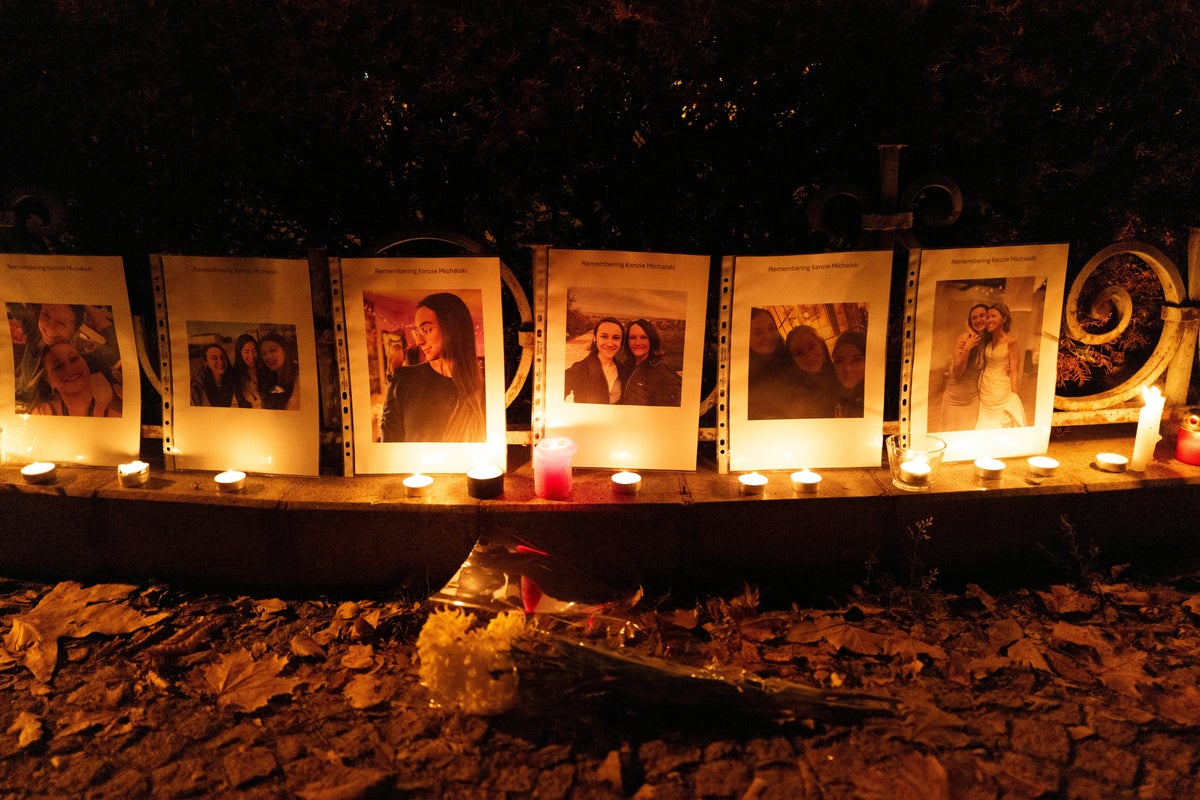
A holiday in Budapest shouldn't end in a shallow grave. Yet, that is exactly what happened to Mackenzie Michalski, a 31-year-old nurse from Portland, Oregon, who went by Kenzie to those who loved her. Today, the Budapest Metropolitan Court handed down a 14-year prison sentence to the Irish citizen who strangled her to death in November 2024.
Foureen years. Let that number sink in. For the cold, calculated destruction of a young woman's life, a European court decided that just over a decade behind bars is a fitting punishment. If you are angry reading that, you aren't alone.
The defense claimed it was an accident. The police evidence proved it was anything but. The sentence feels like a punch in the gut to anyone who expects a justice system to actually deliver justice.
The Night a Vacation Turned Into a Nightmare
Kenzie Michalski was enjoying a solo vacation in Hungary's capital. On November 5, 2024, she vanished. Her friends panicked when she missed her flight home, triggering a desperate missing persons hunt across central Budapest.
Security footage from the city's nightlife district showed Kenzie dancing at several clubs with a man. He was later identified by police initials L.T.M., a 37-year-old Irish national. Investigators tracked them back to his rented apartment. What happened inside those walls was brutal. Hungarian prosecutors revealed that the man beat and strangled Kenzie during an intimate encounter.
When the police knocked on his door two days later, Kenzie was already gone.
The Myth of the Panicked Accident
The killer's legal team tried to spin a familiar narrative: a tragic mishap during a consensual encounter. They argued he panicked. It's a defense mechanism seen all too often in international homicide cases, designed to reduce murder charges to manslaughter.
But the digital footprint tells a vastly different story.
You don't panic and accidentally search the internet for tips on corpse disposal. Hungarian police uncovered the killer's search history from the hours immediately following Kenzie's death. His queries didn't show remorse or shock. He searched for:
- How to properly dispose of a human body.
- Police procedures regarding missing person investigations.
- Whether pigs actually eat dead bodies.
- The local wildlife population of wild boars around Lake Balaton.
This wasn't a man in shock. This was a man treating a human being like a logistical problem. He cleaned the crime scene, stuffed Kenzie's body inside a wardrobe, and went out to buy a suitcase. He then packed her into the luggage, rented a car, and drove 150 kilometers southwest to the wooded outskirts of Szigliget near Lake Balaton to dump her like trash.
What the 14-Year Sentence Really Means
The Budapest Metropolitan Court found L.T.M. guilty of murder. The judge stripped away his chance for parole, meaning he must serve the full 14 years. On paper, it sounds rigid. In reality, it's incredibly lenient compared to American or British sentencing standards for a murder involving a cover-up.
Because he has already spent roughly 18 months in a Hungarian detention center since his late 2024 arrest, that time counts toward his sentence. He has just about 12 and a half years left to serve. Once that time expires, he will be deported from Hungary. He was also ordered to pay 2.5 million forints, which converts to a meager $7,995, in court costs.
Unbelievably, his defense attorney has already appealed the verdict, aiming to drag this out further and slash the time even more.
Traveling Solo Means Navigating a System That Doesn't Have Your Back
This case strikes a terrifying chord for the solo travel community. Budapest regularly ranks as one of Europe's safest cities for solo female travelers. It's affordable, vibrant, and highly walkable. But this tragedy exposes a dark truth: no destination is completely safe from predators, and local legal frameworks often value a killer's rehabilitation over a victim's life.
When crimes occur across international borders, the legal complexity multiplies. Kenzie's family had to navigate foreign police departments, translation barriers, and a continental legal structure that treats violent crime with drastically different sentencing guidelines than the US.
If you or someone you know plans to travel solo internationally, reliance on local law enforcement after the fact isn't enough. You need proactive safety measures built into your itinerary.
- Ditch the privacy on your location data: Use apps like WhatsApp or iPhone's Find My to share your live location with at least two people back home 24/7.
- Set up check-in deadlocks: Establish a rule with someone at home. If they don't hear from you by a specific local time, they call the local embassy immediately. Don't wait for a missed flight to raise the alarm.
- Keep embassy details on your lock screen: Know the address and emergency contact number for the nearest US embassy or consulate before you land.