Thousands of vertical feet of empty space wait just below a six-inch shelf. One foot rests securely. The other shifts. Again. And again.
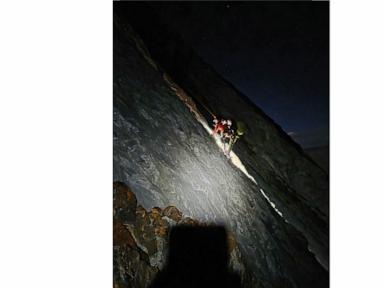
When a climber gets off route in the rugged terrain of California's Sierra Nevada near Mammoth Lakes, margin for error evaporates entirely. Rob Martin found himself in precisely this terrifying position last weekend, stranded on a minuscule ledge with almost no room to breathe, let alone move. Any slip would mean a fatal drop.
What followed was a brutal, grueling 15-hour operation. But it wasn't a heavily funded federal squad or a Hollywood-style military chopper crew that saved him. It was a local, dedicated group of volunteers from the Mono County Sheriff Search and Rescue Team.
Let's look at why this mission matters and how backcountry rescues really happen.
The Anatomy of a High Stakes Sierra Nevada Rescue
Backcountry emergencies look very different on the ground than they do on television. When things go sideways near Mammoth Lakes, response times depend heavily on civilian volunteers who drop everything to head into dangerous gullies.
Team spokesperson Mitchell Quiring laid out the grim reality of the situation. Rescuers faced massive vertical exposure with absolutely zero time to spare. Martin had been forced to continuously shake out his legs and switch his stance on a tiny, 15-centimeter rock ledge just to stave off total muscle exhaustion.
"He was not going to give up," Quiring noted regarding Martin's gritty determination to stay alive. That sheer willpower bought the crucial hours the four-person rescue team needed to execute a technical extraction in a precarious gully.
Why Technical Mountain Rescues Rely on Volunteers
Most people assume local governments maintain full-time, round-the-clock elite alpine commandos stationed in every mountain town. They don't.
Organizations like the Mono County Sheriff Search and Rescue Team operate primarily through trained community volunteers. These individuals spend countless hours mastering rope systems, medical response, and navigation so they can deploy on a moment's notice roughly 200 miles east of San Francisco.
When you lean back into a harness dangling over a thousand-foot drop, trust is everything. It's what these teams train for week after week in harsh weather conditions.
Lessons From the Edge
If you spend time hiking or climbing in regions like the Sierra Nevada, operations like this serve as a stark reminder. Getting off route happens fast. Darkness falls even faster.
- Always pack an emergency bivouac kit, even for day trips.
- Know your physical limits before pushing into technical terrain.
- Recognize that mountain rescue isn't instantaneous; help can take hours to organize and reach your coordinates.
Backcountry survival often boils down to mental endurance. Martin didn't panic himself off the ledge. He endured the agonizing hours until help arrived.
Support your local search and rescue teams. They keep the mountains safe.
Rescued mountain climber speaks out after daring 15-hour mission
This video provides direct coverage and personal insights from the rescued climber following the intense 15-hour operation in the Sierra Nevada.
http://googleusercontent.com/youtube_content/1