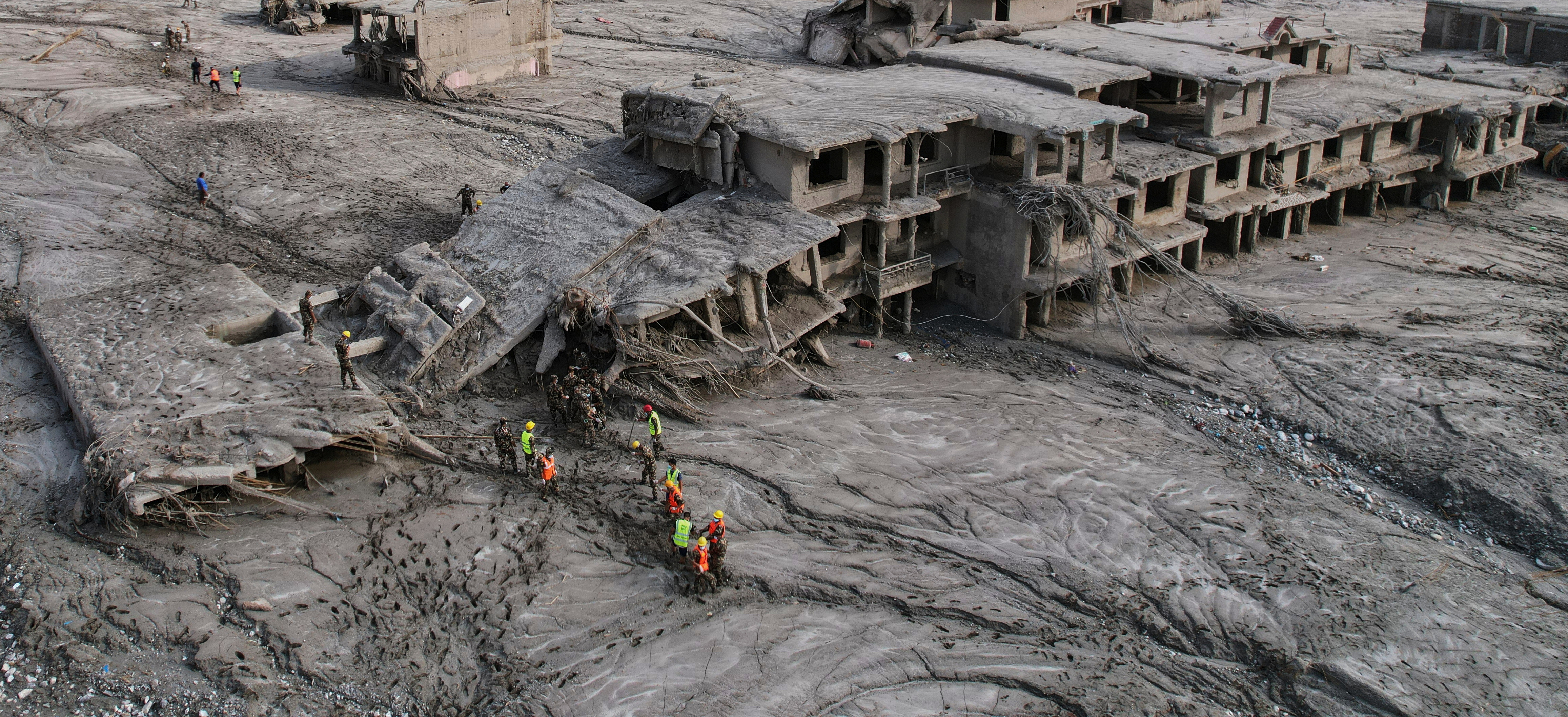
When a massive wall of water and debris tore down the Himalayan valleys on August 26, 2026, it didn't just wash away homes—it shattered lives in a matter of minutes. Triggered by a catastrophic glacial collapse near the Nepal-Tibet border that registered as a 5.2-magnitude seismic shock, flash floods swept through Rasuwa, Nuwakot, Dhading, Gorkha, and Tanahun districts. Hundreds lost their lives, thousands went missing, and entire communities were buried under thick, gray-brown sediment.
Now, authorities are warning of fresh flooding. Water levels in the Bhotekoshi River are rising again, leaving shell-shocked residents scrambling for higher ground. If you are tracking the crisis, you need to understand why the danger isn't over, how communication gaps are worsening the threat, and what officials are doing to prevent another tragedy. For a different look, check out: this related article.
The Threat Upstream That Won't Go Away
The immediate danger driving these new warnings isn't a fresh rainstorm. It is what remains upstream. Chinese authorities notified Nepalese officials about increased water flows and lingering risks from a crater situated roughly 5.6 kilometers upstream. That crater holds an estimated 1.4 million cubic meters of water, creating a ticking clock for downstream villages.
When heavy water flow hits riverbanks already destabilized by massive landslides and broken infrastructure, disaster can strike instantly. In towns like Galchhi and along the Trishuli River, residents are watching the muddy torrents from suspension bridges, clutching what little they managed to salvage. Further coverage on the subject has been shared by Reuters.
"Sometimes they say a flood is coming, then we have to run again to higher ground, even at night," notes local resident Govind Shreshta. "I have a 72-year-old father and 70-year-old mom. I must carry them and I am exhausted."
Why Official Warning Systems Are Falling Short
Technology is supposed to save lives during extreme weather events. Yet, during the late August disaster and subsequent fresh flood warnings, Nepal’s state-run alert system faced heavy criticism.
Many residents reported receiving delayed SMS alerts, or messages that lacked specific, actionable evacuation instructions. Traditional text message systems take time to route through telecom networks and were often perceived as crying wolf due to frequent low-stakes monsoon warnings in the past.
Contrast that with decentralized, community-based networks. On the morning of August 26, head teacher Rajendra Dawadi received a frantic phone call about an oncoming flood toward Tribhuvan Trishuli Secondary School. He ordered roughly 900 students to sprint for higher ground just ten minutes before a wall of mud buried the entire compound. Neighbors warning neighbors saved more lives that day than automated government text messages ever did.
Experts have pointed to solutions like cell broadcast technology—which can instantly target a specific risk zone in seconds across multiple languages—as a vital upgrade. But until funding and modern infrastructure catch up, communities remain heavily reliant on grassroots communication and physical vigilance.
Climate Realities in the High Himalayas
You can't talk about Nepal's ongoing flood crisis without addressing the underlying driver: rapid climate change in the mountain ranges. Scientists analyzing satellite imagery confirmed that the August disaster was triggered when bedrock underneath a high-altitude glacier gave way, dragging millions of tons of ice and rock down the valley.
Himalayan regions are warming significantly faster than the global average. As temperatures rise, glacial lakes expand, ice sheets weaken, and the probability of sudden catastrophic collapses skyrockets. Nepal's foreign minister has repeatedly called for a global response, pointing out that local populations are paying a devastating price for carbon emissions generated thousands of miles away.
What Communities Are Doing Now
If you want to understand how people survive on the ground right now, look past the macro statistics and focus on immediate survival steps:
- Securing High Ground: Families living near the Bhotekoshi and Trishuli rivers are mapping out rapid escape routes that avoid fragile mud-choked roads.
- Clearing Debris Manually: With heavy machinery struggling to reach isolated pockets, residents are using basic shovels to clear thick sludge from doorways and balconies.
- Prioritizing Safe Water: UNICEF and local aid groups are rushing water purification kits and emergency healthcare to thousands of displaced children and adults to prevent waterborne disease outbreaks.
The threat of fresh flooding means the crisis in Nepal is far from over. Staying alert requires looking beyond official text alerts and listening closely to local community networks while the region battles the long shadow of climate vulnerability.