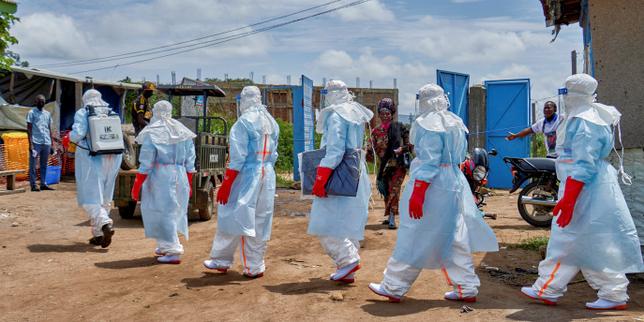
Numbers do not lie, and right now, they paint a terrifying picture. The Ebola outbreak declared in the Democratic Republic of the Congo in May 2026 has crossed a grim threshold faster than any previous wave in history. We are watching deaths mount at nearly three times the speed of the devastating 2014-2016 West African epidemic.
If you want to understand why this crisis is breaking records, you have to look beyond standard health reports. The culprit driving this surge isn't just the virus itself. It is a deadly cocktail of a rare strain, delayed detection, and ongoing regional instability that health authorities are struggling to contain. For a deeper dive into this area, we recommend: this related article.
The Strain That Caught Everyone Off Guard
Most people assume every Ebola outbreak is identical. It is not. The virus behind the current crisis in Congo is the Bundibugyo strain.
Unlike the more common Zaire species that powered past outbreaks, the Bundibugyo variant presents unique challenges. There are no approved vaccines or targeted treatments ready off the shelf for this specific strain. Medical teams are forced to rely purely on supportive care, treating symptoms like severe fevers and dehydration while racing against the clock. To get more details on this issue, extensive analysis is available on Psychology Today.
When the first cases appeared, diagnostic testing lagged. Officials missed the initial signature of the virus, allowing transmission chains to multiply quietly before anyone realized what they were dealing with.
Speed Kills
During the historic 2014-2016 outbreak, it took roughly eight months to reach one thousand deaths from the first recorded case. This time? That horrific milestone arrived in just over two months.
That velocity changes everything. Contact tracers can't keep up. When new infections outpace the people tracking them, hospitals fill up instantly.
The World Health Organization has noted that the true scale of the outbreak could easily be two to four times higher than official tallies show. People are staying home. They are hiding symptoms out of fear or distrust of local authorities.
Why Regional Chaos Feeds the Virus
Viruses thrive where governments stumble and conflict reigns. Much of the current outbreak is concentrated in the eastern region of Congo, an area already fractured by armed conflict and mass displacement.
When millions are forced to move, tracking transmission chains becomes nearly impossible. Health workers trying to reach remote communities face severe security risks. Compare this to neighboring Uganda, which faced a small spillover of cases but aggressively used rapid testing, contact tracing, and quick border coordination to start its 42-day countdown to freedom from the virus. Congo doesn't have the luxury of that stability.
What Needs to Happen Right Now
Waiting for international aid to magically solve this won't work. Stopping this outbreak requires concrete actions on the ground:
- Aggressive community engagement: Local leaders must rebuild trust so sick individuals seek treatment early instead of hiding symptoms.
- Enhanced diagnostic resources: Mobile testing units need immediate deployment to remote areas to shorten the gap between symptom onset and confirmation.
- Cross-border synchronization: Neighboring nations must maintain strict surveillance without cutting off humanitarian supply lines.
This outbreak won't burn itself out on its own. Unless health infrastructure catches up to the speed of the virus, records will continue to shatter for all the wrong reasons.