The global community loves making big financial promises that fizzle out before reaching the people who need them. We see it constantly in climate finance. But the latest injection of 900 million dollars in clean cooking commitments for Africa feels different. It brings the total mobilized capital to over 3.1 billion dollars since the first Paris summit in 2024. More importantly, we are finally seeing the money actually move.
Nearly one billion people across the African continent still lack access to modern cooking utilities. They rely on wood, charcoal, and animal waste. This is not just an environmental issue. It is a massive, ongoing public health catastrophe. The International Energy Agency reports that household air pollution from traditional stoves leads to roughly 850,000 premature deaths every single year. Women and young children bear almost the entire burden of this toxic smoke.
The new 900 million dollar commitment, secured during a high-level virtual meeting co-chaired by Kenya and the IEA, aims to scale up the distribution of cleaner alternatives like liquefied petroleum gas, bioethanol, electric stoves, and biogas. It is a massive undertaking. Ambition is cheap, but infrastructure is expensive.
The Real Cost of Burning Wood
If you have never sat inside a poorly ventilated kitchen where wood or charcoal is burning, it is hard to grasp the sheer physical toll. The smoke fills the room within minutes. It stings your eyes. It coats your lungs with particulate matter. For millions of women, this is their daily reality for hours at a time. It equates to smoking multiple packs of cigarettes a day.
The economic drain is just as brutal. Gathering firewood takes hours every day. That is time stolen from education, farming, or running a small business. In urban areas where wood must be purchased, charcoal costs swallow up a huge chunk of a family’s monthly income. It is a trap that keeps households locked in poverty.
Transitioning to cleaner options is the fastest way to lift families up. It saves lives immediately. When a household switches to an ethanol or electric stove, their indoor air quality improves instantly. They save hours of labor. This frees up time for women to enter the local economy, which changes the entire financial trajectory of a household.
Where the New Nine Hundred Million Is Going
Money sitting in a fund does nothing. The real question we have to ask is how this cash gets deployed on the ground. According to recent data tracking by the IEA, about 740 million dollars from the initial 2024 Paris commitments has already been spent across 22 African countries. That is roughly one-third of the original capital distributed in just two years. It represents an unusually fast pace for international development funds.
The money isn't just going toward buying stoves. It is building a functional ecosystem. Roughly two-thirds of the disbursed funds go directly toward hardware, which includes end-use equipment like gas cylinders and efficient cookstoves. The rest is split between infrastructure projects, targeted investment funds, and local market development.
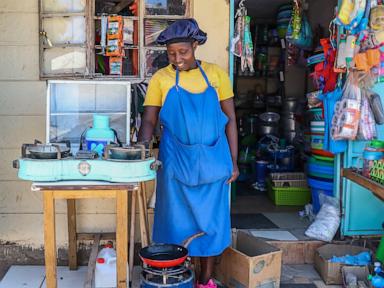
Kenya has emerged as the biggest recipient, taking in about 19 percent of the early capital. Uganda, Tanzania, and South Africa are also pulling in significant portions. You can see the impact in places like the Kibera settlement in Nairobi, where local vendors are swapping out charcoal burners for bioethanol stoves to run their businesses safely. The demand is there. The bottleneck has always been upfront capital.
The Hidden Supply Chain Nightmare
Expanding clean cooking is not a simple task of shipping stoves across the ocean. The fuel supply chain is highly fragile. Look at what happened earlier this year. Shipping disruptions through the Strait of Hormuz directly threatened the global supply of liquefied petroleum gas.
About 30 percent of all globally traded LPG moves through that single chokepoint. When that route faces conflict or delays, the ripples hit vulnerable markets instantly. Over 3.4 billion people worldwide rely on LPG as their primary fuel source. If a country in sub-Saharan Africa cannot secure a steady supply of gas, households immediately revert to burning charcoal.
This supply vulnerability has forced a major strategy shift. The IEA recently launched a public-private Clean Cooking Security Programme. The goal is simple: secure the supply chain. African governments are building out massive regional storage capacities to insulate themselves from global geopolitical shocks. Right now, at least 250 kilotonnes of new LPG storage capacity is under construction across sub-Saharan Africa. This will boost regional storage by more than 30 percent, giving countries a vital buffer when global markets go sideways.
Policy Shifts Moving the Needle
Foreign aid cannot solve this problem alone. Local laws have to change to make clean energy affordable. For years, heavy taxes and import duties on clean stoves made them luxuries that average families could never afford. Meanwhile, dirty fuels like charcoal remained untaxed and cheap.
That is changing. Since 2024, African governments have introduced 121 new clean cooking policies across more than 30 countries. These nations represent roughly 80 percent of the continent’s population currently living without clean energy access.
Governments are slashing value-added taxes on imported electric stoves and ethanol components. They are setting stricter safety standards to keep low-quality, dangerous equipment off the market. They are also working with the African Union to build a unified, continent-wide strategy. When regulations are predictable, private companies feel safe investing their own capital.
Why Private Capital Beats Handouts
Philanthropy is great, but it has limits. To truly reach a billion people, we need sustainable businesses. The most exciting growth in the clean cooking market is coming from private sector innovation, particularly pay-as-you-go financial models.
Many families cannot afford to buy a modern stove and a full tank of gas all at once. The upfront cost is too high. Pay-as-you-go systems fix this. By using mobile money platforms, consumers can pay small amounts for the fuel they actually use each day. It mimics the cash-flow patterns of buying small bundles of charcoal, making the transition seamless for low-income households.
Annual investment in the African clean cooking sector reached 770 million dollars in 2024. Roughly 70 percent of that money came from private capital and consumer spending, not government grants. This proves that clean cooking is a viable market. When you remove regulatory hurdles and de-risk early infrastructure, private operators will scale the solutions faster than any bureaucratic agency ever could.
What Needs to Happen Next
The momentum is real, but we cannot afford to get complacent. Pledges are just numbers on a whiteboard until they land in a local economy. If you are an investor, policymaker, or advocate looking to convert this 900 million dollar momentum into real-world impact, focus on these critical areas.
First, push for immediate local tariff elimination. If your country still charges high import duties on clean cookstoves or components, pressure your representatives to eliminate them. High tariffs kill consumer adoption before it even starts.
Second, support multi-fuel strategies. Relying entirely on LPG exposes households to global fuel price shocks. Diversify by investing in local bioethanol production and electric cooking infrastructure, especially in urban areas with expanding grid access.
Third, demand rigorous fund tracking. Hold international donors accountable by checking IEA status updates. Ensure that the newly committed 900 million dollars moves from bank accounts to project deployment within the next eighteen months.