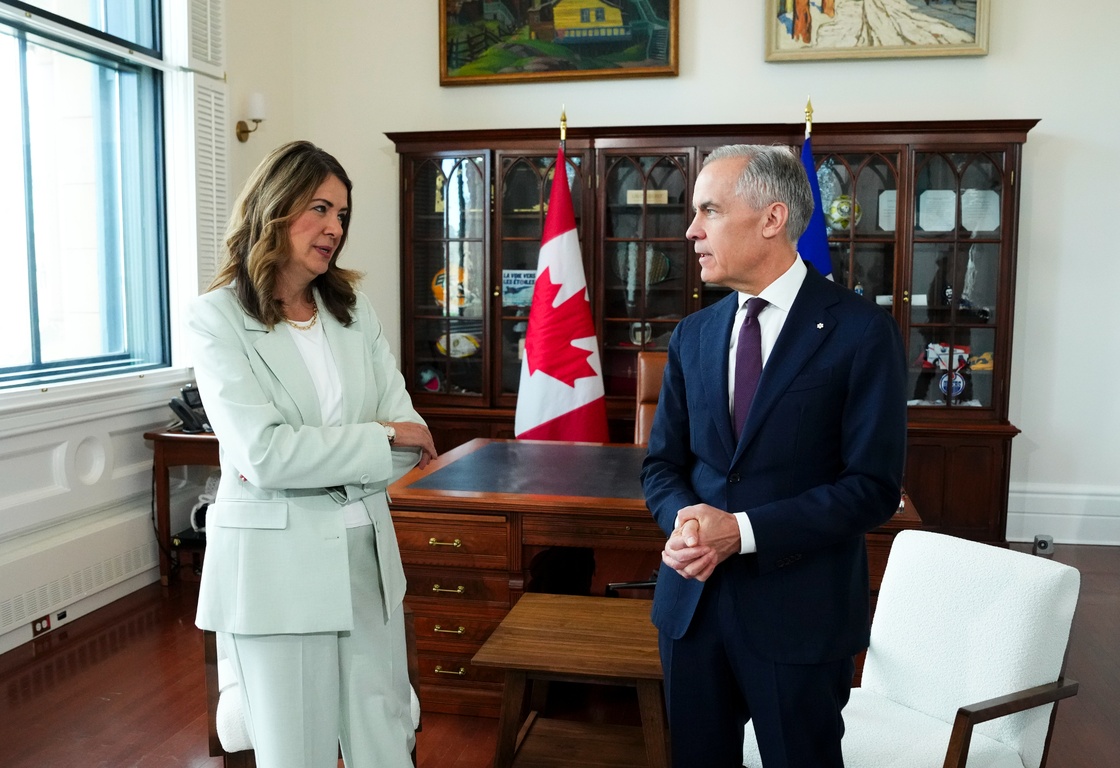
Governments don't just hand out billions in tax credits out of pure environmental altruism, and oil giants don't build massive infrastructure without a guaranteed return on investment. The newly signed trilateral memorandum of understanding between Ottawa, Alberta, and the newly rebranded Oil Sands Alliance exposes the raw transaction at the heart of Canadian energy policy.
If you read the mainstream headlines, you'll hear about a monumental breakthrough for climate tech. Look closer, and it's a massive quid pro quo.
The math is simple. The federal and provincial governments are backing the multibillion-dollar Pathways carbon capture and storage project. In exchange, the five mega-producers behind the project—Canadian Natural Resources, Imperial Oil, Suncor, Cenovus, and ConocoPhillips—get exactly what they wanted: a streamlined pathway to double their oil production and a brand-new pipeline to the West Coast.
The Grand Bargain Built on Steel and Sequestration
This deal didn't materialize overnight. It solidifies a framework stretching back to late 2025. The core agreement binds the viability of the West Coast oil pipeline directly to the execution of the Pathways carbon capture system. Simply put, there is no pipeline without Pathways, and there is no Pathways without the pipeline.
The scale of the infrastructure is dizzying. The alliance plans to capture flue gases from boilers and steam generators across their separate oilsands facilities. The carbon dioxide is then separated chemically, compressed into a liquid state, and sent through a network of lateral pipelines. From there, a massive transportation artery will pump the liquefied carbon dioxide deep underground into the Basal Cambrian Sandstone formation, roughly one to two kilometers beneath the surface.
But look at how the timelines line up. The shared transportation and storage infrastructure is slated to start operating by January 1, 2032. The full initial phase of carbon capture is supposed to wrap up by January 1, 2035. Meanwhile, Alberta is aggressively pushing forward regulatory frameworks to ensure that this infrastructure underpins a massive production ramp-up to fill a pipeline moving one million barrels of oil a day to a tanker port in British Columbia.
Moving the Goalposts on Emissions
While the press releases focus on the partnership, the actual targets reveal a striking compromise. Five years ago, the alliance heavily campaigned on a promise to slash emissions by 68 million tonnes annually.
That number is gone.
The finalized agreement drops the immediate target down to reducing emissions by 6 million tonnes per year through the Pathways carbon capture project by 2035. An additional 10 million tonnes of annual reductions are targeted by 2045, bringing the total expected reduction to 16 megatonnes. That is a massive drop from the original net-zero PR campaigns that flooded Canadian airwaves over the last few years. Critics are already calling it a classic case of corporate greenwashing, pointing out that the scaled-back numbers allow companies to claim climate action while fundamentally growing their fossil fuel output.
Who Pays and Who Profits
The financial mechanics of this deal show just how much risk is being shifted to the public ledger. The energy companies have been explicit for years that they wouldn't foot the bill alone.
To get the oil majors to sign, Ottawa agreed to extend its federal investment tax credits for carbon capture equipment out to 2035. Not to be outdone, Alberta is finalizing its own Carbon Capture Incentive Program to match that 2035 timeline and fast-tracking the issuance of a Carbon Sequestration Agreement for the storage complex.
Then there is the policy insurance. The agreement leans on carbon contracts for difference. These contracts act as a financial hedge for the oil companies. If a future government steps in and repeals Canada's carbon pricing regime, the governments assume sole liability. They have guaranteed that the effective industrial carbon price under Alberta's Technology Innovation and Emissions Reduction system will scale to $130 a tonne by 2040.
The deal even alters the rules of the system to reward the producers. If the companies hit their share of the initial 6-million-tonne reduction, their carbon stringency rate drops from 2% to 1%. If they fail to hit subsequent targets, the benchmark tightens aggressively by 1.5% to 2% annually. It's a carrot-and-stick model where the carrot is cheaper compliance costs for companies generating record revenue.
What Happens Next
The signing of this memorandum of understanding is a massive political win for Alberta Premier Danielle Smith and federal energy minister Tim Hodgson, but it is not a legally binding contract yet. A trilateral working group is being established immediately to sort out the actual regulatory hurdles.
If you are tracking this project, the real date to watch is November 15, 2026. That is the hard deadline the parties set to turn this framework into binding, individualized legal agreements with each of the five oil companies. Between now and then, expect intense legal maneuvering over the duty to consult Indigenous communities and the exact sharing of the multibillion-dollar financial risks. Alberta has already instituted a strict 120-day approval timeline for qualified projects to speed things up, meaning the regulatory rubber is about to hit the road fast.