Arizona Republicans are panicking. They won't admit it publicly, but the anxiety is thick enough to cut with a knife. For a party that used to own the desert, losing the governor's mansion to Democrat Katie Hobbs in 2022 was a brutal wake-up call. Now, the race to challenge her in November 2026 is turning into a messy, public therapy session where everyone claims they have the magic formula to win back the state.
They don't. In similar developments, take a look at: The Illusion of Performance-Based Sanctions in the New Iran Deal.
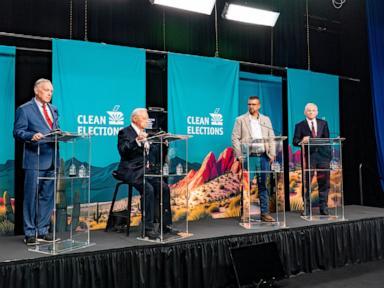
The June 17 primary debate laid bare the deep fractures within the state's GOP. Four candidates shared the stage: U.S. Representatives Andy Biggs and David Schweikert, alongside businessmen Scott Neely and Ken Miceli. Instead of offering a unified vision to fix Arizona's rising cost of living, they spent their time arguing over who is actually electable. The reality is that Arizona isn't the deep-red bastion it used to be. It's a hyper-volatile swing state, and the strategies being pitched on the campaign trail show a party that's still fighting the battles of yesterday.
The illusion of the easy fix
Every Republican candidate claims they can fix Arizona's economic woes overnight. The state's affordability index is looking pretty miserable lately. Housing costs in Phoenix are sky-high. Groceries eat up too much of the average family budget. BBC News has also covered this important issue in extensive detail.
Andy Biggs thinks the answer is simple. Eliminate the state income tax. He argued during the debate that the state could easily cover the lost revenue by aggressive fraud prevention and cutting government waste. It sounds great in a thirty-second ad. It makes for a wonderful applause line at a rally.
But it's mostly a fantasy.
State budgets are rigid. You can't just wave a magic wand, eliminate a massive chunk of tax revenue, and expect fraud savings to fill a multi-billion-dollar hole. David Schweikert, who has built his entire brand as a federal budget hawk, was quick to point out that consumer prices don't fall by magic. Schweikert's approach relies more on aggressive business recruitment and wage growth, but even his plans assume a level of economic control that governors simply don't have.
The disagreement over taxes highlights a bigger problem. The candidates are pitching national economic talking points to a local audience that needs immediate relief. Voters don't care about ideological purity when they can't afford rent.
The data center divide
One of the few areas where you see surprising agreement is the crackdown on tech giants. Arizona recently passed a three-year moratorium on tax incentives for new data centers. It's a policy that Katie Hobbs herself has praised, and during the debate, Biggs threw his weight behind it too.
He wants to stop giving these facilities a break. Data centers are notorious energy hogs. They suck up massive amounts of electricity and, more importantly in Arizona, water. In a desert state facing long-term water scarcity, subsidizing massive server farms looks less like economic development and more like a liability.
Schweikert took a slightly different path, focusing on the broader picture of business recruitment. But the fact that a hardline conservative like Biggs aligns with a progressive governor on corporate tax incentives shows how much the political ground has shifted. The old Republican playbook of corporate deregulation at all costs is dying. In its place is a stranger, more populist form of conservatism that isn't afraid to use state power to punish certain industries.
The electability trap
The most explosive moment of the debate happened when Schweikert openly questioned Biggs' ability to win a general election. It hit a raw nerve. Biggs is the current frontrunner in the primary, armed with a coveted endorsement from Donald Trump. He has spent five terms representing a deeply conservative district in the Phoenix suburbs and once chaired the House Freedom Caucus. He knows how to speak the language of the base.
But Scott Neely, who ran a failed bid for governor in 2022, backed up Schweikert's warning after the debate ended. Neely said flatly that if Biggs wins the primary, Republicans will lose the general election to Hobbs.
They have a point.
Look at what happened in 2022. Kari Lake ran a high-octane, populist campaign fueled by election denial and MAGA rhetoric. She lost. Moderates and independent voters in Maricopa County fled the top of the ticket. Biggs has a very similar political profile. He was one of Trump's most vocal defenders in Congress and supported claims that the 2020 election was stolen.
If the primary electorate chooses Biggs because he's the most conservative option, they risk repeating the exact same mistake they made four years ago.
Schweikert pitches himself as the safe alternative. He has survived three incredibly tough Democratic challenges in his congressional district. He represents Scottsdale and northeast Phoenix, an affluent area full of the exact type of suburban voters the GOP needs to win back. He talks about federal debt and finance instead of cultural grievances.
But Schweikert carries his own heavy baggage. In 2022, he had to pay a $125,000 fine to the Federal Election Commission for misappropriating campaign funds. That's a ready-made attack ad for the Democrats. It's hard to position yourself as the disciplined, ethical manager of state finances when your own campaign treasury was fined for major ethics violations.
Healthcare and the safety net
When the moderators pressed the congressmen on healthcare, the answers became evasive. They were asked about expired healthcare subsidies under the Affordable Care Act. Thousands of Arizonans rely on these programs to keep their insurance premiums manageable.
Schweikert offered a bleak assessment. He basically said that subsidizing everything in the economy isn't sustainable. It's a classic fiscal conservative stance, but it doesn't offer much comfort to someone whose health insurance costs are about to double.
Biggs touted his federal legislation aimed at bringing healthcare costs down through market competition. He also pointed to Trump's proposal to send health savings account funds directly to citizens. The idea is to let people handle their insurance as they see fit. It's a standard free-market solution.
The problem is that free-market solutions take years to shift industry dynamics. Voters who are struggling right now don't want a lecture on market theory. They want to know how they're going to pay for their prescriptions next month. Hobbs will undoubtedly run on protecting these subsidies, giving her a potent weapon against whoever wins the Republican nomination.
A changing electorate
The underlying issue that none of these candidates want to face is that Arizona has fundamentally changed. The era of John McCain and suburban Republican dominance is gone. The influx of new residents from states like California and Illinois has altered the demographics.
Maricopa County is the ultimate battleground. It decides statewide elections. Winning here requires a delicate balancing act. You need to turn out the enthusiastic conservative base in places like Gilbert and Queen Creek, but you also have to win over the moderate, business-minded voters in Phoenix and Scottsdale.
Biggs can easily do the former. Schweikert is better suited for the latter. Neither has shown they can do both.
The primary election happens on July 21. Hobbs is running entirely unopposed on the Democratic side, meaning she can sit back, save her cash, and watch the Republicans beat each other up for the next month. By the time the primary winner emerges, they'll be bruised, cash-poor, and forced to immediately pivot to a general election audience that looks very different from the primary crowd.
What happens next
If you want to understand where this race is heading, keep your eyes on the ground game in Maricopa County over the next few weeks. The candidates aren't going to change their policy positions now. The debate lines are drawn.
Watch the ad spending. Biggs is relying heavily on his Trump endorsement to carry him through, but Schweikert's allies are starting to dump money into television markets to highlight Biggs' right-wing ties.
Pay attention to early voting patterns starting in late June. If turnout is exceptionally high in rural counties and the outer suburbs, that favors Biggs. If the early votes pour in heavily from Scottsdale and the Phoenix urban core, Schweikert has a real path to an upset.
Stop looking at statewide polling averages that mix all voters together. The only numbers that matter right now are registered Republicans who actually show up for midsummer primaries. If the party picks ideological purity, expect a rerun of 2022. If they choose pragmatism, Arizona is looking at a knife fight of a general election.