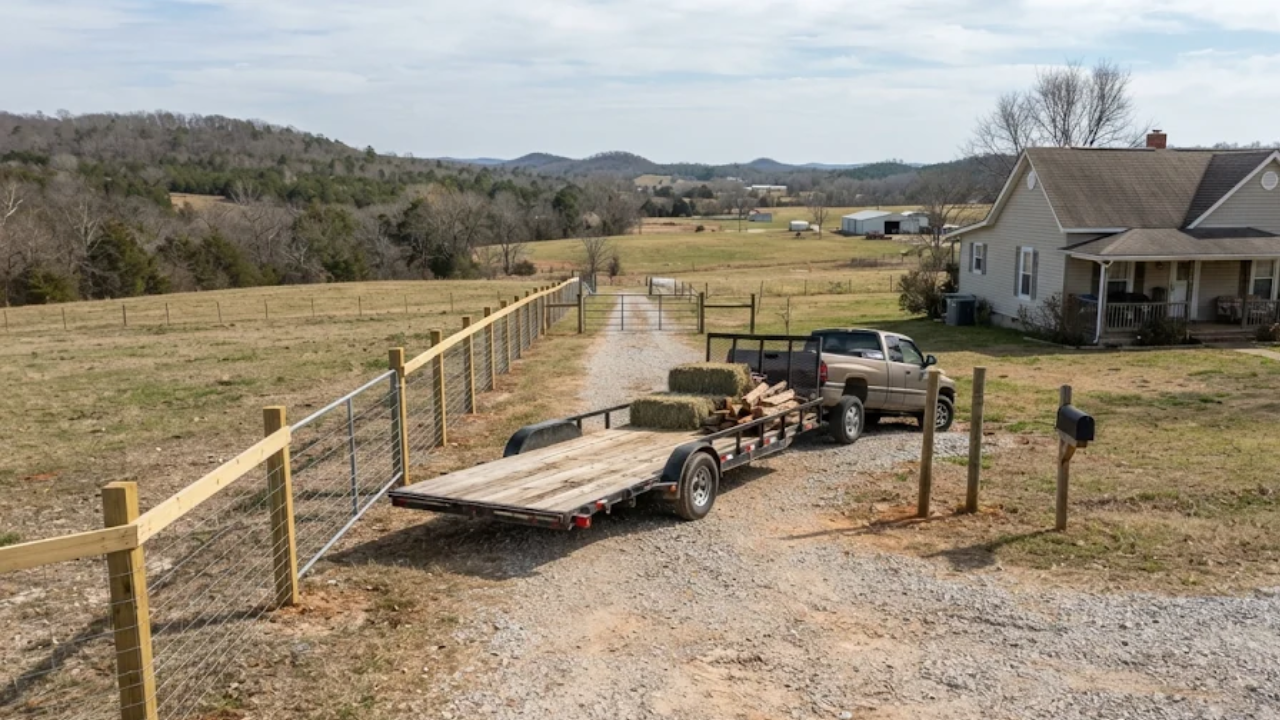
Eight feet sounds like plenty of room until you're trying to swing an 18-foot trailer around your yard toward a county road. That's the exact squeeze Roger C. Moore found himself in after his neighbor extended a fence in Boone County, Arkansas, shrinking a passage from roughly 20 feet down to eight.
On November 18, 2026, the Arkansas Court of Appeals reversed an earlier ruling by the Boone County Circuit Court in favor of neighbor Bob Robertson and the Bob Robertson Family Limited Partnership. The appeals court sent the dispute back for a fresh look, ruling that the lower court stumbled over key legal rules governing property lines, prescriptive easements, and shared road access.
Honestly, this case is a textbook example of how old rural land splits turn into messy courtroom battles decades later. When a single tract gets carved up without rock-solid boundaries and clear rules for who gets to drive where, everyone thinks they're right until someone moves a fence or starts running commercial tours past the front yard.
How an Arkansas Fence Dispute Turns Into an Appeals Court Reversal
To understand why the appeals court stepped in, you have to look back to 1974. Charlotte and Johnny Ray Barnes owned a larger piece of land in Boone County and sold a 40-acre lot to Lorene and Michael Roberts, with a right-of-way along the southern edge letting both sides use an existing road. Moore bought that 40-acre parcel from the Roberts family in 1987, using the road in front of his house as his driveway and driving down it to reach a creek and feed cattle.
Meanwhile, Delbert Tharp bought the larger neighboring tract from the Barnes family in 1976, and the Bob Robertson Family Limited Partnership bought it from the Tharps in September 2012. Moore testified that he had used the open space between his house and the old western fence line since 1987 as a turnaround spot when hauling hay and wood, and he had kept up the yard out to the county road. Then, around late 2013 or early 2014, Bob Robertson extended a fence along the western edge and put up new gates, pinching the gap near Moore's mailbox to about eight feet.
Things got even more heated in 2018 when the Robertsons launched an off-road utility vehicle tour business called Hog Wild Adventures and ran paying guests along the road past Moore's house. Dust, noise, and road wear piled up, and by November 2018, Moore tore down a northern fence along the road while Ty Robertson, Bob's son, took down a western gate. Moore filed suit on February 5, 2019, asking the court to settle the boundary, restore access, move the western fence back, and curb non-farm commercial use of the shared road.
When the Boone County Circuit Court issued its ruling on December 12, 2024, it handed a major win to the Robertsons. The judge treated the northern fence as the boundary line, held that the Robertsons acquired disputed land by adverse possession, ruled Moore gave up access rights because of locked western gates, ordered Moore to rebuild the northern fence at his own expense, and barred him from using the road or interfering with the Robertsons. Moore appealed, and on November 18, 2026, Judge Mike Murphy wrote the appeals court opinion—joined by Judges Abramson and Barrett—reversing and remanding the case.
The Legal Traps That Trip Up Rural Landowners
In my experience watching rural property fights play out, people assume a fence on the ground equals a property line in law. It doesn't. Fences often go up along creeks, ridge lines, or convenience paths rather than surveyed corners, and courts look closely at both the facts and the procedural rules before blessing them.
First, pleading rules matter more than folks realize. The appeals court noted that the Robertsons hadn't properly pleaded a claim that both sides agreed to treat the northern fence as the boundary, meaning the lower court shouldn't have relied on that theory to fix the line. If you leave a claim out of your formal court filings, you're asking for trouble on appeal.
Second, adverse possession in Arkansas isn't a casual land grab. Under Arkansas Code § 18-11-106, a claimant faces strict statutory requirements alongside traditional elements, including paying ad valorem property taxes for the required period and meeting the legal standard for possession. The appeals court pointed out that the record didn't establish seven full years of hostile possession or proof of required property tax payments on the disputed or neighboring land over seven years.
Third, the circuit court applied the wrong standard when rejecting Moore's push for a prescriptive easement along the western fence line. A prescriptive easement comes from open, continuous use over time—not from proving you were the only soul on earth who ever set foot or tire on the strip. Forcing Moore to prove exclusive use mixed up ownership with easement law, and the appeals court also rejected the idea that Moore waited too long to ask for the fence to be moved back when he testified he objected right away and there was no showing of prejudice from delay.
Shared Roads, Gates, and Commercial Traffic
Shared farm lanes and easements are notoriously vague on paper. A deed might mention a right-of-way along an edge without spelling out width, gates, maintenance splits, or whether commercial tours count as reasonable use.
In this dispute, the appeals court flagged that the lower court allowed commercial tour traffic on the shared road without properly examining the original 1974 deed and historical use by both sides. Courts are supposed to weigh competing rights fairly rather than treating one landowner's new business model as an automatic trump card.
Gates and locks add another layer of friction. Just because a gate exists or a lock gets put on doesn't automatically wipe out an easement, especially if there's a factual dispute over permission, keys, or clear abandonment. That's why the appeals court kicked the case back to Boone County for proper hearings using the right legal yardsticks rather than declaring a final winner on every issue today.
What You Should Do Before Any Fence Goes Up
If you own rural land, acreage with an old easement, or a house bordering a shared lane, don't wait for a dispute to get loud. A few practical steps can save you years of stress and tens of thousands of dollars in legal fees:
- Pull the full deed chain and easement language. Don't rely on a quick summary from closing day; read the exact wording of every right-of-way and boundary call back to the original split if possible.
- Order a staked boundary survey before building or moving a fence. Spending money on a licensed surveyor upfront is way cheaper than tearing down a fence—or fighting over it—later.
- Document historical use with dates and photos. Keep records of how long a lane, turnaround spot, or driveway has been used, along with maintenance and any objections made in real time.
- Check tax records and talk to a local real estate attorney early. If a neighbor alters a fence line, locks a shared gate, or ramps up commercial traffic, get local legal advice before tearing anything down or letting years slip by.