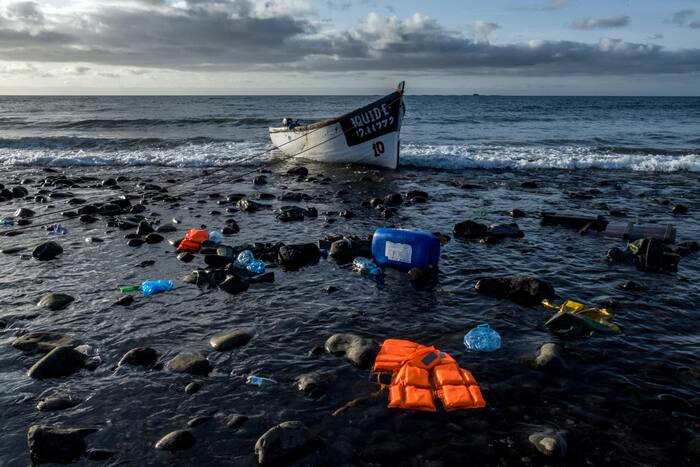
When the ocean stays calm off the coast of West Africa, the boats start moving.
Nearly 2,200 migrants reached the Canary Islands in just a 48-hour window, pushing Spain's emergency rescue services to their absolute limits. Single-day numbers touched heights not seen since the grim peaks of 2020. Most of these wooden fishing vessels—known locally as pirogues—landed on El Hierro, a tiny Spanish island whose local population is dwarfed by the sudden influx of exhausted travelers.
If you look at the statistics in isolation, it's easy to miss the sheer human cost and the compounding logistical nightmare facing local authorities. Over 13,000 people made this perilous Atlantic crossing between January and October, navigating rough waters from Senegal, The Gambia, and Mauritania.
The Anatomy of an Atlantic Surge
Why do these surges happen in sudden bursts rather than a steady trickle? Weather windows dictate everything.
When offshore Atlantic winds die down and sea states flatten, smuggling networks in West Africa push dozens of overloaded pirogues out to sea simultaneously. On a single Saturday during this recent spike, Spain's Salvamento Maritimo rescued 1,488 people across 14 separate boats. One single vessel carried 240 individuals who had spent nearly a week packed tightly together on the open ocean.
These aren't short hops across a calm channel. Trips from Gambia or Senegal can take up to a week. Passengers face dehydration, fuel starvation, and mechanical failure hundreds of miles from the nearest coastline.
Why El Hierro Bears the Brunt
El Hierro is the smallest and most remote of the inhabited Canary Islands. Yet, it has repeatedly become ground zero for Atlantic arrivals due to its geographic position closest to the western departure hubs of Africa.
When a thousand people land on an island with a total population of roughly 12,000, local infrastructure buckles instantly. Medical tents pop up on docks. Coast guard crews work around the clock. Local charities scramble to distribute dry clothes, food, and emergency medical care. Dozens of arrivals routinely require immediate hospital treatment for hypothermia, severe dehydration, or injuries sustained during the rough voyage.
The Broader Political and Social Realities
New European Union migration and asylum frameworks have done little to stem the flow along this specific maritime corridor. West African nations face severe economic pressures, youth unemployment, and shifting agricultural or fishing livelihoods, driving thousands to risk everything on a dangerous ocean passage.
Spain's Interior Ministry continues to grapple with housing and processing constraints. While total year-to-date arrivals show slight fluctuations compared to previous historical highs, sudden multi-thousand spikes paralyze regional reception centers.
The political pressure inside Spain is mounting. Local leaders in the Canaries argue that mainland Europe treats the archipelago as an isolated buffer zone, leaving local municipalities to shoulder the burden of humanitarian reception entirely on their own.
What Happens Next
As long as economic drivers persist in West Africa and weather windows open up during the winter months, the Atlantic route will remain active. Coast guard patrols are stepping up surveillance, but maritime rescue forces admit they are reacting to a crisis rather than stopping its root causes.
The boats will keep launching whenever the sea allows. And small islands like El Hierro will keep preparing for the next wave.