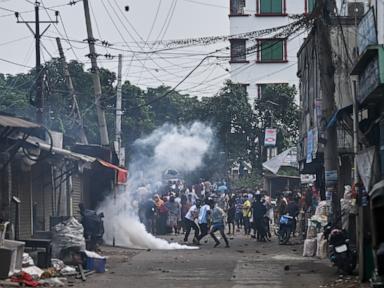
Tear gas fills the air across industrial zones like Ashulia and Gazipur. Thousands of garment workers block major highways, throwing bricks at police vehicles while law enforcement responds with stun grenades and baton charges. Hundreds of factories sit shuttered, their metal gates locked tight as owners fear vandalism.
If you track global supply chains, this scene feels painfully familiar.
Right now, Bangladesh’s critical textile sector is once again paralyzed by massive wage protests. Workers are demanding a monthly minimum wage of 30,000 taka, roughly 241 US dollars, which is more than double their current baseline of around 13,000 taka. With inflation biting hard into everyday essentials, people simply cannot feed their families on current pay.
Let's look at why this crisis happens over and over again, and what it means for the international brands relying on cheap manufacturing.
The Economic Pressure Cooker Behind the Protests
Bangladesh stands as the world's second-biggest garment exporter behind China, manufacturing clothes for many of the largest international fashion labels. The industry employs around four million workers—mostly women—and generates more than 80 percent of the country's export earnings.
You would think an industry holding that much economic power would treat its workforce well. Reality tells a very different story.
Workers currently earning roughly 13,000 taka a month find themselves priced out of basic survival. Food prices, rent, and utility costs have surged over the past few years. When people are working exhausting hours on factory floors and still cannot afford rice and medicine for their children, boiling point is inevitable.
The government has scrambled to respond. Prime minister Tarique Rahman held emergency cabinet meetings, instructing ministers to safeguard worker rights while keeping production unhindered. Yet, orders to balance worker welfare with uninterrupted exports rarely translate smoothly onto the streets. Authorities have deployed additional paramilitary forces to contain the unrest, but heavy policing doesn't fix a broken compensation model.
Why International Fast Fashion Bears Responsibility
Western brands love to point fingers at local factory owners or blame supply chain friction, but global buyers drive the race to the bottom.
Major clothing labels in Europe and North America squeeze suppliers on price margins year after year. If a Bangladeshi factory owner refuses a low-ball contract, the brand simply shifts production to another country with even cheaper labor and laxer regulations. Factory owners operate on razor-thin margins, which they predictably pass down to the lowest rung of the ladder: the sewing machine operators.
When brands demand ethical sourcing on paper while pocketing massive retail markups, the system cracks. The current protests across Dhaka, Savar, and Jirani are the direct result of a global retail model built on hidden human costs.
What Happens to Global Supply Chains Now?
With hundreds of factories suspending operations—some reports count nearly 700 halted plants—retailers face severe shipment delays. Fall and winter inventories hang in the balance.
If you manage apparel procurement or logistics, treating Bangladesh as a bottomless pit of cheap, risk-free labor is a dangerous gamble. Diversifying manufacturing hubs is no longer optional. Brands must also accept that sustainable pricing requires paying more upfront so suppliers can afford legal, living wages without risking bankruptcy.
Fixing this dynamic requires a complete overhaul of how retail giants negotiate contracts. Until international buyers tie purchasing practices directly to fair wage guarantees, the streets of Dhaka will keep erupting in smoke and sirens.