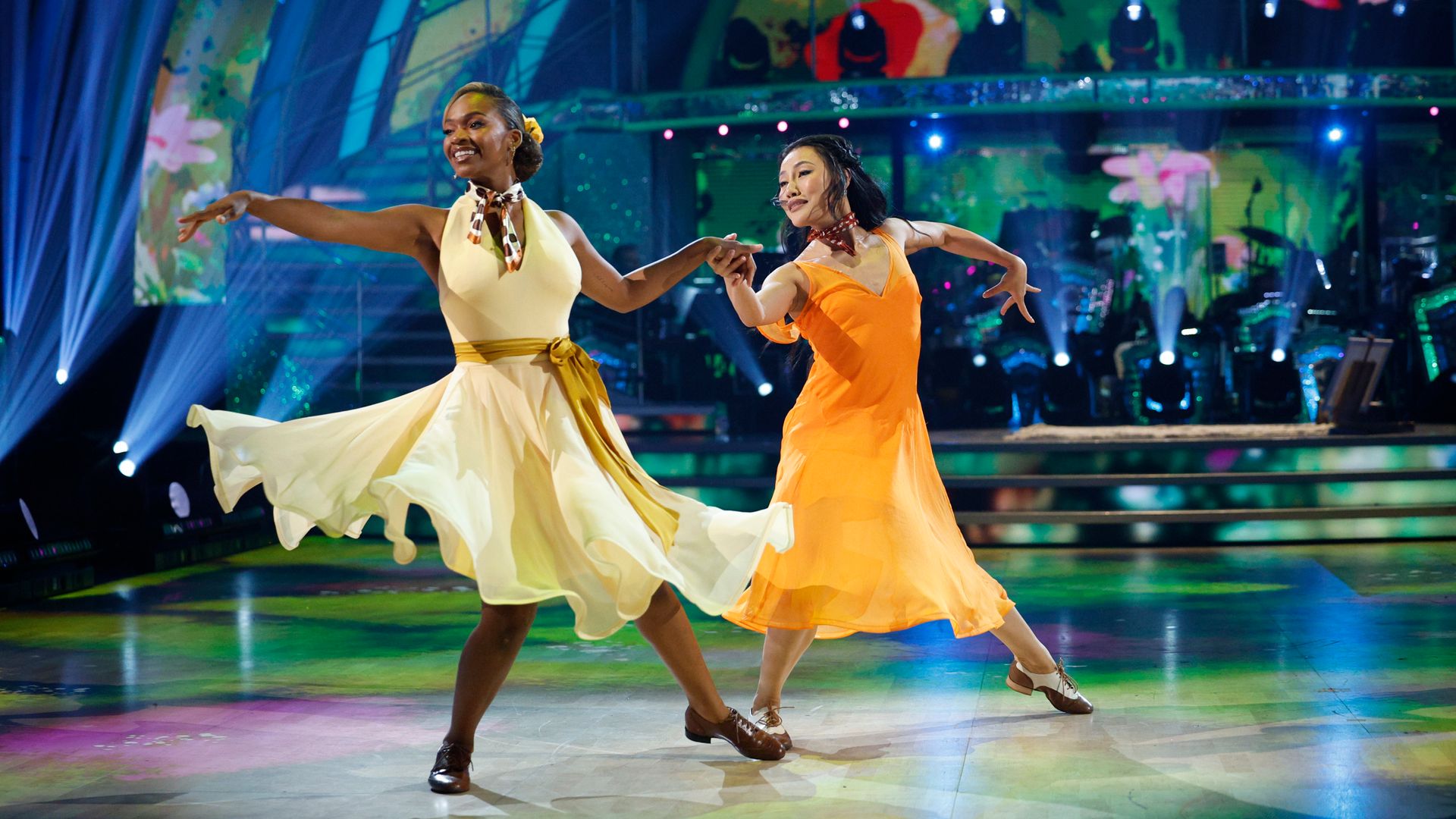
When an entertainment show starts doubling as a battleground for editorial policy, you know things have gotten messy. The BBC recently found itself right back in the firing line after censoring a pro-trans slogan worn by Strictly Come Dancing contestant Bethany Antonia during a rehearsal clip.
If you tuned into Saturday night's episode, you wouldn't have seen the phrase "Protect the Dolls" printed across Antonia's t-shirt. Instead, she appeared in a completely plain white top during the pre-recorded footage of her American Smooth practice with professional partner Nancy Xu. But eagle-eyed viewers who had already spotted an earlier Instagram post shared by the corporation noticed something didn't add up. In the social media video, the slogan was clear as day. On television? It was edited out, prompting an instant digital backlash.
So what's the real story here? Why are clothing choices on family entertainment programmes turning into a weekly PR headache for the broadcaster?
The Official Line Versus Public Reality
The BBC's defense relies on a familiar corporate playbook. A spokesperson defended the decision by pointing straight to neutrality rules, stating that standard practice on entertainment shows requires appropriate steps to reduce the inclusion of overt branding or slogans, regardless of the message itself.
Fans aren't buying it. Social media erupted over the weekend, with critics accusing the broadcaster of institutional bias and cowardice. Many argued that offering a message of basic survival and community support for vulnerable groups shouldn't be treated like a controversial political statement.
"Protect the Dolls" is a well-known community phrase expressing solidarity with transgender women. The t-shirt in question, designed by Conner Ives, has been worn by a roster of global stars including Pedro Pascal and Tilda Swinton, with all proceeds directly benefiting the UK trans support charity Not A Phase. To the queer community and its allies, erasing the phrase on a major prime-time platform feels less like routine editing and more like active silencing.
A History of Blurry Boundaries
This isn't an isolated incident. The broadcaster has a long, awkward history of policing the wardrobes of musicians and actors appearing on its networks.
Back in 2024, singer Ricky Wilson of the Kaiser Chiefs performed on Michael McIntyre's Big Show. He wore a shirt emblazoned with "Trans Rights Are Human Rights," only for the text to be noticeably blurred out during the broadcast. Go back even further to 2017, and Clean Bandit singer Grace Chatto had her t-shirt supporting then-Labour leader Jeremy Corbyn blurred out of a tribute montage for victims of the Manchester Arena terrorist attack.
In every single instance, the justification remains identical: strict adherence to editorial guidelines designed to maintain impartiality. But rules written for politicians sitting in Westminster start to look absurdly rigid when applied to actors and pop stars wearing charity merchandise during rehearsal montages.
The Impartiality Trap
The core issue isn't just about a single piece of clothing. It's about how rigid institutional policies collide with modern cultural reality.
Public service broadcasters face an impossible balancing act in a deeply polarized media environment. Every move gets dissected under a microscope. If the BBC permits a pro-trans slogan, critics on one side claim it's taking a partisan political stance. When it edits the slogan out, critics on the other side accuse it of censorship and prejudice.
Yet treating human rights messages as commercial branding or partisan lobbying creates a dangerous precedent. When basic advocacy for marginalized lives gets lumped into the same category as corporate logos or election campaigns, it sends a chilling signal.
Reality television thrives on authenticity and personal connection. Antonia has spoken openly about what it means to be part of a same-sex pairing on Strictly, calling it a massive privilege. When the production team edits out the symbols of the very communities that contestants belong to or champion, it manufactures a sanitized, artificial version of reality that viewers see right through.
If the broadcaster wants to avoid these repetitive controversies, it needs to rethink how it applies blanket censorship rules to human expression. Until then, every blurred shirt and scrubbed rehearsal clip will only guarantee one thing: a louder conversation about what's missing from the screen.