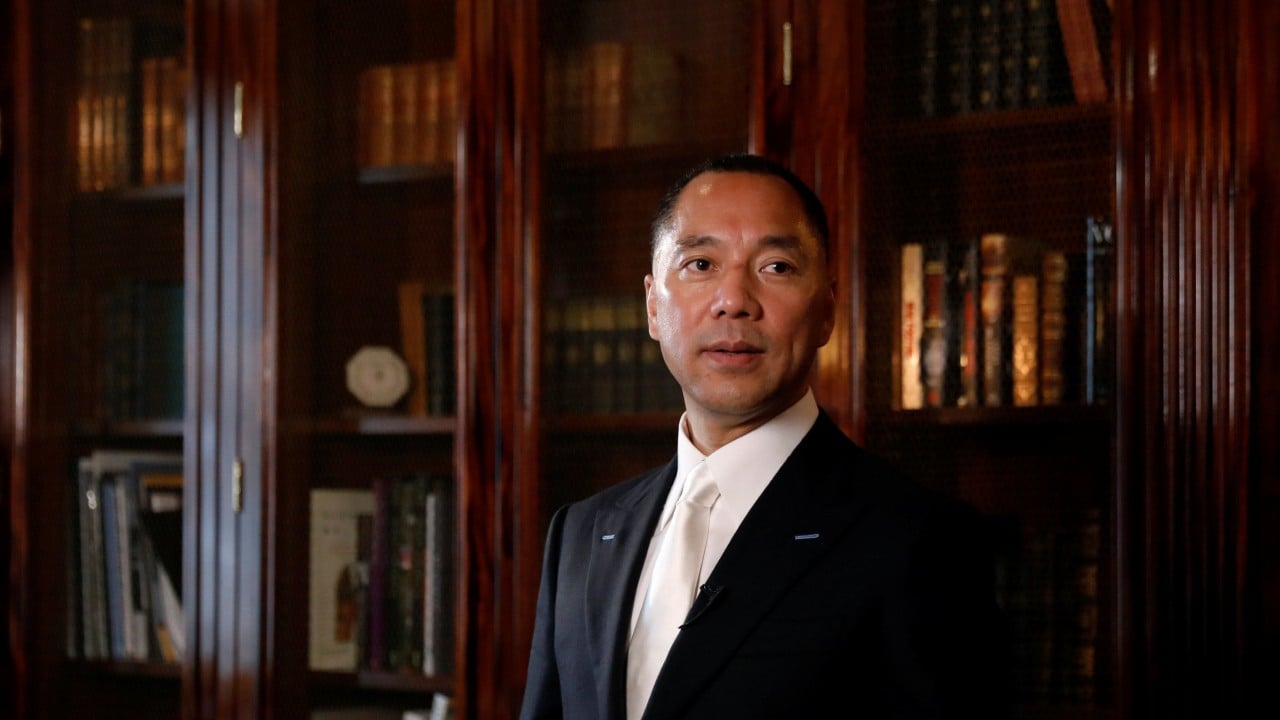
The downfall of Miles Guo is complete. A federal judge in Manhattan just handed the exiled Chinese billionaire a devastating 30-year prison sentence. For years, Guo postured as the ultimate threat to the Chinese Communist Party, using his massive online following and tight bonds with American right-wing elites like Steve Bannon to build an anti-Beijing empire. Now, he's going away for three decades. Not for political dissidence, but for running a massive, billion-dollar fraud that fleeced his own passionate followers.
In Beijing, the reaction from the Ministry of Foreign Affairs was predictable, short, and heavy with a sense of validation. Chinese officials dryly noted the sentence while reminding everyone that Guo is still a wanted fugitive under an Interpol Red Notice. The message they're broadcasting is clear. They want the world to know they were right about him all along.
Guo Wengui Criminal Conviction Data
- Total Charges Filed: 12
- Guilty Verdicts: 9 (including racketeering conspiracy, wire fraud, securities fraud, and money laundering)
- Restitution Order: $889 million
- Estimated Scheme Scale: Exceeded $1 billion
The Scam Behind the Dissident Mask
Guo arrived in the United States in 2017 after escaping a massive anti-corruption sweep in China. He immediately rebranded himself. He wasn't a crooked real estate tycoon fleeing local prosecutors anymore; he was a political refugee ready to take down the Chinese Communist Party. He bought a $67.5 million penthouse overlooking Central Park, bought a 151-foot superyacht, and started live-streaming to hundreds of thousands of Chinese expats who desperately wanted to see political change in their homeland.
That trust became his personal goldmine. Judge Analisa Torres pointed out that Guo intentionally targeted people who dreamed of a democratic China. He didn't build a movement. He built an elaborate trap.
He convinced his followers to pour money into a series of shady entities. He pushed stock in his media venture, GTV Media Group. He promoted the Himalaya Farm Alliance. He even launched a proprietary cryptocurrency called the Himalaya Exchange. His defense lawyers tried to claim these funds were meant for his grand political crusade to overthrow the regime. The jury didn't buy it. The money didn't go toward a revolution; it funded a life of extreme luxury.
Federal prosecutors proved that Guo used his followers' life savings to purchase a 50,000-square-foot mansion in New Jersey, a fleet of ultra-luxury sports cars, a pair of $36,000 mattresses, and a $3.5 million Ferrari for his son. It was a classic affinity fraud. He wrapped himself in the flag of political freedom to pick the pockets of vulnerable believers.
Beijing Gets the Last Laugh
For years, Guo’s presence in New York was a persistent thorn in the side of Chinese leadership. His wild, unverified allegations about the private lives and secret wealth of top officials regularly went viral. Beijing tried hard to get him back. They issued international arrest warrants, accused him of bribery, kidnapping, and rape, and even sent state security agents to New York on transit visas to corner him in his apartment.
The U.S. government ignored Beijing's demands back then, viewing the accusations as politically motivated harassment. Now, the tables have completely turned. By prosecuting Guo for massive financial crimes, the American justice system did exactly what China wanted, even if for entirely different reasons.
The Chinese Foreign Ministry’s statement on the 30-year sentence represents a major propaganda victory for the ruling party. For years, state media portrayed Guo as a textbook example of a corrupt criminal weaponizing Western political asylum laws to escape justice. His conviction in a U.S. federal court validates that narrative perfectly for internal consumption.
A Devastating Blow to Chinese Dissident Credibility
The damage from this sentence extends far beyond Guo’s personal bank accounts. It strikes a blow against the broader Chinese dissident community living abroad. Authentic activists who face genuine, life-threatening danger from state intelligence agencies now have to deal with the fallout of Guo's massive scam.
His legal defense team argued that a lengthy prison sentence would embolden Beijing to aggressively target other critics abroad. They claimed that the entire prosecution was influenced by a sophisticated Chinese smear campaign designed to eliminate political opponents. They even brought up his physical scars from past torture in China to gain sympathy.
The court rejected that narrative. The reality is that Guo did the damage himself. By tying the cause of Chinese democracy to fraudulent crypto schemes and fake stock offerings, he managed to poison the well. Future whistleblowers and political exiles will face intense scrutiny from Western financial regulators and law enforcement, who are now deeply wary of high-profile exiles pulling off similar schemes.
The Steve Bannon Connection and Political Collapse
You can't talk about Guo without talking about his deep ties to American right-wing populism. His most high-profile partnership was with Steve Bannon, the former political strategist for Donald Trump. In 2020, the duo stood on Guo’s luxury yacht off the coast of Connecticut and announced the creation of the New Federal State of China, a bizarre shadow government meant to replace the Chinese Communist Party.
The partnership was incredibly lucrative for their public profiles, but it dissolved in scandal. Bannon was arrested by federal agents while on that very yacht for his own unrelated fraud charges involving a border wall fundraising campaign. Though Bannon avoided prison time by pleading guilty to state-level fraud charges in early 2025, his alliance with Guo showed just how easily foreign money could buy access to influential American political circles.
During the sentencing hearing, the courtroom was packed with more than a hundred of Guo’s remaining die-hard supporters. Some were even dressed in apparel from the fashion brands he promoted. Their devotion remains intense. One supporter even went to the microphone during the victim statement portion of the hearing to call the trial "America's funeral." They genuinely believe the U.S. justice system fell under the control of Beijing.
The evidence presented during the seven-week trial tells a completely different story. This wasn't a political hit job orchestrated by overseas communist agents. It was a standard, meticulously documented financial prosecution led by the Southern District of New York.
Spotting the Signs of Political Affinity Fraud
The tragic reality of the case is the wreckage left behind. Prosecutors submitted over 200 statements from victims who lost everything. Many described intense shame, deep anxiety, and destroyed family relationships. If you want to protect your assets from predatory figures who hide behind political or social causes, you have to look past the rhetoric.
Verify Financial Licensing
Never buy stock or cryptocurrency from an organization just because you like their political stance. Genuine investment platforms must be registered with the U.S. Securities and Exchange Commission or appropriate financial watchdogs. Guo turned to unregulated crypto and private offerings precisely because he couldn't pass regulatory compliance checks.
Demand Independent Audits
True non-profit organizations and political action committees regularly publish audited financial statements. If a leader claims they are pouring $100 million of their own money into a cause, ask to see the third-party accounting paperwork. Don't take their word for it on a live stream.
Separation of Causes and Commerce
Be highly suspicious when a political movement starts selling high-end luxury goods, exclusive memberships, or proprietary digital tokens. True advocacy groups don't require you to buy private digital currency to prove your loyalty to the cause.
Guo’s long sentence serves as a stark reminder that wrapping yourself in a noble cause won't shield you from the law when you steal from the people who trust you. He wanted to go down in history as the man who broke the Chinese Communist Party. Instead, he will spend the next three decades in a federal prison cell, remembered as a con artist who took advantage of the fight for freedom.