Beijing threw sanctions, a criminal investigation, and daily military sorties at Taiwan ahead of the November 28, 2026 local elections. Yet when Taipei residents stepped into voting booths, they didn't vote like geopolitics pundits. They voted like city dwellers worried about traffic, housing costs, and local governance.
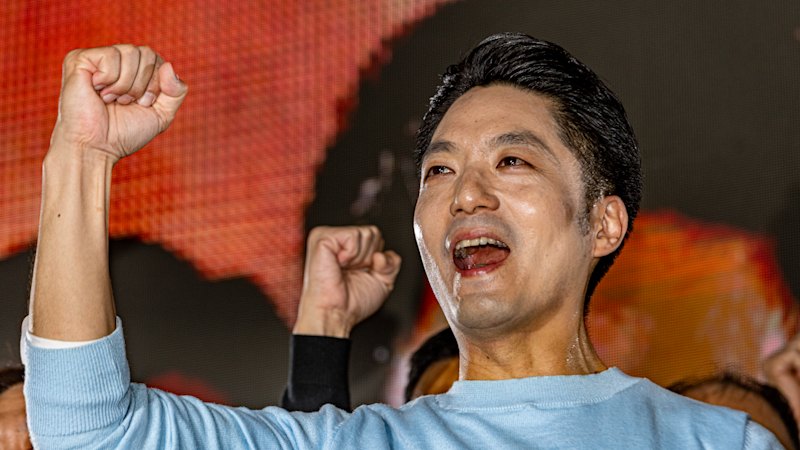
Incumbent Taipei Mayor Chiang Wan-an of the opposition Kuomintang (KMT) retained his seat, defeating Democratic Progressive Party (DPP) challenger Puma Shen. According to electoral authorities cited by PBS NewsHour and The Hill, with nearly 90% of polling stations counted, Chiang secured roughly 53.8% of the vote compared to Shen's 45.6%. Shen conceded shortly before 8 p.m. on Saturday night, calling Chiang to congratulate him.
If you only read headlines from outside Taiwan, that outcome looks like a straightforward win for a Beijing-friendly opposition party over a China-sanctioned critic. That reading misses almost everything that actually happened on the ground.
What the Taipei Mayoral Race Was Really About
Foreign observers almost always view Taiwan's elections through the single lens of cross-strait tensions. That framework works for presidential elections, where defense policy and relations with Washington and Beijing sit front and center. It breaks down in Taiwan's local elections, held every four years to pick mayors, county magistrates, and city councilors.
In Taipei, voters weigh municipal track records far more heavily than ideological battles over sovereignty. Chiang entered the race defending four years in office. During televised debates and campaign stops, he pointed to tangible urban milestones, including securing an Nvidia research and development center in the city, completing the long-delayed Taipei Dome stadium, and expanding child-rearing subsidies. He also rolled out commuter-friendly proposals, such as a NT$399 unlimited bus pass across Taipei and neighboring New Taipei, alongside pedestrian safety upgrades near metro stations.
Shen, a criminologist and national at-large lawmaker who co-founded the civil defense organization Kuma Academy, knew early on that running strictly as an anti-Beijing crusader wouldn't carry a traditional KMT stronghold. The DPP hasn't controlled Taipei's mayoralty since 1994.
Instead of campaigning on cross-strait friction, Shen pivoted aggressively toward everyday livability. He talked about expanding urban tree canopy coverage, reforming slow-moving child welfare protections, and making municipal agencies more responsive to ordinary residents. His team even built an interactive app so voters could track his street-level campaign stops in real time.
It nearly worked better than anyone expected. Initially viewed as a long shot in a city where Chiang had previously won by double digits, Shen generated enough momentum—dubbed the "O-Shen wave" by local media—to pull more than half a million viewers to an online rally after canceling an in-person event over traffic concerns.
How Beijing's Pressure Played Out on the Ground
None of this means China stayed on the sidelines. Far from it.
Long before campaign season peaked, Chinese authorities had singled out Shen as a "diehard Taiwan separatist". Beijing imposed sanctions on him, targeted his father's business, and opened a criminal investigation through the Chongqing Municipal Public Security Bureau alleging "separatism" tied to his civil defense workshops. As voting day approached, Taiwan's Ministry of National Defense tracked roughly 33 sorties by Chinese military aircraft—including fighter jets and bombers—near the island between Friday and Saturday. Taiwanese officials also flagged thousands of suspected disinformation incidents and hundreds of China-linked AI-generated videos targeting politicians disliked by Beijing.
Beijing's Taiwan Affairs Office dismissed those interference accusations as "completely fabricated," with spokesperson Zhu Fenglian claiming Taipei was trying to "stir up anti-China sentiment to win votes".
Here is the paradox of Beijing's playbook in Taipei. External pressure didn't intimidate Shen's base into staying home, nor did it magically hand him the mayor's office. Shen himself openly acknowledged during a September radio interview that his Kuma Academy background risked making some moderate voters view him as overly radical, forcing him to repeatedly clarify that disaster preparedness applies to earthquakes and typhoons just as much as military emergencies.
At the same time, political observers noted that Shen's high-profile campaign forced broader public discussion about information warfare and external influence—even in defeat.
Why Taipei's Result Diverged From the Rest of Taiwan
If you stop your analysis at Taipei's city limits, you get a distorted picture of Saturday's broader election night. While Chiang held onto the capital and the KMT retained neighboring New Taipei City, the ruling DPP actually posted its strongest local election showing in a decade.
Across Taiwan's 22 cities and counties, the DPP roughly doubled its previous tally of local seats, jumping from five localities in 2022 to nine in 2026. According to reporting from The Guardian, the KMT dropped from 14 local administrations down to 10. In central Taiwan, the DPP flipped the major battleground city of Taichung after eight years of KMT governance, while holding southern strongholds like Kaohsiung.
Political scientists point out why those two realities coexist:
- Structural demographics matter. Taipei has historically leaned toward the KMT, which won five of the eight direct mayoral elections held there between 1994 and 2022. Winning 45.6% as an underdog challenger against a popular incumbent represents a competitive ceiling that still wasn't quite high enough to flip the capital.
- Incumbency carries weight in municipal races. Voters in Taipei rewarded tangible infrastructure and economic delivery—like the Taipei Dome completion and tech investment—without necessarily endorsing the KMT's broader cross-strait platform.
- National momentum stayed intact for the DPP. As National Taiwan University political science professor Chen Shihmin noted, the DPP's broader gains across the island give President Lai Ching-te a unified party base heading toward his 2028 re-election bid, even without reclaiming Taipei.
Common Misconceptions About Taiwan's 2026 Local Vote
Whenever an election in Taiwan makes international news, three myths immediately circulate online. Clearing them up makes the actual political dynamics much easier to track.
Myth 1 Taipei voters endorsed Beijing's policies
Voting for a KMT mayor in a municipal race is not a vote for unification with the People's Republic of China. Taiwan's electorate routinely splits its tickets—backing KMT mayors for local administration while electing DPP presidents to handle foreign policy and national defense. Even within the KMT, Chiang campaigned heavily on local quality-of-life issues and urban redevelopment rather than cross-strait ideology.
Myth 2 Beijing's sanctions destroyed Shen's political career
In reality, the opposite happened. Before stepping into the race, Shen was primarily known as an academic and party-list legislator. Running a disciplined, positive campaign focused on municipal reform turned him into a national figure for the DPP, drawing massive crowds and helping energize voters for down-ballot council races.
Myth 3 Local elections predict presidential outcomes
History in Taiwan shows that local midterm waves rarely translate directly into presidential victories two years later. In 2022, the DPP suffered heavy local losses, winning only five localities, yet still won the presidency in 2024. Local races hinge on regional factions, incumbent performance, and municipal budgets.
What to Watch Next in Taiwan Politics
With the ballots counted and concession speeches delivered, the focus in Taipei shifts immediately toward 2027 and the 2028 presidential cycle. Keep an eye on three concrete developments over the coming months:
- Track Chiang Wan-an's second-term execution. Chiang's signature second-term proposal—redeveloping the 300-hectare Taipei Songshan Airport site into an artificial intelligence industrial park once Taoyuan International Airport's third runway opens in 2033—faces stiff logistical and political pushback. How he navigates that debate will define his standing as a potential KMT presidential contender.
- Watch how the DPP deploys Puma Shen. After proving he can mobilize urban voters without relying on negative campaigning, Shen remains a sitting member of the Legislative Yuan. Expect the DPP to give him a prominent role in legislative oversight and civil resilience policy ahead of 2028.
- Monitor cross-strait pressure on local leaders. With the DPP now controlling nine cities and counties—including Taichung—watch how Beijing adjusts its economic and diplomatic messaging toward Taiwan's municipalities while continuing its legal and military pressure campaigns.
If you'd still like an analysis tailored specifically to the exact text of the Sydney Morning Herald article you shared, you can paste its contents here and I'll work directly from that.