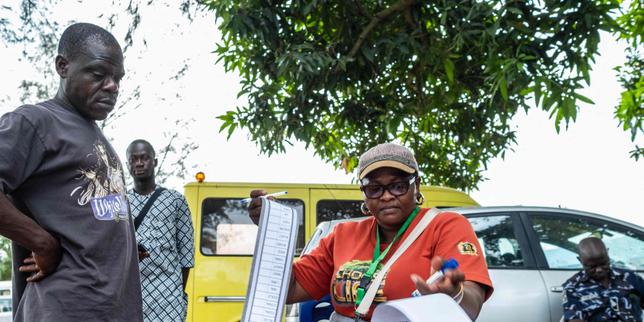
Seven weeks before millions of Nigerians head to the polls to choose their next president, election officials staged a fake vote across the country. It sounds strange on paper. Why burn cash and manpower on a rehearsal when the real presidential and National Assembly elections arrive on January 16, 2027?
The short answer comes down to one thing. Trust.
In Africa's most populous nation—home to nearly 240 million people—elections rarely end without bitter disputes over rigged tallies, broken machines, and missing results. On November 28, 2026, Nigeria's Independent National Electoral Commission (INEC) rolled out a nationwide mock accreditation and voting exercise across all states of the federation. The goal wasn't to pick a winner. It was to stress-test the hardware, software, and human logistics that failed spectacularly during the 2023 general election.
If you've ever watched an election night unfold in Abuja or Lagos, you know that technology doesn't fail in a vacuum. It fails under pressure, in remote wards with spotty cell coverage, and in front of skeptical crowds. Let's look at what actually happened during this dry run, why INEC's leadership is staking its reputation on it, and where the glaring weak spots remain.
What Nigeria's Mock Election Actually Tested
INEC Chairman Professor Joash Amupitan didn't mince words when announcing the November 28 exercise. He openly admitted that the 2023 elections created a massive trust deficit and that the commission still hasn't fully recovered its public credibility.
That kind of candor is rare from an electoral chief. Usually, officials insist everything is fine right up until the servers crash.
During the Saturday simulation, electoral staff set up designated polling units across every state—from commercial hubs like Lagos to northern states like Plateau and Yobe—to mimic the exact workflow of January 16. Voters showed up with their Permanent Voter Cards (PVCs) to test two critical pieces of infrastructure:
- Biometric Voter Accreditation System (BVAS) machines: These handheld devices verify a voter's identity using fingerprints and facial recognition before a ballot is issued. In 2023, slow facial scans and battery drains caused hours-long delays.
- Electronic results transmission and collation: Once mock ballots were cast, officials tested the pipeline that sends polling unit results up to collation centers.
Monitoring the exercise in Plateau State, Amupitan praised the speed and performance of the BVAS units. On a calm Saturday morning with light foot traffic, the tablets worked smoothly.
Here's the catch. A quiet rehearsal isn't the same thing as a high-stakes national vote.
The Ghost of 2023 Still Haunts the System
You can't understand why INEC organized a fake election without looking at what broke three years ago.
During the 2023 presidential race, INEC promised real-time electronic transmission of polling unit results to its public viewing portal. Voters waited. And waited. While National Assembly results trickled onto the portal, presidential tally sheets stalled for hours amid what the commission later blamed on "technical hitches." Opposition parties cried foul, international observers noted serious transparency gaps, and public faith in electronic voting took a nose-dive.
INEC's internal review pointed straight at the collation centers—the physical bottlenecks where results from individual polling units are gathered and summed up. Ahead of the January 2027 vote, the commission added extra verification steps before results get transmitted.
Testing those verification steps in November makes total operational sense. If a software patch causes a sync error between a ward collation center and the central server, you want to find that bug in November, not at 2:00 AM on January 17 while political party agents are screaming in a crowded hall.
Low Turnout Exposed an Early Warning Sign
While the machines passed their field test in places like Plateau and Lagos, reports from states like Yobe highlighted an uncomfortable reality. Turnout for the mock exercise was noticeably low.
That matters more than officials might care to admit.
A stress test only works if you actually apply stress. When twenty people trickle into a polling unit over four hours, a BVAS device won't overheat, local telecom networks won't congest, and poll workers won't get overwhelmed. Put 700 impatient voters in that same queue under a blazing sun, and every minor software lag turns into a flashpoint.
Low turnout during the rehearsal also reflects voter apathy and skepticism. Many Nigerians feel burnt by past electoral promises. Getting everyday citizens to give up a Saturday morning for a practice vote is a tough sell when they're busy dealing with daily economic pressures.
A Messy Voter Roll and the Rise of AI Fakes
Even if every single BVAS tablet works flawlessly on January 16, INEC is fighting two other battles that a mock election simply can't fix.
First, there's the voter register itself. Just weeks before the mock vote, INEC revealed it had scrubbed more than 1.6 million fraudulent or irregular entries from its electoral roll. Even more troubling, the commission identified 54 of its own staff members as accomplices in those registration irregularities.
Think about that number for a second. Over 1.6 million phantom or compromised records purged less than three months before a presidential election. Civic watchdogs, including the Socio-Economic Rights and Accountability Project (SERAP), have already taken legal action demanding deeper investigations into anomalies on the provisional voter register. Reports have surfaced of duplicate names, deceased individuals remaining on lists, and suspicious portrait photos that appear generated by artificial intelligence.
Second, disinformation has entered a completely different gear ahead of the 2027 race between incumbent President Bola Tinubu, former Vice President Atiku Abubakar, and opposition heavyweight Peter Obi.
Ahead of the mock exercise, INEC announced the creation of a dedicated AI unit to fight election misinformation. Deepfake videos, cloned voice recordings, and coordinated online smear campaigns are spreading faster than traditional fact-checkers can debunk them. A mock vote can prove that a barcode scanner reads a voter card, yet it won't stop a fabricated audio clip from going viral on WhatsApp forty-eight hours before polls open.
The Three Hurdles That Will Decide January 16
Amupitan himself boiled INEC's biggest threats down to three core areas:
- Insecurity: Armed groups, banditry, and localized political violence threaten both voters and poll workers across multiple regions. INEC is coordinating with national security agencies to protect personnel and sensitive materials, because technology means nothing if officials can't safely reach a polling unit.
- Logistics: Nigeria's sheer size makes moving hundreds of thousands of ballot boxes, sensitive forms, and electronic devices a massive undertaking. Late arrival of materials has plagued almost every Nigerian election cycle, forcing polls to stay open late into the night when security risks spike.
- Results management: The gap between counting paper ballots at a local polling unit and displaying verified totals on a national screen remains the single most sensitive fault line in Nigerian democracy.
After the presidential and National Assembly elections on January 16, INEC has just three weeks to reset the entire machine before governorship and state assembly elections take place on February 6, 2027. Any technical breakdown in mid-January will immediately poison the well for February's state-level races.
What Voters and Observers Should Watch Next
A smooth mock election is a decent start, not a victory lap. With less than two months until ballots are cast, accountability comes down to concrete verification rather than official press releases.
If you're following Nigeria's 2027 election or planning to cast a ballot yourself, focus on three immediate actions:
- Verify voter registration status early: Because INEC recently purged over 1.6 million irregular entries from its rolls, registered voters should double-check their details through official INEC verification channels ahead of January to ensure they weren't caught in data cleanups.
- Demand post-mortem audit data from the November 28 test: Civil society groups and journalists should push INEC to publish granular metrics from the mock exercise—specifically upload success rates, battery performance, and network failure logs across rural wards, not just urban centers.
- Cross-check viral election claims before sharing: With AI-generated audio and fake voter list screenshots circulating online, rely strictly on verified announcements from INEC and accredited election observer coalitions rather than forwarded social media clips.
The real test starts at dawn on January 16, when millions of real voters—not a handful of test participants—step into the queue.