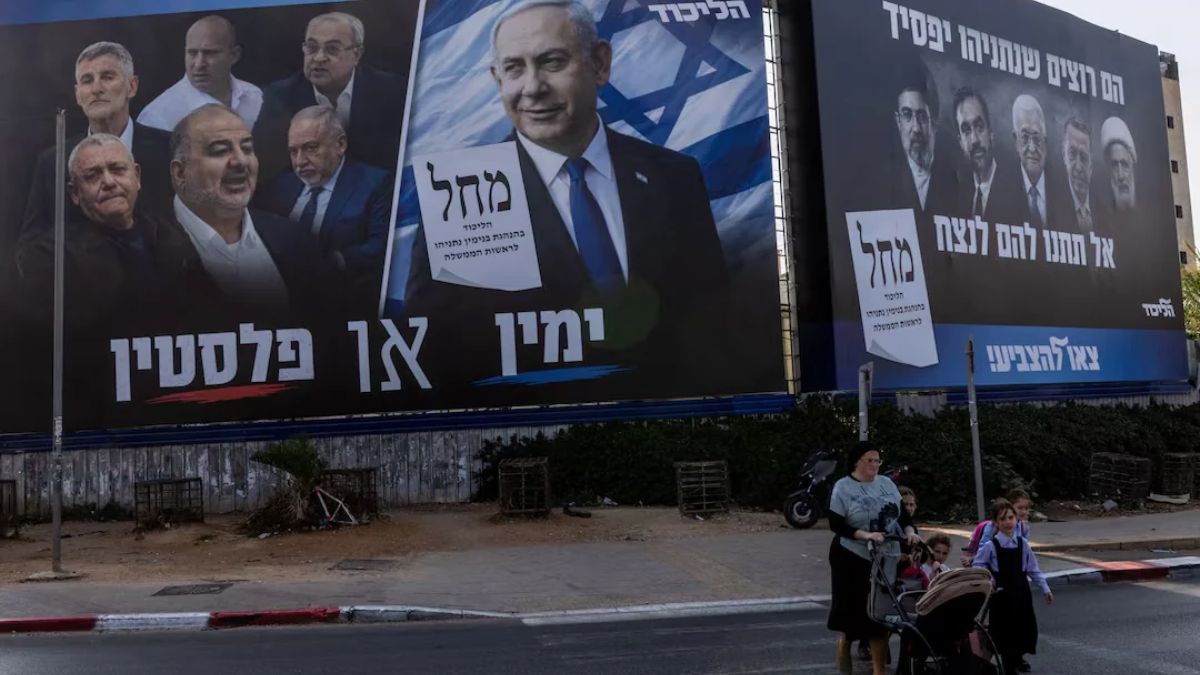
Israel’s political map is frozen in a familiar state of dysfunction. Following the recent Knesset elections, Prime Minister Benjamin Netanyahu finds his bloc holding 53 seats. That leaves him sitting exactly eight seats short of the 61-seat majority required to form a stable governing coalition.
If you have been watching Israeli politics for any length of time, you know that numbers on a whiteboard rarely tell the whole story. Netanyahu doesn’t just need raw integers; he needs to bridge massive ideological gaps while keeping a fractured political ecosystem from collapsing under its own weight. Meanwhile, his primary challenger, Gadi Eisenkot, faces an equally steep mountain with an opposition camp that struggles to find internal harmony.
The Arithmetic of the Knesset Stalemate
To understand why this eight-seat gap matters so much, you have to look closely at how the math breaks down. Netanyahu’s outgoing bloc sits at 53 seats. The main opposition parties command roughly 48 seats. Floating in the middle are Arab-majority factions like Ra'am and the Joint List, holding a combined 19 seats.
Nobody has a clean path to 61 without making uncomfortable compromises.
- The Incumbent Advantage: Netanyahu remains in the Prime Minister's Office while coalition talks stall. He doesn't need to build a new consensus immediately; he just needs to stop anyone else from doing it first.
- The Opposition Dilemma: Eisenkot has to convince disparate political factions—ranging from secular nationalists to left-leaning parties—to lock arms.
- The Outside Parties: The wild card rests with Arab lawmakers, whose support or abstention could theoretically tilt a confidence vote, even if formal inclusion in a coalition remains politically toxic for several Zionist parties.
Why the Eight Seats Are Harder to Find Than Ever
Closing a gap of eight seats usually involves horse-trading cabinet portfolios, budget allocations, or policy concessions. But this cycle is different. The political scar tissue from years of intense domestic friction and ongoing regional conflicts makes standard coalition-building nearly impossible.
Far-right allies within Netanyahu's orbit demand strict adherence to their platforms, particularly concerning security and the West Bank. If Netanyahu yields too much to satisfy extreme factions, he alienates potential moderate partners. If he tries to court figures outside his traditional bloc, he risks triggering a revolt among his most loyal base.
It is a classic political bottleneck. Every potential route to a majority comes with an exorbitant price tag.
The Countdown Clock and the Threat of Fresh Elections
President Isaac Herzog holds the constitutional authority to task a candidate with forming a government, setting a strict deadline for negotiations. If neither Netanyahu nor Eisenkot can stitch together 61 reliable votes before time runs out, Israel faces a catastrophic scenario: another round of general elections.
Voters are exhausted. The economy feels the strain of protracted uncertainty, and regional pressures demand steady governance. Yet, party leaders remain tethered to their survival instincts.
Netanyahu is banking on time. He knows that his rivals possess deep internal divisions that could fracture under pressure. If the opposition fails to present a viable alternative, the incumbent prime minister wins by default, dragging the country forward on borrowed time and a fragile legislative skeleton.
Keep an eye on the backroom meetings over the coming days. The eight-seat deficit is more than a mathematical puzzle; it's a structural crisis that could either extend an era of dominant leadership or trigger a fresh trip to the ballot box.