The attempted heist was stupid. There is simply no other way to put it.
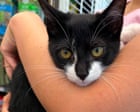
When you think of a bank robbery, you probably picture ski masks, demands yelled over a counter, or maybe a quiet, tense note slipped to a teller. You do not picture a man walking into a PNC Bank branch in Beltsville, Maryland, handing a three-month-old tuxedo kitten to the bank manager, and asking, "Can you hold this?"
But on a Monday morning in July 2026, that is exactly what happened.
The suspect, who had just stolen the kitten from a pet store in the same shopping center, used the tiny animal as an "accessory" to demand cash. The bizarre event quickly made national headlines as a quirky, late-summer oddity. Yet, behind the sensational headlines lies a massive warning sign for animal rescues and retail pet partners across the country.
This is not just a story about a failed bank robbery. It is a wake-up call about how we secure adoptable animals in public spaces.
The Timeline of a Very Weird Monday in Beltsville
To understand how a three-and-a-half-month-old kitten named Magnolia ended up in the middle of an active bank robbery, you have to look at the geography of the Baltimore Avenue plaza in Beltsville.
Everything happened within a few hundred feet.
[Pet Supplies Plus] ---> Snatched Kitten ---> [PNC Bank] ---> Asked Manager to Hold Cat ---> Note Handed to Teller
The suspect spent roughly two weeks laying the groundwork, though not in the way a professional thief would. Employees at the Pet Supplies Plus store reported that the man came in almost every single day, specifically focusing on Magnolia, who was housed in an in-store adoption habitat run by the non-profit rescue group Beltsville Community Cats.
On Monday morning, around 10:30 AM, he saw his chance. The front of the store was temporarily quiet. In a lapse of security, the key to the acrylic adoption enclosure was left hanging nearby.
The suspect grabbed the key, unlocked the enclosure, scooped up Magnolia, and ran out the front doors.
He did not flee the scene. He did not jump into a getaway car. Instead, he walked right over to the PNC Bank in the very same shopping center.
Once inside, he approached a bank employee. Carrying a kitten in his arms, he asked the employee—who turned out to be the bank manager—to hold the animal. As the manager stood there cradling a three-pound kitten, the suspect wrote out a note and handed it to a teller, demanding all the cash.
The police response was incredibly swift. When Stephanie Stullich, president of Beltsville Community Cats, arrived at the shopping plaza after getting an emergency call from a pet store worker, she expected to see a lone cruiser looking for a cat snatcher.
Instead, she saw a sea of flashing lights.
"Immediately saw all of these police cars, and I thought, 'Wow, that's a heck of a response for a stolen cat,'" Stullich said. "But then I realized they all were going down to the bank."
Prince George's County police arrested the suspect inside the bank before he could make off with any cash. Magnolia was recovered completely safe and unharmed, having spent the aftermath of the arrest bonding with the bank manager inside an office.
Why Retail Adoption Partners Face Unique Risks
This bizarre story has a happy ending for Magnolia, but it exposes a massive vulnerability in how local rescues operate.
Most local cat rescues do not have their own brick-and-mortar facilities. They rely on partnerships with major retail pet stores like Pet Supplies Plus, Petco, or PetSmart to showcase their adoptable animals. These partnerships are fantastic for visibility, but they introduce a dangerous security gap.
You have a non-profit volunteer group managing the animals, while a completely separate corporate retail staff manages the physical space.
When those two entities do not communicate flawlessly, bad things happen.
In the Beltsville case, the store manager, Aaron Kurkowski, noted that the suspect chose a moment when none of the store team was near the front. Because retail employees are stretched thin—managing registers, stocking heavy bags of dog food, and assisting customers in the aisles—the adoption habitats are often left unmonitored.
Worse, the key to Magnolia's enclosure was reportedly hanging right next to the cage.
This is a classic example of security theater. If a lock requires a key, but the key is hanging on a hook next to the lock, you do not actually have a locked door. You have an open invitation.
We see this mistake all the time in retail environments. Employees get tired of walking back and forth to the manager's office or a central key locker, so they hide the key in a "convenient" spot. Criminals, even highly impulsive ones like our cat-wielding bank robber, notice these shortcuts.
The Psychology of the Impulsive Criminal
What drives someone to visit a kitten daily for two weeks, only to steal it and immediately walk into a bank to commit a felony?
People on social media joked that the suspect wanted a literal "cat burglar" accomplice, or that he was trying to use Magnolia as some sort of emotional shield. The reality is likely far less calculated.
Criminal behavior expert and clinical psychologist Dr. Stanton Samenow has written extensively on the rapid, illogical decision-making processes of impulsive offenders. They often act on sudden, immediate desires without a single thought for the next steps.
The suspect clearly developed an obsession with Magnolia over those two weeks. When he saw the store front empty and the key exposed, his brain fired a green light. He took the cat.
But once he was out the door, the reality of what he had done likely hit him, or perhaps an entirely separate, equally chaotic impulse took over. He needed money. He had a cat. In his disorganized state of mind, carrying the cat into the bank and asking someone to hold it while he wrote a robbery note seemed like a perfectly reasonable sequence of events.
It is easy to laugh at the sheer absurdity of the crime. But for the volunteers who dedicate their lives to rescuing these animals, it is terrifying. Magnolia could have easily been dropped, stepped on, or lost in the chaos of a police arrest.
Practical Security Steps for Pet Adoption Partners
If you run an animal rescue or manage a pet store that hosts adoption events, you cannot treat this Maryland incident as a one-off joke. You need to take active steps to make sure your animals are safe from impulsive thefts.
Here is what you need to implement immediately:
1. Tighten Key Management Policies
Never leave keys to animal enclosures in the public retail area.
- Keys must be kept on the person of a designated store manager or rescue volunteer.
- If a physical key must stay near the habitat, it should be kept in a secure, digital key box that requires a PIN code to open.
- Conduct random audits during the week to ensure staff are not leaving keys hanging on hooks or on top of the cages.
2. Install Dedicated Smart Cameras
Do not rely solely on the store's general security cameras, which are often positioned to watch the cash registers and exit doors.
- Install a low-cost, smart security camera (like a Ring or Wyze camera) directly facing the adoption habitat.
- Set up motion alerts that ping the rescue coordinators' phones when there is activity near the enclosures during off-hours or quiet times.
- Place highly visible signs stating that the area is under 24/7 video surveillance.
3. Implement the "Two-Week Tracker" Protocol
The suspect in this case visited the kitten almost daily for two weeks. Retail staff noticed him, but because he was just looking at the cat, nobody flagged it as suspicious.
- Train retail staff to engage with repeat visitors who show an unusual level of fixation on a specific animal without applying to adopt.
- A simple, friendly, "Hey, I see you love Magnolia! Have you filled out our adoption application yet?" can act as a powerful deterrent. It lets a potential offender know they have been noticed and recognized.
Moving Forward and Finding Magnolia a Real Home
Magnolia's brief and chaotic "life of crime" is thankfully over.
Beltsville Community Cats confirmed that the black-and-white tuxedo kitten is back in their care and is actively looking for a forever home—preferably with a law-abiding citizen who does not require her to act as a bank robbery accessory.
The lesson here is simple. Criminals are unpredictable, and our safety measures must account for the absurd just as much as the calculated. By locking up keys, paying attention to repeat visitors, and ensuring retail staff are trained to protect adoptable pets, we can keep the next bizarre headline from happening.
If you want to support the rescue or apply to adopt Magnolia, you can reach out directly to Beltsville Community Cats. Let's make sure her next trip out of her habitat is to a loving, quiet home.
This short news segment on the Maryland kitten bank robbery offers a quick, lighthearted visual breakdown of how the entire incident unfolded inside the Beltsville shopping plaza.