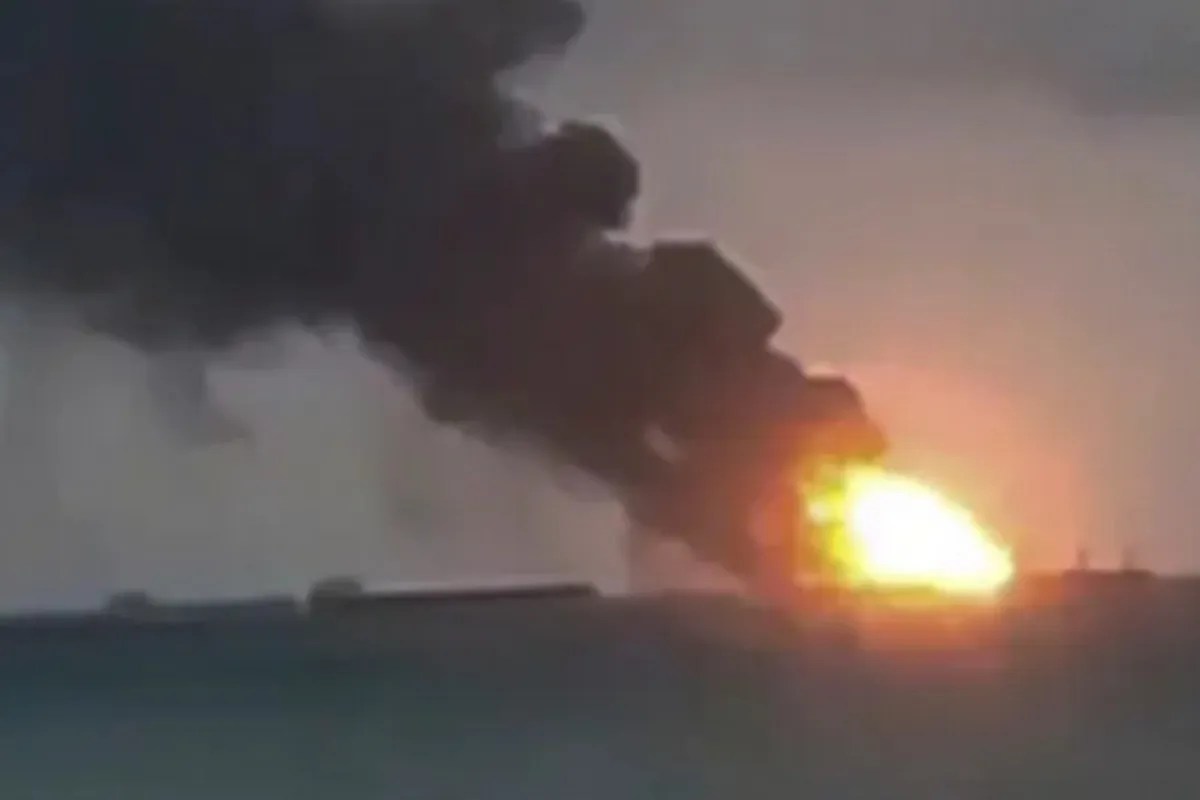
Waters that once carried peaceful grain shipments now hide invisible destruction.
A sudden blast tore through a commercial vessel operating in the Black Sea near Romania, turning a routine maritime transit into a desperate rescue mission. Eight crew members vanished into the cold depths. The incident instantly ignited global concern over the fragile safety of civilian shipping lanes caught in ongoing geopolitical flashpoints. You aren't just looking at an isolated accident. You're looking at the dangerous reality of navigation in a war-adjacent corridor where floating hazards and sudden explosions threaten every vessel that dares to cross.
Let's break down what actually happened and why this maritime tragedy matters far beyond the immediate coastline.
The Anatomy of a Black Sea Maritime Incident
When an explosion strikes a ship at sea, chaos follows instantly. Communication lines break down. Fire engulfs superstructures. Crew members face impossible choices in pitch-black, smoke-filled corridors.
In this specific Black Sea emergency, the blast occurred unexpectedly near Romanian territorial waters, triggering immediate mobilization from regional coast guards and rescue coordination centers. Reports confirmed that the ship suffered severe structural damage, resulting in a rapid fire outbreak that complicated evacuation protocols. While emergency responders pulled several survivors from the freezing water, the search for the eight missing sailors stretched across tense hours, hindered by rough weather conditions and lingering security risks in the area.
You might wonder why ships keep sailing through such perilous corridors if the risks are this high. The answer comes down to global supply chains and economic survival. Grain, fuel, and vital commodities must move. Stopping traffic means starving global markets of essential goods. Crew members and shipping companies constantly gamble with danger, trusting thin margins of safety that can vanish in a fraction of a second.
Why Maritime Security Protocols Fail Under Pressure
Standard maritime safety rules assume normal operating conditions. They assume predictable weather, functioning electronic navigation aids, and open communication channels. They do not account for hidden drifting hazards or unexpected wartime fallout.
Commercial captains operating in the Black Sea face an impossible balancing act. Turn on every tracking transponder, and you risk becoming a target. Turn them off to stay safe, and you violate international maritime tracking laws while blinding rescue services to your exact coordinates. This friction creates a blind spot where accidents multiply. When a blast happens, rescue teams lose precious minutes just figuring out where the signal originated or who was monitoring the bridge at the time of impact.
I've spoken with commercial navigators who describe these routes as high-stakes gambles. You check your radar. You watch the horizon. You pray the sea beneath you remains stable. But prayer doesn't stop hidden underwater hazards or unexpected mechanical failures exacerbated by stress and fatigue.
The Broader Economic Ripple Effect
Every time a vessel burns in the Black Sea, insurance premiums skyrocket globally. Shipping lines pass those costs directly down to consumers, making food and energy more expensive everywhere.
When eight sailors go missing, families bear an unbearable emotional toll, but the broader industry also absorbs a psychological shock. Crew shortages are already hitting the maritime sector hard. Who wants to sign a contract for a route where a routine voyage can turn into a battlefield disaster overnight? If mariners refuse to board ships heading into high-risk zones, international trade grinds to a halt. Governments talk about securing corridors, but the reality on the water remains precarious, volatile, and deeply unforgiving.
What Needs to Change Right Now
If the international community wants to prevent future tragedies like this one, passive observation won't cut it.
- Independent Monitoring: Deploy neutral international observers to audit maritime routes continuously.
- Enhanced Mine Sweeping: Increase coordinated naval sweeps along civilian transit lanes to clear drifting hazards before they claim another hull.
- Strict Accountability: Enforce transparent reporting standards when accidents occur so operators can learn what went wrong instead of hiding behind corporate statements.
Don't wait for the next disaster to demand better safety measures for the people who keep global trade moving. Check your supply chain dependencies, support organizations advocating for mariner rights, and stay informed about the hidden human cost behind the goods arriving at your local port.
_Carrier_Strike_Group_formation_sails_in_the_Atlantic_Ocean.jpg/1280px-US_Navy_031130-N-3653A-002_USS_George_Washington_(CVN_73)_Carrier_Strike_Group_formation_sails_in_the_Atlantic_Ocean.jpg)
