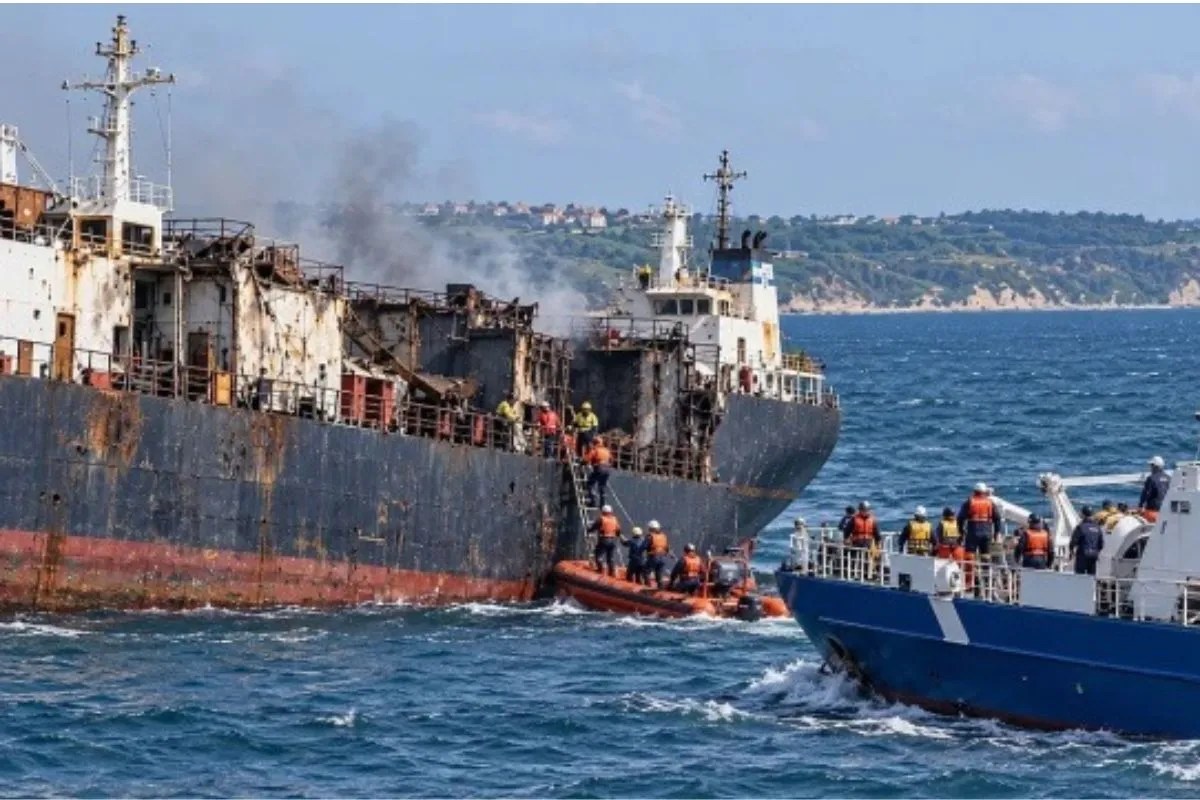
The Black Sea isn't just a body of water anymore. It's a high-stakes maritime war zone. When three sea drones slammed into a commercial container ship right off the coast of Bulgaria, it wasn't just an isolated maritime accident. It was a terrifying escalation that brings the Russia-Ukraine war straight to the doorstep of NATO territory.
Let's look at what actually happened. A Liberia-flagged container ship, sailing from the Israeli port of Haifa toward Constanta in Romania, found itself directly in the crosshairs. Seventeen nautical miles off Cape Kaliakra, inside Bulgaria's exclusive economic zone, three uncrewed surface vessels struck the hull. Fire broke out. The starboard side took heavy structural damage. Fortunately, the crew made it out alive, but the implications for international shipping are staggering.
The Shifting Danger Zone in European Waters
We tend to think naval warfare happens exclusively between warships. That's a dangerous misconception. Commercial vessels are increasingly becoming collateral damage or intentional targets in modern asymmetric conflicts.
When you track the numbers, the trend line is alarming. At least half a dozen merchant ships have faced direct strikes in these waters over recent months. International crews face unprecedented risks, with dozens of sailors reportedly killed or missing across various incidents. Bulgaria, a NATO member state, suddenly finds its coastal waters transformed into a testing ground for cheap, highly lethal maritime drones.
Who Is Actually Behind These Attacks?
Attribution in modern drone warfare is messy. Ukraine points fingers directly at Moscow, arguing that the disruption of commercial traffic and the militarization of the western Black Sea serves Russian strategic interests. Bulgarian leadership, including Prime Minister Rumen Radev, has acknowledged the obvious tactical alignment with Russian objectives, while Moscow denies direct involvement.
The reality on the ground—or rather, on the water—is that naval drones are cheap to build, hard to track, and devastatingly effective. They change the math of naval defense entirely. You don't need a multi-billion dollar frigate to shut down a major shipping lane. You just need a swarm of GPS-guided jet-ski hulls packed with explosives.
What This Means for Global Supply Chains
Most people assume supply chain vulnerabilities only exist in the Red Sea or the South China Sea. They forget Europe's eastern flank. The Black Sea corridor handles massive volumes of grain, oil, and manufactured goods connecting Eastern Europe and the Middle East to global markets.
When container ships start taking direct hits near NATO borders, insurance premiums skyrocket. Crews refuse to sail. Port operations slow to a crawl. Even if a ship doesn't sink—like the recent vessel off the Bulgarian coast—the economic shockwaves ripple through international markets immediately.
The Hard Truth About Maritime Security
NATO is scrambling. Bulgaria is now forced to lean heavily on alliance partners to upgrade surveillance and coastal defense mechanisms in a sector that was once considered routine commercial territory. But defensive patrols can't cover every square mile of open water against low-profile surface drones operating under the cover of night or rough weather.
The Black Sea is no longer safe for business as usual. Until a robust diplomatic or security framework reins in the deployment of autonomous naval weapons near commercial lanes, every captain sailing toward Eastern Europe is playing high-stakes roulette. The longer this war drags on, the more collateral damage global trade will absorb.