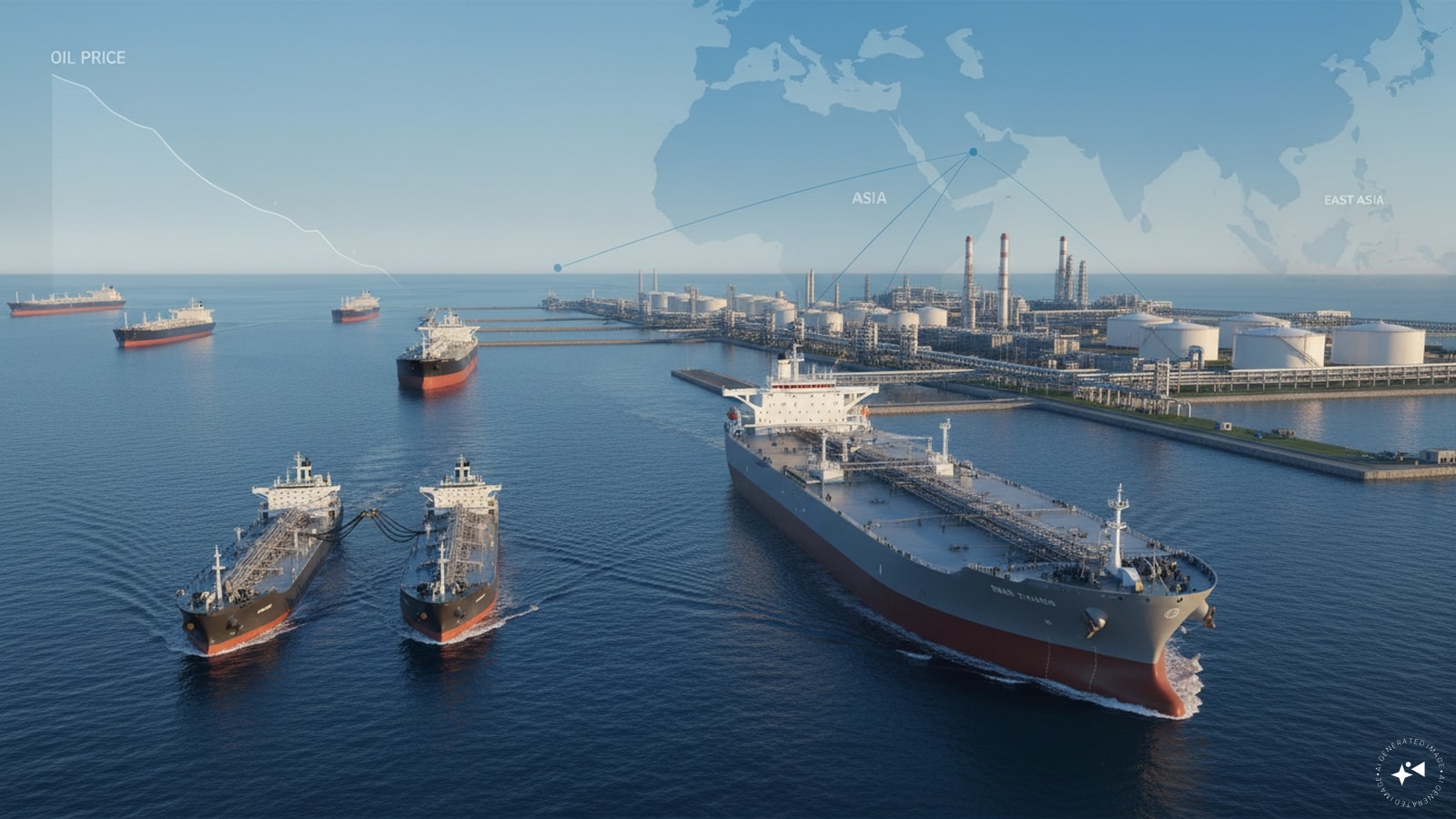
Energy markets are currently in total chaos, and major corporations are cashing in. British Petroleum just announced second-quarter profits that more than doubled, hitting US$3.9 billion. Yet, amidst this windfall, the company is doubling down on a controversial strategy: cutting loose major developments like the Bay du Nord oil project off Newfoundland.
If you're wondering how a company can rake in billions while walking away from a massive Canadian deepwater asset, you aren't alone. The math seems counterintuitive at first glance. But looking closer at corporate balance sheets and global energy politics reveals a very different story. BP isn't struggling for cash. They're just being ruthlessly selective about where that cash goes. Meanwhile, you can explore similar stories here: Why Wall Street Ipo Dreams Are Hitting A Wall Right Now.
The Real Reason BP Dropped Bay du Nord
Let's cut straight to the point. BP didn't exit the Bay du Nord project because fossil fuels are suddenly unprofitable. Driven by disruptions in the Middle East and spiking global demand, oil and gas prices have surged, stuffing corporate pockets across the board.
Instead, the move comes down to portfolio simplification and capital discipline under new leadership. Meg O'Neill, BP's chief executive officer, put it bluntly during the recent financial briefing. She stated that the company needs to compete in the weight class it's actually in. Translation? They have too many projects scattered across the globe, and tying up roughly C$14 billion in a complex deepwater frontier like the Flemish Pass Basin just didn't make the cut for their strict return hurdles. To understand the bigger picture, check out the excellent analysis by Investopedia.
Norway's Equinor is now taking over full ownership of Bay du Nord, steering the project toward a targeted first oil date of 2031. BP is happy to hand over the reins, pocketing clean books while focusing funds on projects with quicker paybacks.
Why Surging Profits Don't Equal Reckless Spending
It is easy to look at a US$3.9 billion quarterly profit and assume energy giants are throwing money at every drill site they can find. That used to be the playbook a decade ago. Today, institutional investors are demanding discipline over reckless expansion.
Shareholders want buybacks, dividends, and secure balance sheets rather than long-term mega-projects that might take a decade to yield a single barrel of crude. Bay du Nord is estimated to hold hundreds of millions of barrels of light oil, but it requires massive upfront capital and deepwater engineering expertise. By selling its 37.2% stake to Equinor, BP is shedding future financial exposure while keeping two smaller 100% exploration licenses in Newfoundland waters.
- Strict Capital Allocation: Every dollar must compete against internal benchmarks for immediate cash generation.
- Risk Mitigation: Deepwater frontier projects carry massive execution and regulatory timelines.
- Portfolio Simplification: Pruning fringe assets lets management focus on core, highly reliable producing regions.
What This Means for Canada's Offshore Future
Does BP walking away mean Bay du Nord is dead in the water? Absolutely not. Equinor remains committed to maturing the project toward a final investment decision slated for early 2027. They're driving the development using a floating production, storage, and offloading vessel with subsea tie-backs.
Local leaders in Newfoundland and Labrador have watched major players shuffle assets before. While losing a heavyweight like BP stings from a prestige standpoint, having a single dedicated operator like Equinor can sometimes streamline decision-making without waiting for partner consensus.
You have to look at the broader picture. Energy corporations are playing a high-stakes game of chess right now. They're capitalizing on short-term high commodity prices while aggressively shedding long-term capital commitments that don't fit their immediate profit models.
Stop expecting big oil to act like traditional expansionists. They are lean, mean, and hyper-focused on margin over volume. Keep an eye on Equinor's next moves in the Flemish Pass, because Canada's deepwater future now rests squarely on their shoulders.